
Video marketing has shifted from a nice-to-have to a critical B2B strategy. As buyer expectations evolve and attention spans shrink, the organisations that master video communication will dominate their markets. This article explores why video has become indispensable for B2B growth and how to implement it strategically.
Key Takeaway
Video has become the dominant format for B2B engagement. Organisations that invest in video marketing now will gain competitive advantage in lead generation, customer retention, and brand authority.
The State of B2B Video Marketing Today
The evidence is clear: video marketing has fundamentally changed how B2B organisations communicate with their audiences. According to recent industry data, 89% of businesses now use video as a core part of their marketing strategy, and this number continues to grow year over year.
The shift towards video is driven by several factors: remote-first work environments, shortened attention spans on social media, and the proven effectiveness of video for conveying complex information quickly. Decision-makers in B2B organisations are increasingly watching product demos, educational content, and case study videos before engaging with sales teams.
What makes this shift particularly important is the ROI it delivers. Organisations using video in their marketing strategies report higher conversion rates, longer average session times, and improved customer lifetime value compared to text-only content.
89%
B2B Organisations Use Video
Core strategy adoption rate
72%
Prefer Videos Over Text
Audience preference metric
4.8x
Higher Engagement Rate
Video vs. static content
85%
Convert After Video
Purchase decision influence
Sources: Wyzowl State of Video Marketing 2025, HubSpot State of Marketing 2025
Why Video Outperforms Other Content Formats
The superiority of video in B2B marketing comes down to how human brains process information. When we see, hear, and read simultaneously, we retain up to 65% of information after three days. This multisensory engagement makes video exceptionally effective for complex product explanations.
Video also builds trust faster. A 60-second product walkthrough conveys confidence and transparency in ways that product descriptions simply cannot match. For B2B buyers evaluating high-ticket solutions, this rapid trust-building is critical to moving through the sales cycle. Our video marketing benchmarks quantify exactly how video impacts engagement, conversion, and revenue.
Additionally, video content signals investment and professionalism. When prospects see that a vendor has invested in quality video production, they perceive higher brand authority and credibility—essential factors in B2B decision-making where purchase risks are significant.
| Content Format | Engagement Rate | Information Retention | Lead Quality |
|---|---|---|---|
| Product Demo Video | 8.2% | 65% (3-day retention) | Very High |
| Explainer Animation | 6.4% | 58% (3-day retention) | High |
| Blog Post with Images | 2.1% | 20% (3-day retention) | Medium |
| Case Study Webinar | 7.8% | 62% (3-day retention) | Very High |
| Infographic | 3.2% | 35% (3-day retention) | Medium |
| Plain Text Email | 1.4% | 10% (3-day retention) | Low |
Sources: BrightEdge Content Engagement Study 2025, IAB UK Video Advertising Report
Platform-Specific Strategic Shifts

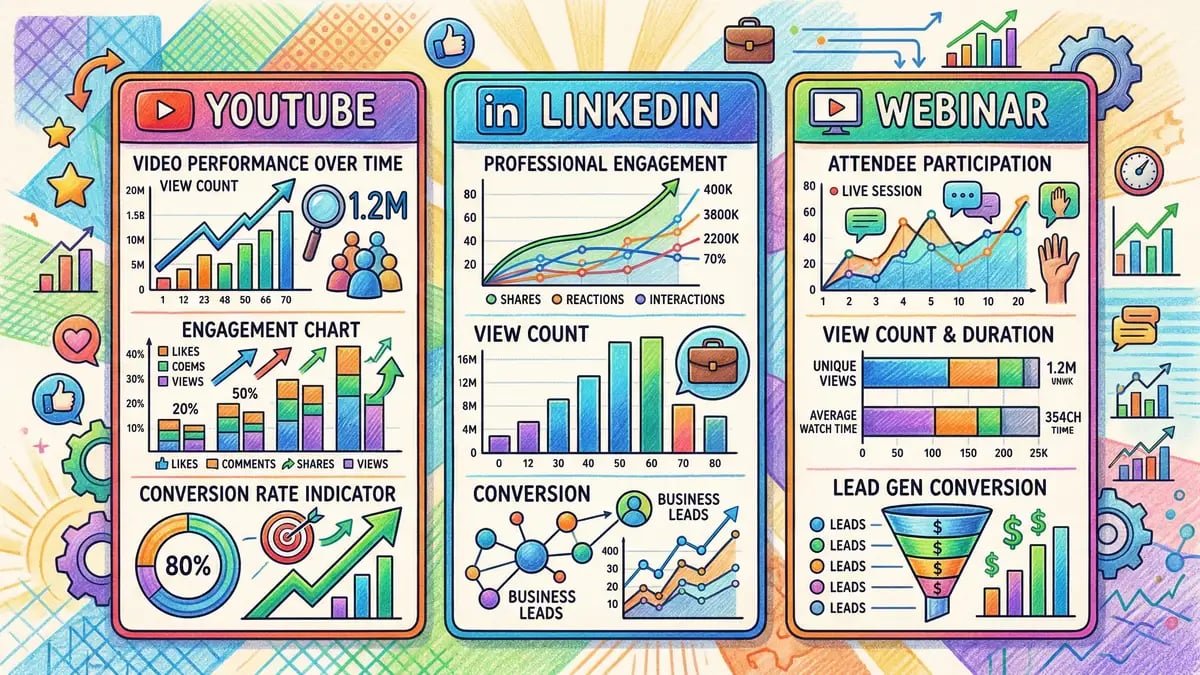
Each platform has unique requirements for video success. On LinkedIn, native-uploaded videos receive significantly higher engagement than YouTube links, making direct platform investment essential for B2B reach. The algorithm rewards video consumption, making this the highest-ROI platform for enterprise-focused organisations.
YouTube remains critical for long-form educational content and SEO — our YouTube marketing guide for B2B covers the full platform strategy. Since Google owns YouTube, videos hosted there appear in search results and earn featured snippets—a significant advantage for organisations targeting informational keywords. A single well-optimized YouTube video can generate leads for years through organic search.
TikTok, while traditionally associated with younger audiences, is rapidly becoming relevant for B2B. Short-form educational content, team culture videos, and thought leadership clips are gaining traction with Gen Z and millennial decision-makers entering C-suite roles.
Video requires a different strategic approach than text content. Learn how to optimise your content marketing strategy for video success.
Explore Content Marketing ServicesBuilding Your B2B Video Strategy: The Six-Step Framework
Creating an effective video marketing strategy requires more than just pointing a camera at your team. This six-step framework guides organisations from strategy through measurement, ensuring every video serves a specific purpose in your buyer journey. For a detailed mapping of content types to funnel stages, see our video marketing funnel guide.
Define Your Video Goals and Audience Segments
Start by identifying what you want videos to achieve: brand awareness, lead generation, customer education, or retention. Next, map specific buyer personas to each goal. A video designed to build awareness for C-suite executives requires different messaging, length, and distribution channels than a video designed to help customers understand a technical feature.
Plan Your Video Types and Content Mix
Diversify across video types: product demos (30 seconds to 3 minutes), thought leadership (10-15 minutes), customer case studies (5-8 minutes), how-to tutorials (3-5 minutes), and webinars (45-60 minutes). Each type serves different needs at different buyer journey stages. A mature strategy typically runs 60% educational content, 25% product-focused content, and 15% brand/culture content.
Invest in Equipment and Talent
Video quality matters. Poor audio and lighting signal low professionalism and hurt your brand perception. Invest in quality microphones, LED lighting, and a high-resolution camera (or work with an agency). For enterprise-level organisations, hiring in-house video producers or working with dedicated agencies ensures consistency and faster production cycles.
Develop SEO and Distribution Plans for Each Video
Treat every video as an SEO asset. Write compelling titles, descriptions, and transcripts. Host long-form content on YouTube (owned, organic search traffic) while repurposing clips for LinkedIn and TikTok. Use captions and subtitles to improve accessibility and boost watch time. Plan which platforms get what content type—not everything goes everywhere.
Implement Clear Calls-to-Action and Conversion Tracking
Every video needs a clear next step. Add captions, annotations, or end screens that direct viewers to your landing page, contact form, or free resource. Use UTM parameters to track which videos drive the most qualified leads. Set up conversion tracking in your analytics platform to measure ROI by video and video type.
Measure, Analyse, and Iterate
Track watch time, click-through rates, conversion rates, and lead quality. Identify which video topics, lengths, and styles drive the best outcomes. Review performance monthly and adjust your content calendar based on data. A/B test different thumbnails, titles, and call-to-action placements to continuously improve performance.
Technical Optimisation for Video Performance
Video file format and compression directly impact viewing experience and SEO performance. Use H.264 codec with MP4 container for universal compatibility. Optimise for both desktop and mobile: 1920×1080px for desktop viewing, with videos encoded at multiple bitrates for adaptive streaming. This ensures fast loading times whether your audience is on broadband or mobile networks.
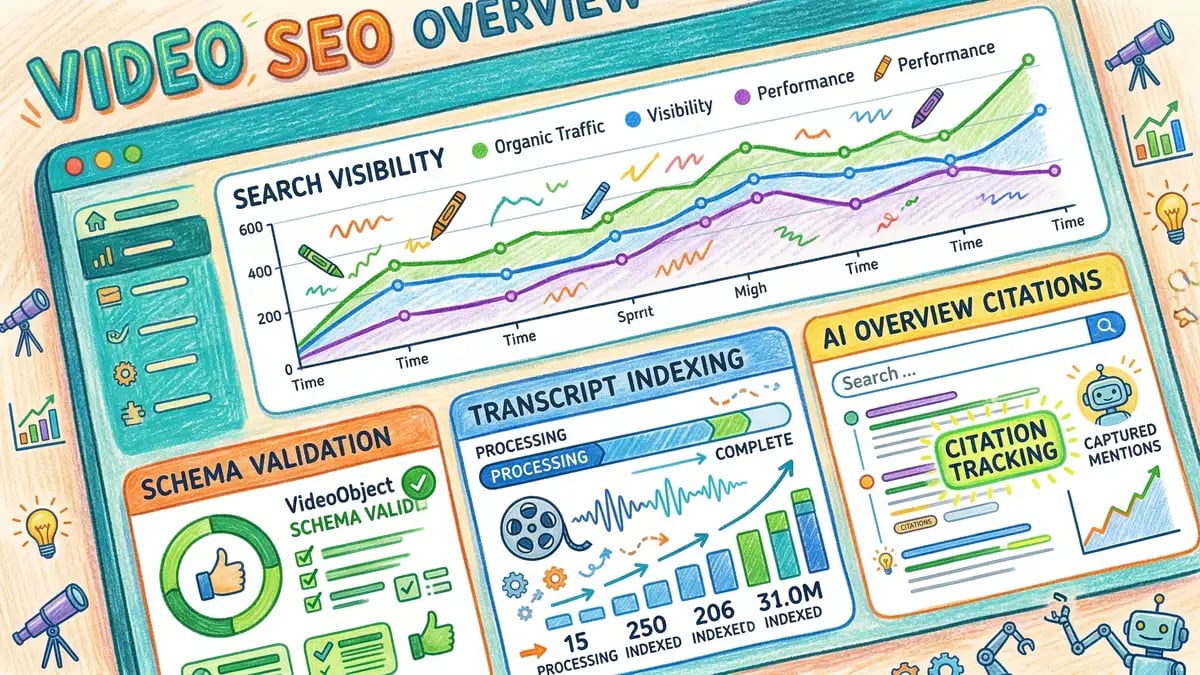
File size matters more than resolution. A well-compressed 15MB 1080p video will outperform a bloated 200MB file. Aim for 5-8 Mbps bitrate for 1080p content. Additionally, create captions and transcripts not just for accessibility, but for SEO. Search engines index text content, and captions increase engagement by up to 80% for viewers watching without sound—which is common on social media.
Consider using adaptive bitrate streaming for longer videos. This technology automatically adjusts video quality based on viewer connection speed, reducing buffering and abandonment. Platforms like Vimeo Pro, Wistia, and HubSpot Video Host handle this automatically, eliminating the technical complexity.
| Setting | Resolution | Bitrate | Recommended Use Case |
|---|---|---|---|
| Mobile-First | 1280×720px (720p) | 3-4 Mbps | Social media clips, Stories, short-form content |
| Standard B2B | 1920×1080px (1080p) | 5-8 Mbps | Product demos, educational videos, landing pages |
| Premium/4K | 3840×2160px (4K) | 15-25 Mbps | Brand films, executive presentations, premium content |
| Webinar/Live | 1920×1080px (1080p) | 4-6 Mbps (adaptive) | Live events, webinars, interactive presentations |
Sources: BrightEdge Video Optimisation Guide 2025, Wistia Video Best Practices
Webinar Model: The High-ROI Video Format
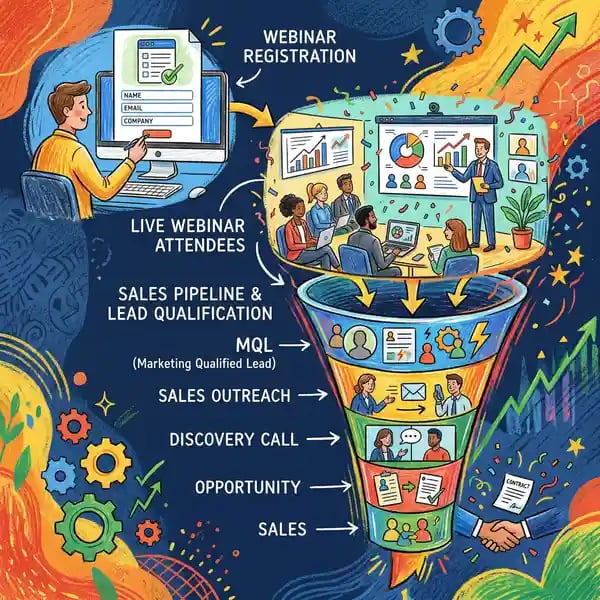
While short-form video is essential, webinars remain the highest-ROI video format for B2B lead generation. A single well-executed webinar can generate 50-200 qualified leads, with conversion rates sometimes exceeding 15% depending on topic relevance and audience quality.
The webinar advantage lies in engagement depth and data collection. Attendees voluntarily register, confirming that they are genuinely interested in your topic. During the session, interactive features (polls, Q&A, chat) create engagement opportunities. Post-webinar, you own the attendee data and can follow up with additional content.
The ROI extends beyond lead count. Webinar recordings serve as evergreen content assets. Repurposed into clips, they fuel social media strategies for weeks. The full recording becomes an educational resource that drives organic search traffic. Some organisations report that a single webinar generates more long-term value through organic search than the live event itself.
The Bottom Line
Webinars bridge the gap between brand awareness and sales conversations. They build trust, demonstrate expertise, and generate data. In B2B, where buying cycles are long and purchase decisions are complex, webinars remain unmatched for their ability to nurture prospects toward conversion.
Common Video Marketing Mistakes and How to Avoid Them
The Cost of Getting It Wrong
Common mistake: Creating videos without clear goals or measurement plans. Many organisations produce videos hoping they will generate leads without tracking actual ROI or optimising based on performance data.
The reality: Unmeasured video strategies lead to wasted budgets. Without conversion tracking and audience analysis, you cannot optimise your approach, leading to diminishing returns over time.
Beyond measurement issues, many organisations stumble with production quality. Poor lighting, bad audio, and unprepared presenters signal lack of investment and reduce viewer trust — our video marketing tips playbook covers the essential production checklist. This is particularly damaging in B2B, where professional standards are high.
Another common mistake: ignoring platform-specific best practices. A LinkedIn video that works beautifully won't perform on TikTok. Video length, style, captions, and calls-to-action need platform customization. Uploading the same 10-minute video everywhere guarantees poor performance on most platforms.
Finally, many organisations neglect SEO fundamentals. Videos without transcripts, optimised titles, and descriptions miss organic search opportunities. A video that ranks well in YouTube search can drive traffic for years, while an un-optimised video disappears into obscurity.
Frequently Asked Questions
How long should B2B videos be?
Length depends on video type and platform. Product demos work best at 30 seconds to 3 minutes; educational content at 3-8 minutes; webinars at 45-60 minutes; LinkedIn videos at 1-3 minutes; YouTube videos at 5-12 minutes for new channels (longer audiences develop over time). Always test and measure what your audience responds to.
What video hosting platform is best for B2B marketing?
For lead generation and detailed analytics: Wistia or Vimeo Pro. For SEO and organic search: YouTube. For sales enablement and tracking: HubSpot Video Host or Vidyard. For webinars: Zoom, Hopin, or ON24. Most mature strategies use multiple platforms—YouTube for organic discovery, Wistia for conversion tracking, and LinkedIn for direct outreach.
How much budget do I need to start a video strategy?
You can start with minimal investment: a quality USB microphone (£50-150), LED lighting (£30-100), and a smartphone or basic camera. As your strategy matures, invest in editing software (£15-50/month) or hire freelance editors. For professional production, expect £500-2,000+ per video depending on complexity. Start small, measure results, then scale investment based on ROI.
How do I measure video marketing ROI?
Track key metrics: watch time, click-through rate (CTR), conversion rate, cost per lead, and lead quality. Use UTM parameters to identify which videos drive qualified leads. Set up conversion tracking in your analytics platform. Calculate ROI as (Revenue from Video Leads – Video Production Cost) / Video Production Cost. Monitor monthly and adjust your strategy based on data.
Should I use YouTube or LinkedIn for B2B video marketing?
Use both, but for different purposes. LinkedIn is best for reaching decision-makers directly and building thought leadership. YouTube is best for long-form educational content and organic search traffic. A balanced approach: long-form content on YouTube (optimised for SEO), clips and thought leadership on LinkedIn, short-form content on TikTok. The algorithm favours native uploads, so avoid just linking to YouTube from LinkedIn.
What is the difference between evergreen and timely video content?
Evergreen content (how-tos, product explanations, industry insights) stays relevant indefinitely and drives consistent long-term traffic. Timely content (news, events, product launches) attracts immediate attention but loses relevance quickly. Best practices: 70% evergreen, 30% timely. This ensures a consistent stream of organic traffic while maintaining audience interest with current topics.
Final Thoughts: The Future of B2B Video Marketing
Video marketing is no longer optional in B2B. The organisations that master this format will dominate their industries. As algorithms increasingly favour video content, the competitive disadvantage of ignoring video only grows larger.
The good news: you do not need massive budgets or complex production capabilities to get started. Begin with strategy and measurement. Create content that serves your audience first. Invest in quality where it matters (audio, lighting, presenter comfort). Track results ruthlessly. Then scale based on what works.
The organisations starting their video journey today will be the category leaders tomorrow. The question is not whether to invest in video—it is when to start and how aggressively to scale. For the full strategic framework covering everything from lead generation to ROI measurement, start with our complete B2B video marketing guide.
Ready to build a winning video strategy?
Our SEO experts help B2B organisations create integrated video strategies that drive leads and build authority. From strategy through measurement, we guide you every step of the way.
Clwyd Probert
SEO Specialist, Whitehat SEO
Clwyd specialises in content strategy and AEO optimisation for enterprise B2B clients. He has helped over 50 organisations build integrated video strategies that drive measurable lead growth. When not analysing video metrics, he can be found exploring new SEO technologies and competitive intelligence methods.
Sources: Wyzowl Video Marketing Report 2025, HubSpot State of Marketing 2025, BrightEdge Content Engagement Study 2025, IAB UK Video Advertising Report 2025