
A landing page is a standalone web page designed with a single conversion goal in mind—whether that's capturing an email address, booking a demo, or completing a purchase. Unlike your website homepage (which serves multiple audiences), a landing page targets one specific audience segment with a focused message, removing navigation distractions to drive action. In 2026, median B2B landing page conversion rates sit at 6.6%, but top-performing pages exceed 11%, demonstrating that design, messaging, and user experience matter enormously.
This guide covers everything you need to know about creating high-converting B2B landing pages—from essential elements and technical performance to HubSpot implementation and AI-powered optimisation. Whether you're a SaaS marketer, enterprise communications team, or agency running campaigns for clients, you'll find proven strategies grounded in 2026 benchmarks and real-world data.
6.6%
Median Conversion
Average B2B landing page
11%+
Top Performers
Top 10% of pages exceed this
120%
Form Lift
Multi-step forms vs. single-field
24%
Less Abandonment
Pages meeting Core Web Vitals
Sources: Unbounce 2026 Conversion Benchmark Report, Google Core Web Vitals Research 2026
Landing Page vs. Website Page: What's the Difference?
Many businesses confuse landing pages with regular website pages, but they serve fundamentally different purposes. A website page (like your Services or About pages) is designed to inform, build trust, and guide visitors through multiple pathways—customers might read, explore, navigate elsewhere, or convert. A landing page, by contrast, eliminates friction by removing global navigation, hiding the company logo, and stripping away alternative links. Every element on a landing page—headline, form, CTA, social proof—exists to move one specific visitor segment toward one specific action.
This focused design approach is why landing pages convert 2–3× better than website pages when campaign messaging aligns with the page content. Your homepage gets traffic from a broad mix of sources and intents; your landing page gets traffic from a single campaign with a clear promise, matched by the page content itself.
Industry Benchmarks: What Should You Expect?
Landing page conversion rates vary significantly by industry, campaign type, and audience. Use these 2026 benchmarks to evaluate your own performance and set realistic targets:
| Industry | Median Conversion | Top 25% | Key Success Driver |
|---|---|---|---|
| SaaS | 3.8% | 9.2% | Free trial offer + social proof |
| B2B Services | 6.6% | 13.1% | Case studies + case logic |
| Financial Services | 16.3% | 24.8% | Trust signals + calculators |
| Legal Services | 8.4% | 15.2% | Attorney credentials + testimonials |
| E-commerce | 2.1% | 6.3% | Product imagery + shipping clarity |
Source: DataBox 2026 Landing Page Benchmark Report, HubSpot Q1 2026 Conversion Study
Key Takeaway
If your landing page converts below your industry median, focus first on message alignment (does your copy match the traffic source?) and form friction (can you reduce fields?). Technical optimisation (speed, mobile) comes second. Most underperforming pages fail on clarity, not polish.
The Five Essential Elements of a High-Converting Landing Page
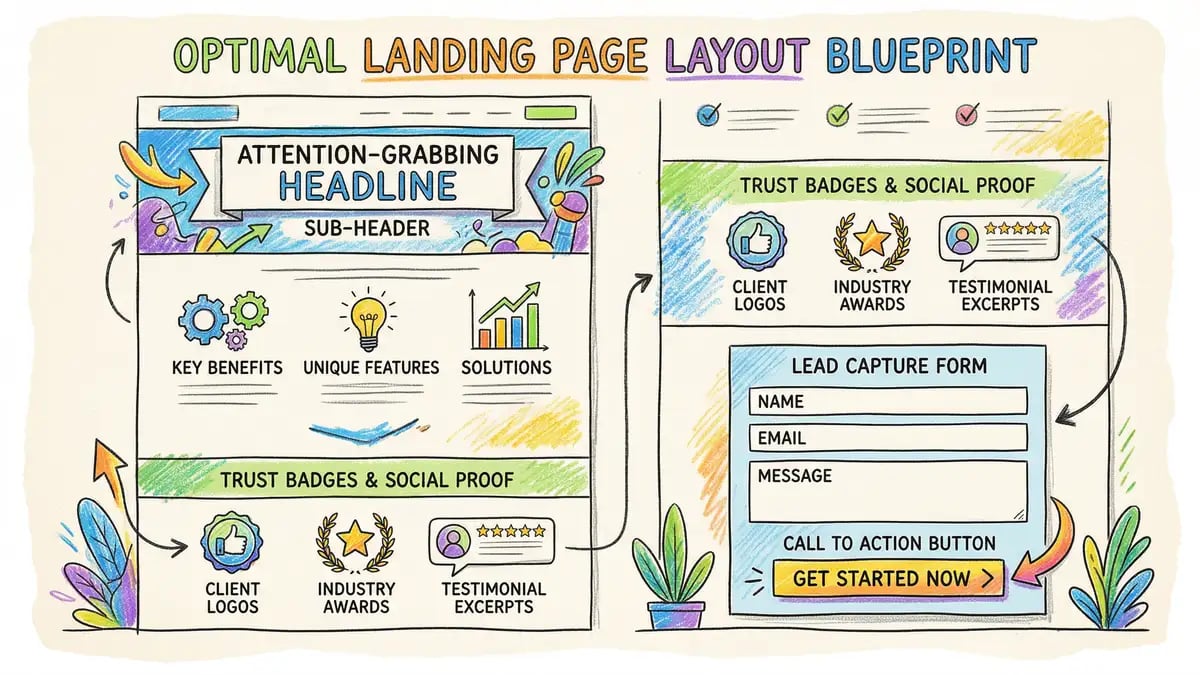
Every landing page needs a focused headline, a form or CTA, social proof, and value messaging. But sequencing and clarity separate the good from the great:
1. Headline: Make Your Promise Clear (Above the Fold)
Your headline is the first thing visitors see. It must immediately communicate the benefit, not the feature. "Generate 10X More Leads" beats "Lead Generation Platform" every time. Use numbers, specificity, and outcome-focused language. Your headline should answer: "What's in it for me?"
2. Form: Reduce Friction, Increase Conversions
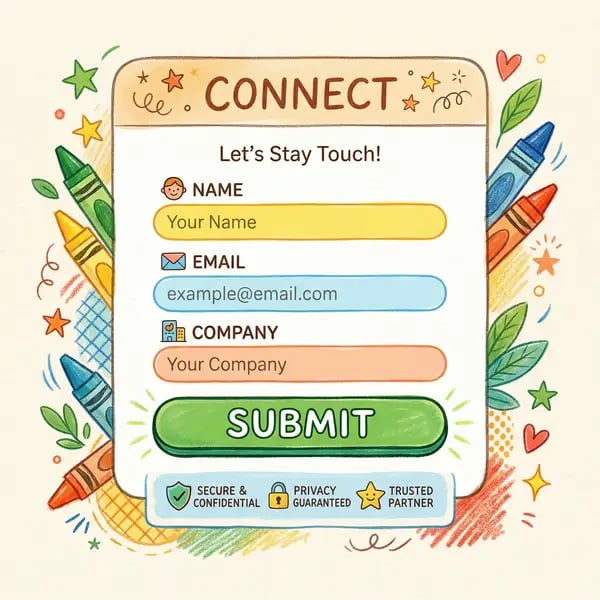
Form length is a proven conversion lever. Single-field forms (email only) convert best initially, but multi-step forms—which ask for name, company, phone separately—convert 120% higher overall. The trick: use progressive profiling. On first visit, ask only for email. On return visits, ask incrementally for phone, company, and role.
HubSpot's form builder supports progressive profiling natively, and you can hide the global form submission button to encourage page scrolling before asking for contact details. Position the form on the right side of your page (or centre on mobile) to maximise visibility.
3. Call-to-Action (CTA) Button
Your CTA button text should be action-oriented and benefit-focused. "Get Free Demo" outperforms "Submit." Place your primary CTA above the fold and repeat it 2–3 times down the page (end of each major section). Use high-contrast colours—our primary blue (#1a3a5c) stands out against light backgrounds.
4. Social Proof: Build Credibility
Display 2–3 customer logos, a short testimonial, or your star rating prominently. B2B visitors trust peer validation more than branded claims. If you're new and lack testimonials, display media mentions, certifications, or industry awards instead.
Page Speed & Core Web Vitals: The Conversion Killer You Can't Ignore
A one-second delay in page load time costs you 7% of conversions. Pages that meet Google's Core Web Vitals thresholds (LCP under 2.5s, CLS under 0.1, FID under 100ms) see 24% less abandonment. Yet 40% of websites fail on Largest Contentful Paint (LCP) and 66% struggle with Cumulative Layout Shift (CLS).
In HubSpot, optimise by: compressing hero images (use WebP format), lazy-loading off-screen images, minifying CSS/JavaScript, and using HubSpot's CDN (enabled by default). Test your page on Google PageSpeed Insights after publishing.
The Cost of Slow Pages
Common mistake: Publishing landing pages with unoptimised hero images (4MB+), embedded videos, or third-party tracking scripts that block page rendering.
The reality: Pages above 3 seconds load time lose measurably. Mobile visitors—58.67% of global traffic—abandon within 4 seconds. Use lazy-loading for images below the fold and defer non-critical JavaScript.
Building Your Landing Page in HubSpot: 5 Steps
HubSpot's landing page builder makes it straightforward to create responsive, high-converting pages without coding. Here's the playbook:
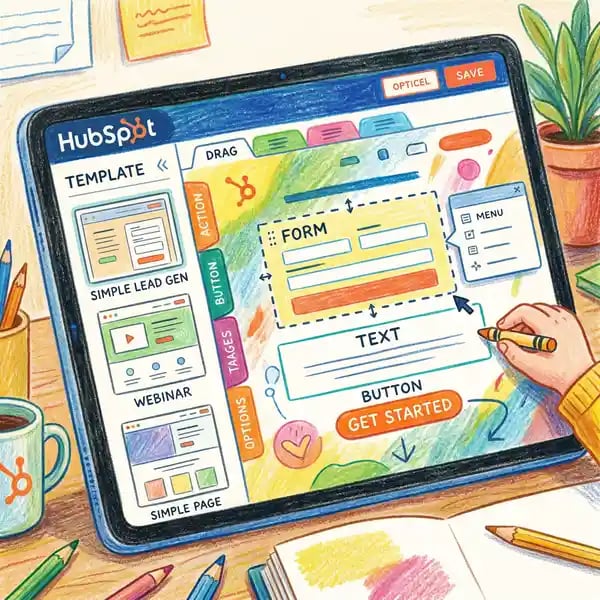
Choose a Template or Start Blank
HubSpot provides 50+ pre-designed templates. If converting from an existing page, start blank and build custom. If creating new, templates save time.
Configure Your Form
Add fields (email, name, company, phone) and enable progressive profiling. Set your form submission action: create a contact, enrol in a workflow, or redirect to a thank you page.
Add Your Content & Images
Drag in text, image, and form modules. Use HubSpot's image module (not the raw HTML module) for images so they compress automatically and lazy-load on mobile.
Customise Settings & Metadata
Set your page URL slug, meta title, meta description, and favicon. Disable the HubSpot header/footer if you're creating a focused landing page (Settings → Page Style).
Publish & Integrate with Your Campaign
Publish to live. Copy your landing page URL into your email campaign, ads, or social post. Ensure your campaign source/medium parameters are set so HubSpot tracks the origin.
AI-Powered Landing Page Optimisation (2026 Update)
In 2026, AI tools are moving beyond A/B testing into dynamic page personalisation. Unbounce's Smart Traffic feature uses machine learning to allocate visitors to the best-performing variant automatically, then tests headlines, CTAs, and form fields continuously. After just 50 visitors, it begins optimising; pages typically see 30% conversion lift within two weeks.
HubSpot Q1 2026 updates include buyer intent enrichment (detecting high-intent signals from visitor behaviour), AI-powered outreach (auto-personalising follow-up emails), and Claude AI integration for custom field population based on form submissions. Here's how leading tools stack up:
| Tool | AI Capability | HubSpot Integration | Best For |
|---|---|---|---|
| Unbounce | Smart Traffic (auto-optimisation) | Native API sync | Rapid A/B testing at scale; enterprise campaigns |
| HubSpot Native | Buyer intent, Claude integration | Built-in (no setup) | Small-mid teams; contact enrichment |
| Convert Experiences | Multivariate testing + AI recommendations | Zapier + custom webhooks | Conversion-rate optimisation agencies |
| Dynamic Yield | Real-time personalisation + predictive ML | Segment sync, lead routing | Enterprise SaaS; real-time personalisation |
Source: G2 Reviews 2026, HubSpot Product Roadmap Q1 2026
B2B Best Practices: Message Match & Buyer Alignment
The #1 reason B2B landing pages underperform? Message mismatch. A visitor clicks an email link promising "Free ROI Calculator" but lands on a page asking for a demo. That friction kills conversion instantly. Your landing page headline and offer must mirror exactly what the traffic source promised.
Traffic source: Email (newsletter blast)
Email headline: "Benchmark Your Marketing Stack Against 500+ SaaS Companies"
Landing page headline (must match): "See How Your Stack Compares"
Form offer: Gated benchmark report
Traffic source: Paid search (branded keyword)
Ad headline: "Free HubSpot CRM Setup Guide"
Landing page headline (must match): "Your HubSpot CRM Setup Checklist"
Form offer: Downloadable PDF checklist
Email traffic converts 77% better than paid search (3.3% vs 3.2%) because email audiences are warm. Your landing pages targeting email should have warmer copy, shorter forms, and faster CTAs. Paid search visitors are cold and need more proof—add case studies, testimonials, and star ratings above the form.
Need a custom landing page for your campaign? Whitehat's web design team can build conversion-optimised pages built on your brand and messaging.
Explore Web Design ServicesA/B Testing: Your Continuous Improvement Engine
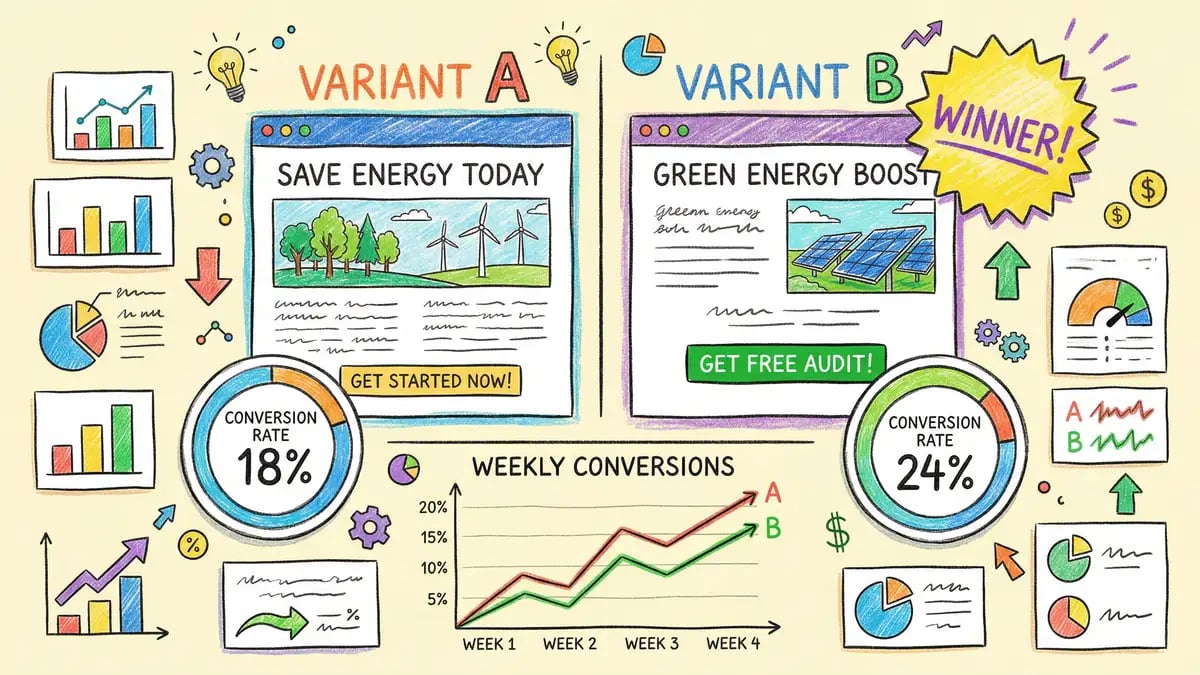
Landing pages aren't "set and forget." The best performers test constantly—headlines, CTA button colours, form fields, and social proof placement. HubSpot's A/B testing lets you run controlled experiments on live pages without affecting your primary URL.
Your testing roadmap:
- Week 1–2: Test headline variations (outcome-focused vs. curiosity-driven). Run 50/50 split; measure for 2 weeks.
- Week 3–4: Test CTA button text ("Get Demo" vs. "Start Free Trial"). Keep winning headline from Week 1.
- Week 5+: Test form field count (3 fields vs. 4 fields) and social proof placement (above or below the form).
Statistical significance: always run tests long enough to achieve 100+ conversions per variant before declaring a winner. Minor wins (2–3%) are noise.
Don't Forget: Thank You Page & Nurture Sequences
The conversion doesn't end on your landing page. Create a thank you page that appears after form submission—offer the promised asset (PDF, calculator, demo link), cross-promote related resources, and begin your nurture sequence.
In HubSpot, set your form's post-submission action to "Redirect to URL" (point to your thank you page). Use HubSpot Workflows to automatically send a confirmation email, add the contact to a nurture sequence, and assign to sales if they're high-intent. This closes the feedback loop and keeps momentum.
Frequently Asked Questions
How long should a landing page be?
For B2B, aim for 800–1,500 words (2–4 minutes read time). Complex products (software, consulting) need more space to build credibility; simple offers (webinar, checklist) work at 400–600 words. Above all, prioritise clarity over length.
Should my landing page have a navigation menu?
No. Landing pages should remove global navigation (header, footer menu links) to prevent visitors from clicking away. Keep only the page content and form. Your analytics will confirm this drives higher conversion rates.
How many CTAs should I have?
Place one primary CTA (button) above the fold and repeat it 2–3 times throughout the page (after each major section). Use the same button label and link target across all instances. Consistency beats variety.
Can I run landing page campaigns on LinkedIn?
Yes, but LinkedIn Ads that lead to external landing pages see lower conversion rates (1.5–2%) because users prefer staying within LinkedIn. Use LinkedIn Lead Gen Forms (embeds form directly in the ad) for 3–4× better results.
How do I track conversions from different traffic sources?
Use UTM parameters on all external links (utm_source, utm_medium, utm_campaign). HubSpot tracks these automatically in the contact record. Filter your analytics by traffic source to compare conversion rates: organic vs. email vs. paid vs. social.
Should I use video on landing pages?
Videos increase engagement but can hurt conversion if autoplay is enabled or file size is large (impacts Core Web Vitals). Use short (under 2 min), hosted on YouTube/Vimeo, and set autoplay to off. Embed testimonial or explainer videos above the form only.
Ready to Transform Your Marketing with High-Converting Landing Pages?
Whitehat's HubSpot experts can build custom landing pages that convert, optimise your existing pages with A/B testing, and integrate them seamlessly into your campaigns. Get your landing pages converting at the top 10% performance level.
Clwyd Probert
Founder, Whitehat
Clwyd founded Whitehat in 2011 and became a HubSpot Platinum Partner in 2016. He specialises in B2B demand generation, landing page optimisation, and full-funnel marketing automation. Clwyd has helped 100+ companies build conversion-focused landing pages and scale their marketing operations on HubSpot.