
Last updated: June 2026
A digital marketing agency plans, executes, and optimises online marketing campaigns to increase visibility, generate leads, and drive revenue for businesses. Core services typically include SEO, paid advertising, content marketing, social media management, web design, and marketing automation. UK businesses typically invest £3,000–£15,000 per month depending on scope and objectives.
The UK digital advertising market reached £35.5 billion in 2024, with online formats now accounting for four in every five pounds spent on advertising, according to IAB UK research. For B2B companies navigating this landscape, the question isn't whether to invest in digital marketing — it's whether to build capabilities in-house or partner with a specialist agency.
This guide explains exactly what digital marketing agencies do, what services they offer, how much they cost in the UK market in 2026, and how to decide whether an agency partnership makes sense for your business. Whether you're a marketing director evaluating options or a business owner considering your first agency engagement, you'll find the evidence-based detail you need to make an informed decision.
Key Takeaway
A digital marketing agency gives you specialist expertise across SEO, PPC, content, and automation without the cost of hiring a full in-house team. UK SMEs typically save 40–70% versus building the equivalent capability internally, while gaining faster results and access to tools worth tens of thousands of pounds a year. The right partner connects every campaign to pipeline and revenue — not just traffic.
£35.5bn
UK digital ad market
Four in five ad pounds now spent online (2024)
7.8%
Revenue spent on marketing
2026 average (Gartner CMO Spend Survey)
46%
UK firms outsource marketing
Rising to 50% among B2B companies
15.3%
Of budgets now on AI
Marketing's fastest-growing line (2026)
Sources: IAB UK Digital Adspend 2024; Gartner 2026 CMO Spend Survey; Limelight Digital UK Outsourcing Statistics 2026.
What services do digital marketing agencies provide?
Digital marketing agencies offer specialist expertise across multiple disciplines that would be difficult and expensive to replicate in-house. The most common services fall into several interconnected categories, each contributing to a cohesive strategy.
Search Engine Optimisation (SEO) improves your website's visibility in organic search results. According to First Page Sage research, SEO delivers average returns of 702–1,389% depending on industry, making it one of the highest-ROI marketing investments available. Whitehat's SEO services combine technical optimisation, content strategy, and authority building to drive sustainable organic growth.
Pay-Per-Click Advertising (PPC) delivers immediate visibility through paid placements on Google, LinkedIn, and other platforms. While PPC provides faster results than SEO, costs continue to climb — the average UK Google Search CPC reached around £2.69 in 2026, and competition keeps rising. Effective PPC management requires constant optimisation to protect returns.
Content Marketing attracts and engages prospects through valuable, relevant content. Companies that blog regularly generate 55% more website visitors according to HubSpot research, while content marketing costs significantly less than traditional marketing and generates roughly three times as many leads.
Marketing Automation and CRM Implementation connect these activities into a measurable system. Platforms like HubSpot enable lead nurturing, email automation, and attribution tracking that proves marketing ROI — critical when only around half of CMOs can confidently demonstrate marketing value to their boards. As a HubSpot Diamond Partner, Whitehat specialises in implementations that connect marketing activity directly to pipeline and revenue.
Answer Engine Optimisation (AEO) is the newest frontier. With AI assistants reshaping how people research and buy, optimising for engines like ChatGPT, Perplexity, and Google AI Overviews has become essential — not optional. Whitehat's AEO services help businesses get cited and recommended in AI-generated answers, protecting visibility as search behaviour shifts.

How much does a digital marketing agency cost in the UK in 2026?
Agency pricing in the UK varies significantly based on scope, expertise, and location. Understanding current market rates helps you evaluate proposals fairly and avoid both overpriced and suspiciously cheap options.
| Service | Monthly retainer | Typical scope |
|---|---|---|
| SEO | £1,000–£5,000 | Technical, on-page, content |
| PPC Management | £1,000–£3,000 + ad spend | Google Ads, LinkedIn Ads |
| Content Marketing | £1,200–£6,000 | Strategy, production, distribution |
| Full-Service | £3,500–£15,000+ | Integrated marketing programme |
Sources: Creative Marketing Ltd UK Digital Marketing Costs 2026; InfluenceFlow Agency Pricing Guide 2026.
London agencies typically command a 30–40% premium over regional competitors, though this gap has narrowed as remote working has widened access to talent. According to the Gartner 2026 CMO Spend Survey, marketing budgets now average 7.8% of company revenue — up marginally from 7.7% in 2025 — with organisations that scale AI well allocating closer to 8.9%. This benchmark helps contextualise agency investment: a company with £5 million revenue might reasonably allocate around £390,000 annually to marketing, with a meaningful portion directed to agency partnerships.
Agency partnership vs in-house team: which is right?

The decision between agency partnership and in-house capability depends on your circumstances, but the economics often favour agencies — particularly for SMEs. A four-person in-house marketing team (manager, SEO specialist, content writer, paid media specialist) costs approximately £320,000–£380,000 annually once you factor in salaries, employer National Insurance, benefits, tools, training, and overhead.
An equivalent agency retainer delivering comparable services typically ranges from £60,000–£180,000 annually — a potential saving of 40–70%. Beyond cost, agencies offer faster time-to-results (2–4 weeks versus 3–6 months to hire and onboard staff), access to specialist tools worth £30,000–£75,000 annually, and the ability to scale up or down without redundancy considerations.
Research shows that 46% of UK companies now outsource some marketing functions, with B2B companies slightly more likely to outsource (50%) than B2C (41%) — a figure expected to keep rising as employer National Insurance costs make in-house teams comparatively more expensive. Whitehat's B2B marketing services are built for companies seeking a partnership that connects marketing activity to measurable business outcomes — pipeline generated, deals influenced, and revenue attributed.
Weighing up whether an agency is right for your business? Our team can audit your current marketing and identify quick wins with our B2B marketing services.
Explore Marketing ServicesHow do you choose the right digital marketing agency?
Selecting an agency partner requires careful evaluation beyond impressive pitches and creative portfolios. The UK hosts thousands of digital agencies, making differentiation difficult. Focus your evaluation on three factors that reliably separate strategic partners from order-takers.
Verifiable certifications and partnerships
HubSpot partner tiers (Gold, Platinum, Diamond, Elite) and Google Partner / Premier status indicate demonstrated client success and platform expertise. These credentials can be checked directly through the official partner directories.
Industry-specific experience
An agency that understands B2B SaaS sales cycles, professional-services buying behaviour, or your sector's compliance requirements will deliver results faster than a generalist learning your market from scratch. Ask for case studies from similar clients with quantified results.
Transparent reporting and attribution
Agencies should connect activity to business outcomes — pipeline generated, not just traffic and impressions. With many CMOs still struggling to prove marketing ROI, choosing a partner that prioritises attribution is the difference between budget growth and budget cuts.
For a deeper walk-through of the selection process, read our guide on how to hire a digital marketing agency.
What are the warning signs of a bad agency?
Red flags to watch for
Guaranteed rankings or viral results: no legitimate agency can guarantee specific Google positions or viral outcomes. Real digital marketing requires testing, iteration, and time.
Refusing to give you asset ownership: you should retain full admin access to your website, Google Ads, Analytics, and social accounts. Reluctance here creates dangerous dependency.
Other behaviours that should trigger caution:
- Long lock-in contracts with high exit fees. Quality agencies retain clients through results, not contractual barriers. Seek 30–60 day notice periods rather than 12-month lock-ins.
- Reporting only vanity metrics. Traffic and impressions matter less than leads, opportunities, and revenue. Demand attribution to business outcomes.
- Too-good-to-be-true pricing. Quality marketing requires expertise and time. Suspiciously cheap services often signal inexperienced staff or corners cut on delivery.
The best agency relationships feel like partnerships where both parties share accountability for results. A good agency will push back when it disagrees and tell you what it believes you should do based on experience — not simply execute whatever you request.
How is AI transforming digital marketing agencies?
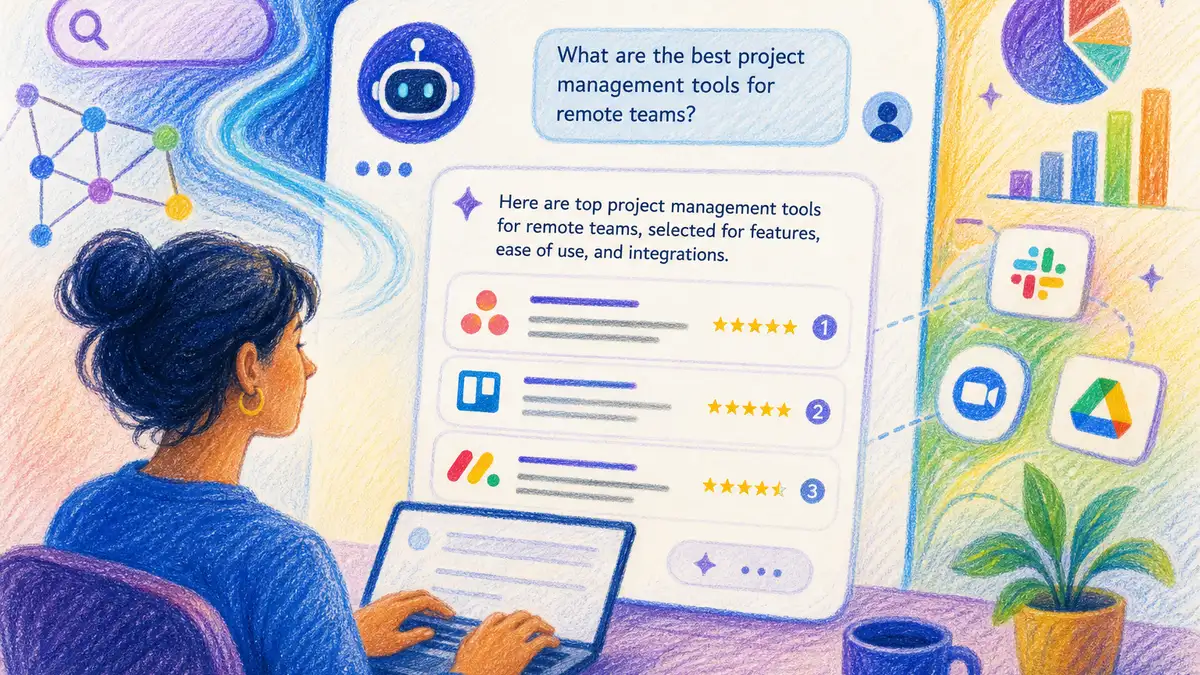
Artificial intelligence has fundamentally changed how digital marketing agencies operate. AI is now marketing's fastest-growing budget line: according to the Gartner 2026 CMO Spend Survey, organisations direct an average of 15.3% of marketing budgets to AI, rising to 21.3% among those best equipped to scale it. The Marketing AI Institute reports the overwhelming majority of marketers now use AI in their daily work.
The most significant shift is the rise of AI-powered search. As users increasingly turn to ChatGPT, Perplexity, and Google AI Overviews to research suppliers, a growing share of buying journeys now begins in an AI answer rather than a traditional results page. This creates both challenge and opportunity for businesses.
Forward-thinking agencies now offer Answer Engine Optimisation (AEO) alongside traditional SEO — ensuring clients get cited and recommended in AI-generated responses, not just ranked in classic search. Whitehat has been at the forefront of this evolution, developing AEO methodologies that help B2B companies hold visibility as search behaviour moves toward AI assistants.
When evaluating agencies, assess their AI capabilities carefully. The differentiator isn't AI adoption itself — nearly every agency now uses generative AI — but how effectively they balance AI efficiency with authentic human creativity while proving business impact.
Frequently asked questions
How much should a small business spend on digital marketing?
UK businesses typically allocate 7–10% of revenue to marketing, with digital representing the majority of that spend. For a company with £1 million turnover, this suggests a marketing budget of £70,000–£100,000 annually, with agency retainers often representing £24,000–£60,000 of that total.
How long before digital marketing shows results?
PPC advertising can generate leads within days of launch. SEO typically shows meaningful results within 3–6 months, with positive ROI achieved at 6–12 months. Content marketing compounds over time, with peak results often occurring in years two and three of consistent investment.
What's the difference between a digital and a traditional marketing agency?
Digital marketing agencies specialise in online channels — SEO, PPC, social media, email, and content. Traditional agencies focus on offline channels like print, TV, radio, and outdoor advertising. Many modern agencies offer integrated services spanning both, though specialists typically deliver stronger results in their core discipline.
Should I hire a specialist agency or a full-service agency?
Specialist agencies deliver deeper expertise in their focus area, while full-service agencies offer convenience and integrated strategy. For most B2B companies, a full-service agency with proven expertise in your priority channels offers the best balance of specialisation and coordination.
What ROI can I expect from a digital marketing agency?
ROI varies significantly by channel and industry. Email marketing commonly delivers around £36–£40 per £1 spent. SEO can return 702–1,389% over three years depending on sector. PPC averages roughly 200% ROI. A good agency should provide realistic projections based on your specific situation and track attribution rigorously.
Do digital marketing agencies help with AI search visibility?
Leading agencies now offer Answer Engine Optimisation (AEO) to help businesses get cited in AI-generated answers from tools like ChatGPT, Perplexity, and Google AI Overviews. With AI taking a growing share of research and buying journeys, AEO is becoming as important as traditional SEO for maintaining visibility.
Taking the next step
Digital marketing agencies help businesses navigate an increasingly complex landscape — from traditional SEO and PPC to emerging channels like AI-powered search. The right partnership delivers not just execution but strategic guidance, specialist expertise, and measurable business results.
Ready to turn marketing from a cost centre into a revenue engine?
Whitehat is a London-based HubSpot Diamond Partner helping UK B2B companies combine SEO, AEO, HubSpot, and paid media into integrated programmes that connect every campaign to pipeline — so you can prove ROI to your board, not just report on activity.
Clwyd Probert
Founder, Whitehat
Clwyd Probert is the founder of Whitehat, a London-based SEO and inbound marketing agency and HubSpot Diamond Partner. He helps UK B2B companies connect SEO, answer engine optimisation, and HubSpot implementation into programmes that generate measurable pipeline.
References
- IAB UK (2025). Digital Adspend 2024: UK's Overall Digital Ad Market Hits £35.5bn
- Gartner / Marketing Dive (2026). AI remains a top priority for CMOs, but spending lags
- Limelight Digital (2026). Outsourcing Statistics 2026 (UK & Global Data)
- Creative Marketing Ltd (2026). How Much Does Digital Marketing Cost in 2026? The Complete UK Guide
- Store Growers (2026). Google Ads Benchmarks 2026
- First Page Sage (2025). SEO ROI Statistics
- HubSpot (2025). 2025 Marketing Statistics, Trends & Data
Sources: IAB UK 2025; Gartner 2026 CMO Spend Survey; Limelight Digital 2026; Creative Marketing Ltd 2026; Store Growers 2026; First Page Sage 2025; HubSpot 2025.
About Whitehat
Whitehat is a London-based HubSpot Diamond Partner and full-service digital marketing agency. We help B2B companies generate qualified leads through integrated SEO, AEO, and marketing automation programmes. Learn more about our team or view our pricing.