
Reputation has shifted from a trust signal to a discovery mechanism. With 94% of B2B buyers now using large language models during their purchase journey and ChatGPT usage as a recommendation tool surging from 6% to 45% in just one year, the entire architecture of reputation marketing is being rebuilt around AI visibility, regulatory compliance, and systematic social proof.
AI answer engines do not just validate businesses anymore — they decide which ones buyers ever see. This guide covers how to build the review infrastructure that earns AI recommendations, based on 2026 research from BrightLocal, G2, 6sense, and Gartner.
the bottom line
Reviews no longer just influence purchase decisions — they function as direct inputs to AI recommendation algorithms. Every review collected, every employee post shared, every crisis response published becomes training data for the algorithms that increasingly mediate B2B buying decisions.
The Numbers Have Changed Dramatically Since 2024
BrightLocal's 2026 Local Consumer Review Survey reveals that 41% of consumers now always read reviews when browsing for businesses — a massive jump from 29% in 2025. The average consumer uses six different review sites, and 97% read reviews before making local purchasing decisions.
For B2B specifically, G2 shows that 82% of B2B buyers consult reviews before purchasing, whilst 77% read user reviews and 54% speak directly with current users. Public product review sites are now the number one consulted information source at 31% of the software buying journey, outweighing vendor narratives and analyst coverage.
| Metric | 2024 | 2026 | Change |
|---|---|---|---|
| Consumers who always read reviews | 29% | 41% | +41% |
| Require 4.5+ star rating | 17% | 31% | +82% |
| ChatGPT used for recommendations | 6% | 45% | +650% |
| B2B buyers consulting reviews | 78% | 82% | +5% |
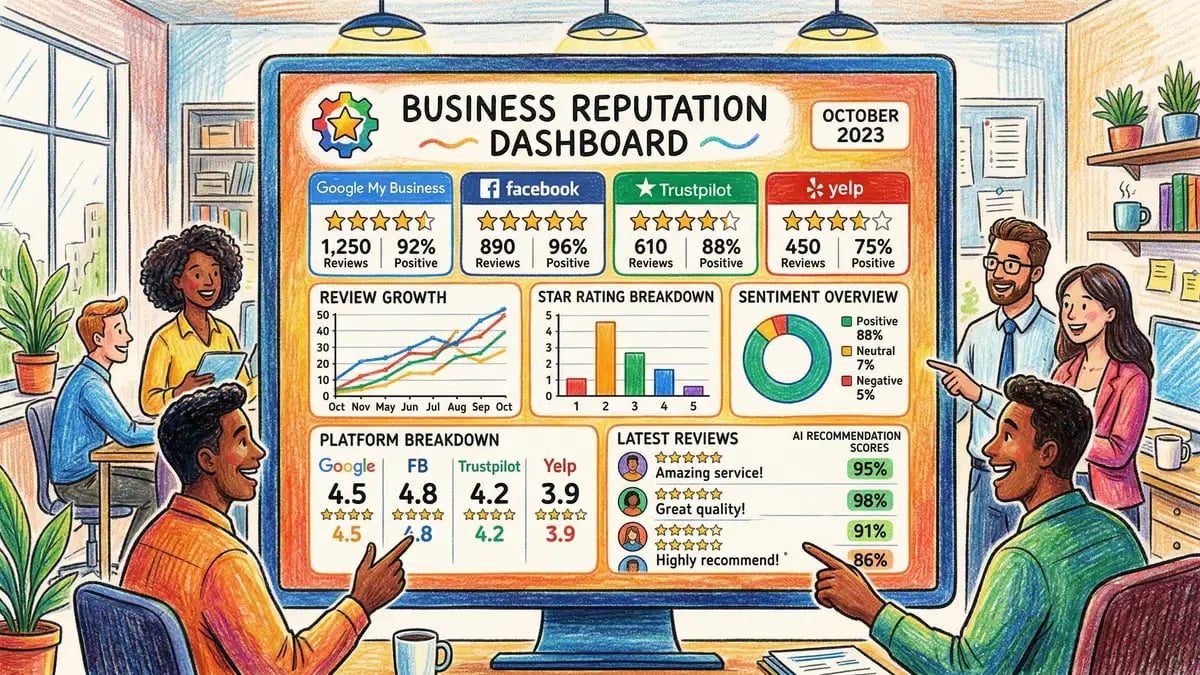
Consumer expectations around ratings have tightened sharply. In 2026, 31% of consumers will only use a business rated 4.5 stars or higher. The optimal conversion sweet spot sits at 4.2–4.5 stars, where trust peaks. Products with a perfect 5.0 rating actually convert comparably to those rated 3.0–3.49 — consumers are suspicious of perfection.
41%
Always Read Reviews
BrightLocal 2026 — up from 29% in 2025
650%
ChatGPT Recommendation Growth
6% to 45% in one year
52%
More Revenue with 9+ Reviews
Per 90-day period
AI Answer Engines Are Rewriting the Rules of Discovery
Gartner forecasts that 25% of traditional search volume will migrate to AI chatbots by 2026. AI-referred web sessions jumped 527% between January and May 2025, and Semrush found that AI search visitors convert 4.4 times more often than traditional organic visitors.
Different AI platforms weight reputation signals distinctly. Analysis of 8,000 AI citations by Rankscale.ai found that ChatGPT leans heavily on Wikipedia (47.9% of factual citations) and domain authority, whilst Google AI Overviews cast a wider net — roughly 43% blogs, 2–5% user-generated content from Reddit and Quora. Brands cited within AI Overviews earn 35% more organic clicks and 91% more paid clicks.
watch out
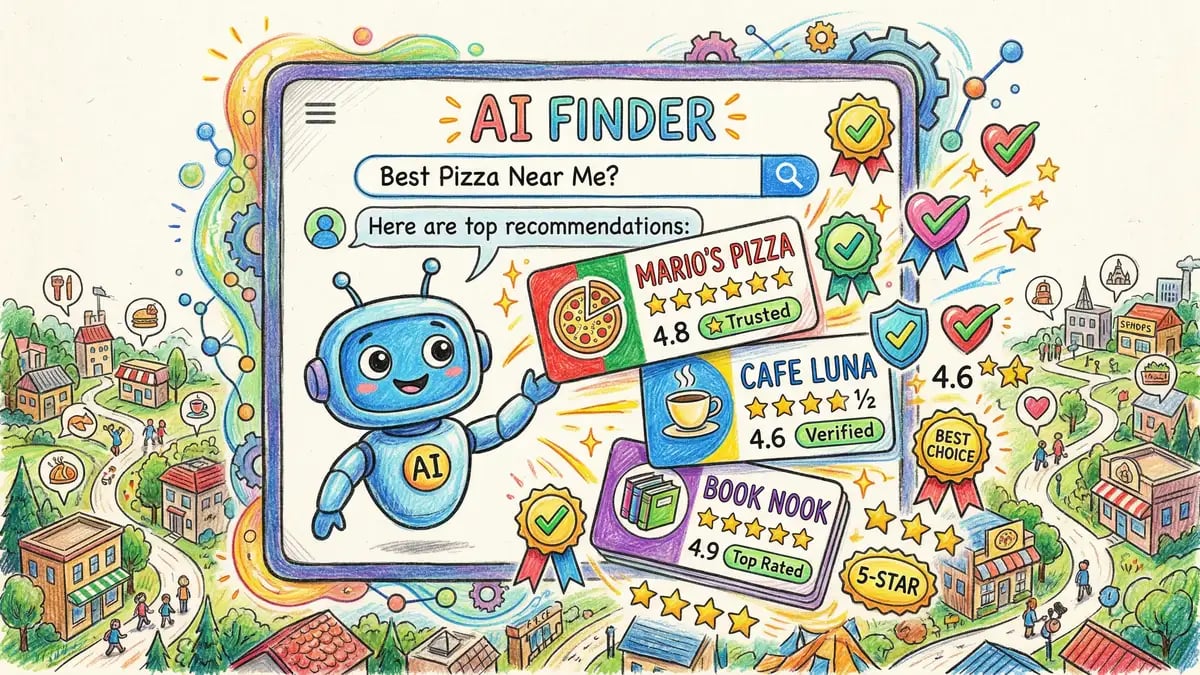
Businesses invisible on review platforms are increasingly invisible to AI — and therefore to buyers. Brand mentions (with or without backlinks), authority, and content clarity are the top three factors for AI visibility according to an Ahrefs study of 75,000 businesses.
Princeton and Georgia Tech research found that adding citations, quotations, and statistics to content can boost AI visibility by up to 40%. Pages with schema markup are 3× more likely to earn AI citations. Whitehat's AEO services help B2B brands structure content for AI extraction.
G2's Mega-Acquisition Reshapes the B2B Review Landscape
G2's announced acquisition of Capterra, Software Advice, and GetApp from Gartner in January 2026 creates a combined platform with approximately 6 million verified reviews reaching 200+ million annual software buyers. The technology review platforms market is valued at £1.2 billion in 2024 and projected to reach £3.5 billion by 2033.
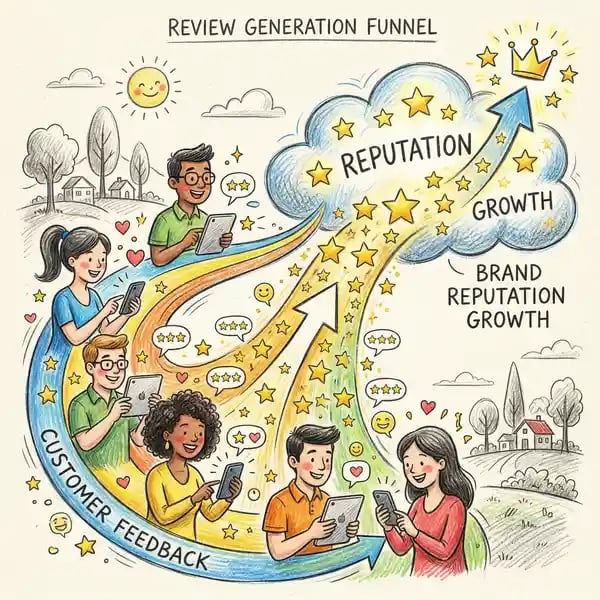
Reddit Has Emerged as a Breakout Reputation Channel
Reddit is now the number two most-visited site via Google search traffic in the US, with over 600 million Google searches per month ending with clicks on Reddit threads. Among tech decision-makers, 72% use Reddit for peer reviews. G2 formalised this shift with an October 2025 partnership allowing G2-listed companies to activate Reddit Pro accounts. Reddit's significance is amplified by its data licensing agreements with OpenAI and Google — Reddit posts now directly train the AI tools buyers use.
The Dark Funnel Dominates B2B Purchase Decisions
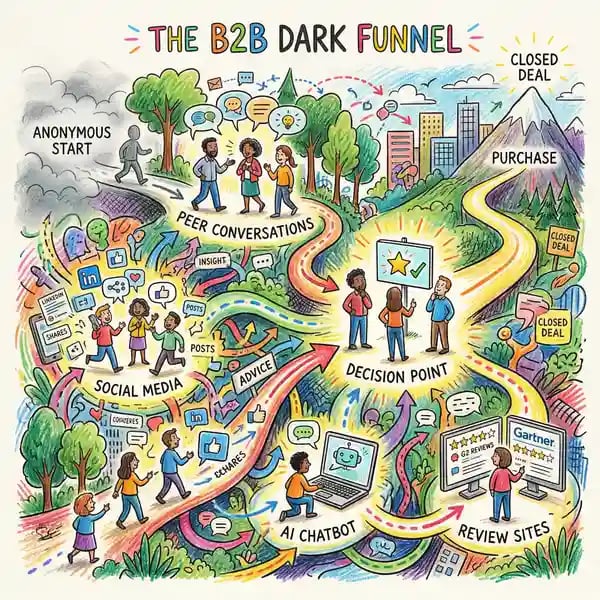
The 6sense 2025 Buyer Experience Report reveals that 95% of the time, the winning vendor is on the buyer's Day One shortlist, and 80% of deals are won by the pre-contact favourite. Buying cycles shortened to an average of 10.1 months, with buyers initiating contact about 61% through the journey — roughly 6–7 weeks earlier than previously.
key takeaway
If your brand is not on the Day One shortlist, you have only a 5% chance of winning the deal
LLMs are summarising your reviews for buyers — whether you have optimised for that or not
The window to influence decisions has compressed by 6–7 weeks compared to 2024
Brand building and review generation are now sales enablement activities
Need help building the review infrastructure that earns AI recommendations? Our team audits your current reputation signals and builds a systematic improvement plan.
Explore Our SEO ServicesTechnology Enables Systematic, CRM-Driven Reputation Workflows
Birdeye (200,000+ businesses, number one on G2 for ORM for 10 consecutive quarters) and Reputation.com lead the enterprise segment with agentic AI systems that autonomously monitor, respond to, and escalate reviews. Birdeye's native HubSpot integration pulls client data based on CRM triggers and automatically sends review request SMS and emails.
The typical CRM-review workflow now operates as follows: a customer transaction closes in HubSpot, triggering the review platform via integration. The platform sends a personalised request with appropriate time delay. Feedback flows to public platforms for positive responses and internal remediation channels for negative ones, with review data syncing back to CRM contact records.
For HubSpot users, Whitehat's HubSpot onboarding services include reputation workflow configuration as standard, ensuring review generation is systematically tied to customer success milestones from day one.
Measuring Reputation Marketing ROI Requires New Frameworks
A one-star increase on review platforms drives 5–9% revenue growth (Harvard Business School). Businesses with 200+ reviews earn 82% more annual revenue, and responding to 100% of reviews versus none improves conversion by 16.4%. But attribution in B2B is inherently complex — buyers interact approximately 36 times before purchase, with buying groups averaging 6.8 stakeholders.
| Metric | Description | Source |
|---|---|---|
| AI Share of Voice | How often your brand is cited in AI responses versus competitors | Emerging — Rankscale.ai, Gauge |
| Review Velocity | Rate of new reviews per 90-day period across key platforms | BrightLocal 2026 |
| Citation Sentiment | Tone and context when your brand appears in AI recommendations | Signal AI, Spotlight |
| Dwell Depth | How thoroughly content is consumed, not just whether it was clicked | Gartner 2025 |
| Meaningful Engagement | Saves, substantive comments, repeat visits (not just views) | LinkedIn/Edelman 2024 |
Five Priorities for the Next 12–18 Months
1. Optimise for AI citation, not just search ranking. Implement structured data (JSON-LD Schema), create extractable content with clear statistics, deploy llms.txt files, and monitor AI visibility. Brand mentions — not just backlinks — are the top factor for AI visibility. See Whitehat's AEO guide for implementation details.
2. Build a systematic review generation engine. CRM-triggered, multi-platform review collection is now table stakes. Target 9+ fresh reviews per 90-day period across G2, Capterra, Trustpilot, and Google. Use NPS scores as triggers — route Promoters directly to review workflows.
3. Invest heavily in employee advocacy and earned media. LinkedIn algorithms increasingly favour people over brands, and AI systems weight third-party validation over owned content. Forrester predicts 75% of enterprise B2B companies will increase influencer relations budgets in 2026.
4. Prepare for regulatory compliance as a competitive advantage. With the CMA's DMCCA enforcement ramping up and fines reaching 10% of global turnover, companies with transparent, ethical review practices will differentiate themselves.
5. Treat crisis management as an AI-era discipline. Unlike traditional search where negative coverage eventually drops off page one, AI systems may surface crisis narratives indefinitely. Build authoritative recovery content proactively and monitor what AI systems say about your brand.
caution
AI systems may surface crisis narratives indefinitely if that coverage dominates available source material. Unlike traditional search, there is no page two for negative results to fall to. Deploy AI monitoring tools that detect brewing crises 30 minutes faster than manual methods.
Frequently Asked Questions
How many reviews do B2B companies need to appear in AI recommendations?
Research shows businesses with 9 or more reviews in the past 90 days earn 52% more than average, and a minimum 4.2-star rating is required to maintain trust. For AI visibility, consistency across multiple platforms (G2, Capterra, Trustpilot) matters more than volume on a single platform.
What is the difference between AEO and traditional SEO for reputation?
Traditional SEO focuses on ranking in search results. Answer Engine Optimisation (AEO) focuses on getting your brand mentioned and recommended within AI answers. AI systems form recommendations based on how frequently and positively a brand appears across their training data, with brand mentions having a 0.65 correlation with AI visibility.
How can HubSpot users automate review collection?
Birdeye and Reputation.com both offer native HubSpot integrations that trigger review requests based on CRM events such as deals marked as closed-won or customer success milestones, routing NPS Promoters to public review platforms whilst channelling Detractors to internal remediation.
Is a perfect 5-star rating better for conversions?
No. Products with a perfect 5.0 rating actually convert comparably to those rated 3.0 to 3.49. PowerReviews found that 46% of all shoppers distrust perfect 5-star ratings. The optimal conversion sweet spot sits at 4.2 to 4.5 stars.
How do AI answer engines decide which brands to recommend?
AI engines synthesise information from review platforms, Reddit discussions, Wikipedia, industry publications, and your own content. They weight brand mentions, sentiment consistency across sources, recency of information, and whether third-party validation supports your claims. Adding statistics, citations, and quotations can boost AI visibility by up to 40%.
Sources: BrightLocal Local Consumer Review Survey 2026 | 6sense B2B Buyer Experience Report 2025 | G2 Buyer Behavior Report 2025 | Gartner Strategic Predictions 2025 | TrustRadius B2B Buying Disconnect Report 2025 | Seer Interactive AI Overview Citation Study 2025 | HubSpot AEO Trends 2026
Ready to Build Your AI Reputation Infrastructure?
Whitehat helps B2B companies integrate reputation workflows into HubSpot, optimise content for AI citation, and build systematic review generation engines.
Clwyd Probert
Founder, Whitehat
Clwyd Probert is the founder of Whitehat, a London-based SEO and inbound marketing agency and HubSpot Diamond Partner since 2016. He leads the world's largest HubSpot User Group and helps UK B2B companies build measurable organic pipelines through evidence-based SEO, AI search optimisation, and reputation strategy.