
The Bottom Line
UK B2B conversion rates vary by sector: professional services average 12.3%, while SaaS typically sits at 1.1–1.2%. The fastest wins come from form optimisation (3–5 fields), page speed improvements (0.1s = 8–10% boost), and A/B testing with proper statistical rigor to avoid false winners.
Conversion rate optimisation (CRO) isn't about vanity metrics. It's about turning your existing traffic into revenue-generating customers. For UK B2B companies, especially those selling professional services or SaaS, even a 1–2% improvement in conversion rate can mean six or seven figures in additional revenue.
This guide walks through the data-backed levers that actually move conversion rates: where your industry stands, what form optimisation does, how page speed impacts revenue, and why A/B testing with proper statistical method beats guesswork every time.
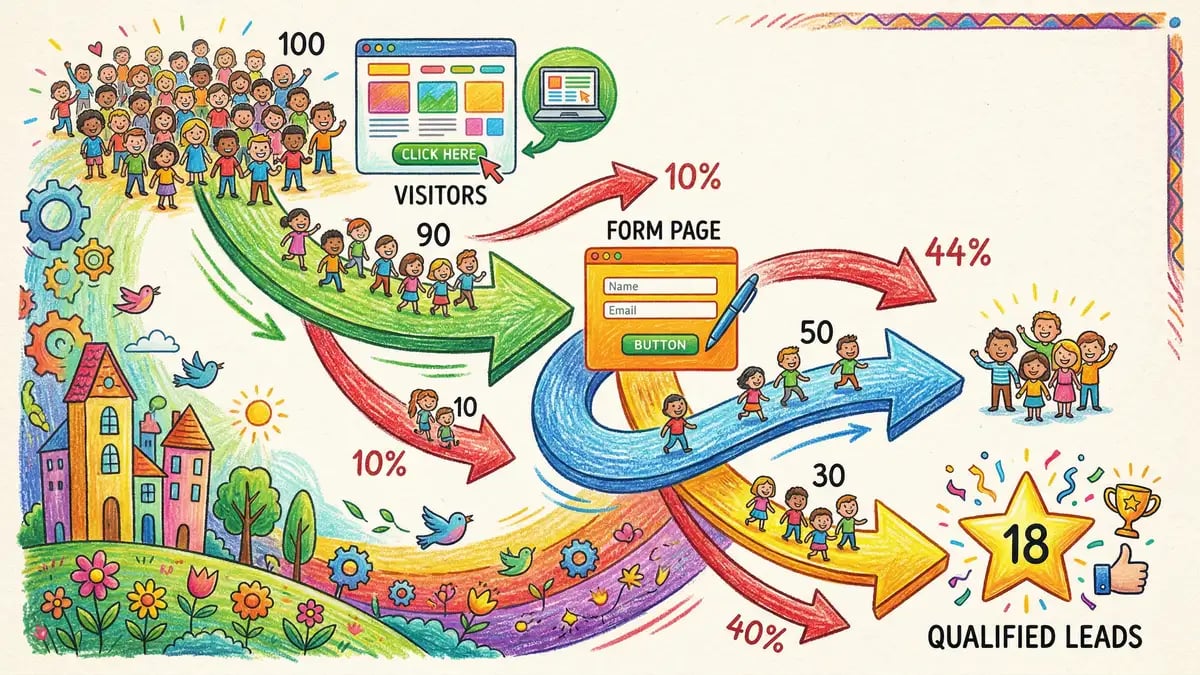
UK B2B Conversion Rate Benchmarks: Where Your Industry Stands
Conversion rates aren't universal. They shift dramatically by sector, business model, and audience sophistication. For UK B2B companies, here's what the data shows:
12.3%
Professional Services
Consultancy, legal, accounting
3.9%
B2B Services
General B2B companies
1.1–1.2%
SaaS
Software as a service
1.6–1.8%
Biotech & Life Sciences
Complex B2B sales
Sources: HubSpot Research 2025, Conversion Rate Experts Benchmarks
If you're a professional services firm sitting at 8%, you have real upside. If you're SaaS at 0.9%, the wins are equally measurable. The key is testing, measuring, and iterating against your own baseline.
Form Optimisation: The Fastest Conversion Lever
Form friction kills conversions. Every field you ask for, every validation error, every page the user has to click through—each one bleeds dropouts. The data on this is clear:
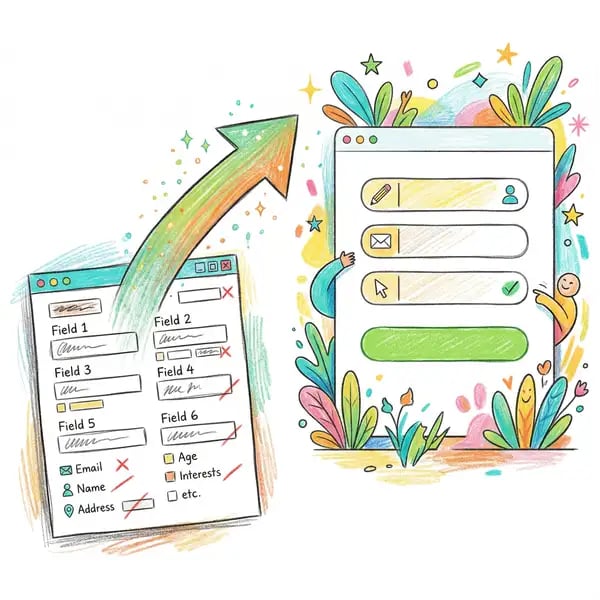
3–5 fields is the ideal sweet spot. Most B2B forms can be completed with first name, email, company, and one qualifying question. More than that and abandonment spikes. Fewer than that and you lose qualifying intel.
Multi-step forms convert 86% higher than single-page forms, especially on mobile. Breaking a 7-field form into two 3–4 field steps feels less daunting and actually increases completion rates. The psychological barrier of scrolling past "field 6 of 7" disappears when the user sees "step 2 of 2".
Remove the phone field unless it's critical. A/B tests show phone-only forms convert 48% better than forms requesting both email and phone. If you need the phone number, ask for it in a follow-up email after the initial capture. This is especially true for UK B2B where email remains the preferred contact method.
Small form changes drive outsized results. We've helped UK B2B clients restructure lead capture and see 15–25% conversion lifts in just 30 days.
Explore Form OptimisationPage Speed and Conversion Rate: The Numbers Are Brutal
Page speed is a conversion lever that CFOs often overlook because engineers own it. Here's why your finance team should care: every 0.1 second improvement in load time correlates with an 8–10% increase in conversion rate.
Real-world case studies show the impact:
| Company | Speed Improvement | Conversion Impact |
|---|---|---|
| Vodafone (UK) | 3.2 seconds faster | 15% conversion increase, £1M+ revenue impact |
| Rakuten | 0.6 seconds faster | 10% conversion lift, 13% revenue increase |
| TUI (UK Travel) | 1.5 seconds faster | 12% booking increase, £7M annual impact |
Sources: Web Performance Working Group, Conversion Rate Experts Case Studies 2024–2025
For B2B, the effect is the same but the psychology differs. Decision-makers expect fast websites. Slow load times signal technical debt and underinvestment. Page speed became a Google ranking factor in 2021 and has only become more influential. Ignore it at your own cost.
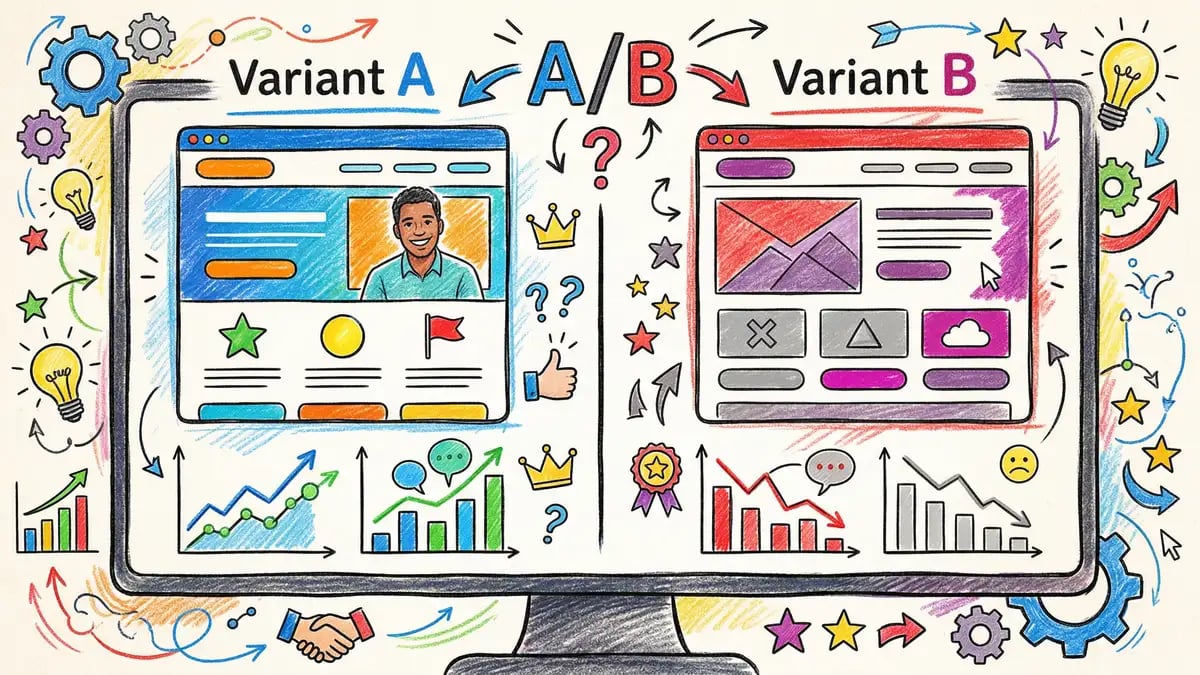
A/B Testing That Actually Works: Avoiding False Winners
The biggest CRO mistake is running too many tests too quickly without proper statistical rigour. Companies see a 5% lift in a test after 2 weeks and declare victory. But here's what the data shows:
The Cost of Getting It Wrong
Common mistake: Running tests for 2 weeks, seeing a 5% lift, and rolling out the winner across all traffic.
The reality: Only 1 in 7.5 tests produce statistically significant results. Of those that appear positive, 31% are false winners that actually underperform long-term. Premature rollout locks you into worse-performing variants.
Here's the right methodology:
Calculate Sample Size
Use a power calculator. For a 2% uplift at 95% confidence, you typically need 5,000–10,000 visitors per variant depending on your baseline conversion rate.
Run for a Minimum of 2 Weeks
This captures day-of-week and time-of-day variations. A test ending on Friday may not represent Monday traffic patterns.
Demand 95% Statistical Confidence
Your test tool should report p-value below 0.05. Anything weaker is noise, not a genuine winner.
Holdback 10% of Traffic for Control
Even after winning tests are rolled out, keep the original variant running at 10% to continuously monitor for regression or seasonal shifts.
Personalisation: The Conversion Multiplier
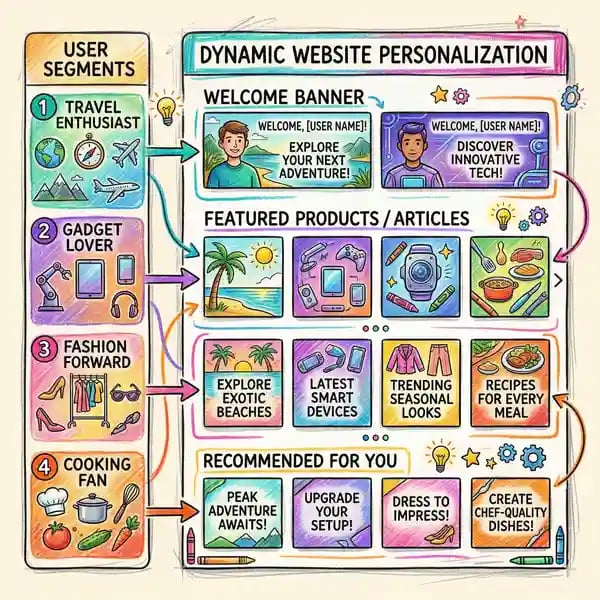
The days of one-size-fits-all web pages are dead. Personalisation isn't just a nice-to-have—it's a conversion engine.
Personalised CTAs convert 202% better than generic ones. A visitor landing from a PPC campaign about "SaaS CRM" should see a CTA about CRM features, not generic "Request a Demo". HubSpot's built-in personalisation tokens make this trivial to implement.
Segmented email campaigns deliver 50% higher conversion rates than broadcast emails. If you're capturing job title on your form (and you should), send consulting-specific content to consultants and marketing-specific content to marketers.
Respect GDPR while personalising. UK data protection law doesn't prohibit personalisation—it requires transparency and consent. Always declare what data you're collecting and how it's used. Cookie consent banners must be genuinely optional; pre-ticked boxes violate GDPR.
AI Chatbots and Live Chat: Modern Conversion Tools
Live chat and AI chatbots remove friction at the moment of hesitation. A visitor lands on your pricing page at 4 PM on a Friday—your sales team is offline, but a chatbot can answer "What's included in the Pro plan?" in seconds.
The data: AI chatbots increase e-commerce conversion by 23%. For B2B, the uplift is often higher because objections are more complex and require immediate answers.
HubSpot's Breeze AI handles this elegantly—it's trained on your knowledge base and can route complex queries to human agents without breaking the conversation thread. Set it up to trigger on pricing pages, form abandonment, and high-value landing pages.
Your 90-Day CRO Quick-Start Roadmap
Month 1: Audit and Quick Wins
Run a conversion audit on your top 10 landing pages. Reduce form fields to 3–5. Fix page speed bottlenecks (images, redirects, third-party scripts). Implement personalised CTAs on high-traffic pages.
Month 2: Testing and Segmentation
Launch 3–4 rigorous A/B tests on CTAs, page layouts, and form copy. Implement email segmentation based on job title or company size. Set up AI chatbots on your three highest-traffic pages.
Month 3: Analysis and Scale
Review test results with 95% confidence threshold. Roll out winners. Measure revenue impact. Plan the next testing cycle. Lock in your 10% holdback traffic on control variants.
Frequently Asked Questions
What's a good B2B conversion rate?
It depends on your sector. Professional services should target 10%+, B2B services 3–5%, and SaaS 1–2%. If you're below these benchmarks, you have immediate upside. If you're at or above, focus on revenue-per-conversion rather than raw volume.
How long should I run an A/B test?
Minimum two weeks to capture day-of-week and time-of-day variation. If your conversion rate is very low (below 0.5%), run for four weeks or until you hit your sample size target (5,000+ visitors per variant). Never stop a test early just because it's positive.
Should my B2B site use multi-step forms?
Yes. Multi-step forms convert 86% higher than single-page forms. Break your form into logical chunks—step 1 collects contact info, step 2 asks about their challenge or use case. The psychological benefit of shorter steps outweighs any data you lose by staging the questions.
Is page speed really that important for B2B?
Yes. B2B decision-makers expect professional experiences. A slow website signals poor technical execution and erodes trust. Every 0.1-second improvement correlates with 8–10% conversion uplift. For a company with 1,000 leads/month and £5,000 ACV, a 10% conversion boost is worth £500k annually.
How do I track conversion rate properly?
Use HubSpot's conversion tracking or Google Analytics 4. Define a clear conversion goal (form submission, demo request, purchase). Segment by traffic source and landing page. Track not just form submissions but also qualified leads (that match your ideal customer profile) to measure true revenue impact.
Does GDPR restrict personalisation?
No, it requires transparency. Personalisation is fine as long as you declare what data you collect and how it's used. Cookie banners must have a genuine "reject all" option (no pre-ticked boxes). When in doubt, consult your legal team, but don't avoid personalisation out of fear—just do it compliantly.
Ready to Optimise Your Conversion Rate?
CRO isn't a one-time project—it's a discipline. Whether you're starting from scratch or optimising an existing funnel, a structured approach beats random testing every time. We'll help you identify your biggest conversion leaks and build a testing roadmap tied to revenue.
Clwyd Probert
Founder, Whitehat SEO
Clwyd has spent 12 years helping UK B2B companies turn traffic into revenue. He's advised everyone from Series B SaaS founders to FTSE 500 firms on conversion strategy, CRO testing, and HubSpot implementation.
Sources: HubSpot Research 2025, Conversion Rate Experts Benchmarks, Web Performance Working Group, Google Analytics Research 2024–2025