
B2B Marketing Strategy
Let's settle this debate once and for all. Google's Gary Illyes has stated unequivocally that Google does not use social signals for search rankings, noting that social links count as little as a single drop in an ocean for PageRank, since most are nofollow links. Matt Cutts, formerly of Google, explained that quality content ranks well because it's excellent, and gets shared on social media because it's excellent—not the other way around.
B2B Social Media and SEO in 2026: What Actually Works (And What Doesn't)
Social signals aren't a ranking factor—but the right social strategy builds the authority, backlinks, and brand searches that are.
<strong>Social media does not directly influence Google search rankings—Google has confirmed this repeatedly.</strong> However, B2B companies with strong social presence consistently outperform competitors in search visibility because social activity generates backlinks, increases branded search volume, and accelerates content discovery. For B2B marketers, LinkedIn delivers 80% of all social leads, whilst YouTube now powers 29.5% of Google AI Overview citations, making these platforms essential components of any integrated SEO strategy.
The Definitive Answer: Social Signals Are Not Direct Ranking Factors
So why do companies with strong social media presence often rank better? Because social media indirectly influences the factors Google <em>does</em> care about:
- Backlink generation: Viral content earns links from bloggers, journalists, and industry publications
- Brand awareness: Increased branded search volume correlates strongly with higher rankings
- Content discovery: Social sharing helps search engines find and index new content faster
- Traffic and engagement: More visitors can improve on-site engagement metrics
A CognitiveSEO analysis of 23 million social shares found clear correlation between strong social activity and higher search visibility. Correlation, not causation—but correlation that B2B marketers can exploit by treating social as a visibility amplifier rather than a direct ranking mechanism.
Why LinkedIn Dominates B2B Social Media in 2026
For B2B marketers, LinkedIn isn't just the most important social platform—it's often the only one that matters for lead generation. The numbers are stark: 80% of all B2B social media leads come from LinkedIn, according to LinkedIn's own research. Statista's 2024 data shows 44% of B2B marketers rank LinkedIn as their most important platform, with no other platform coming close.
| Channel | 3-Year ROI |
|---|---|
| LinkedIn Organic | 229% |
| LinkedIn Paid | 192% |
| B2B Content Marketing Average | 0.8–1.1% conversion |
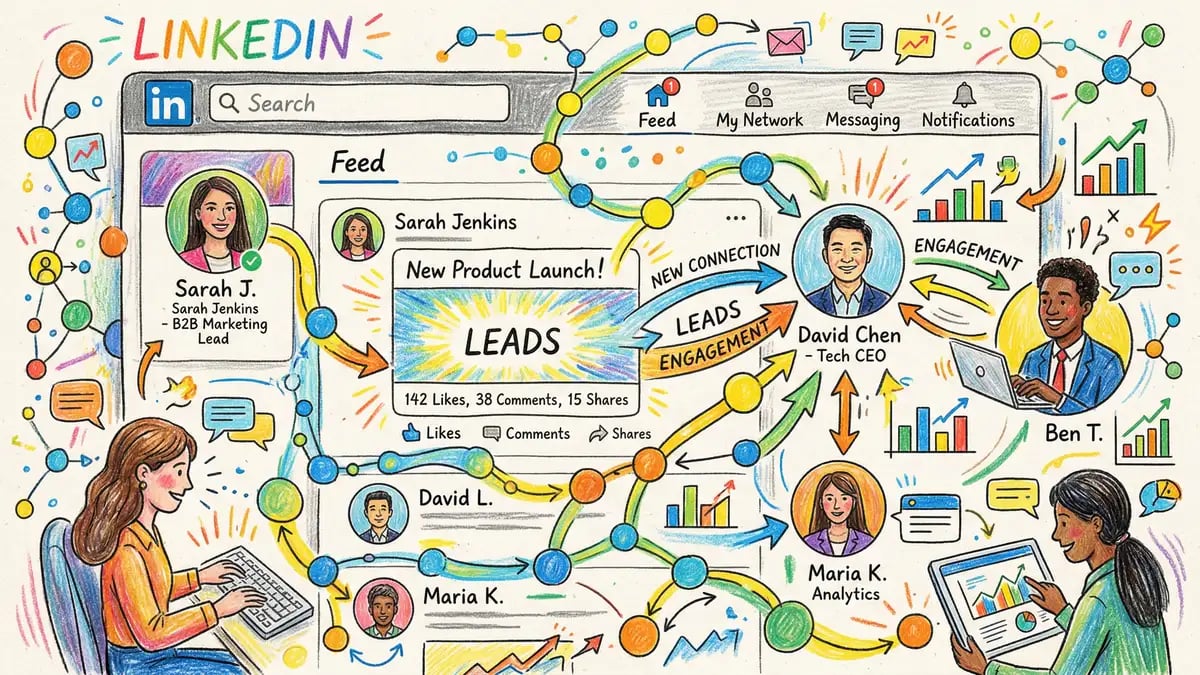
Whitehat SEO's work with B2B SaaS clients consistently shows that LinkedIn-sourced leads convert at higher rates than other social channels. The platform's professional context means visitors arrive with buying intent already established—they're not scrolling past cat videos to find your content.
The 2025 LinkedIn Algorithm Shift
Richard Van Der Blom's 2025 Algorithm Insights research reveals a fundamental shift in how LinkedIn distributes content. The platform has moved from rewarding viral content to prioritising expertise-driven engagement. This means:
watch out
Reach has dropped approximately 50% year-over-year for most creators—posting more won't compensate.
AI-generated content achieves 47% less organic reach—human expertise wins.
Meaningful conversations (3+ comment exchanges) receive 5.2x more amplification.
Content with real expertise and data points generates 3.7x more reach than generalised advice.
The implication for B2B marketers is clear: LinkedIn now rewards depth over breadth. A single, data-rich post about HubSpot attribution challenges—drawing on actual client experience—will outperform ten generic posts about "digital transformation."
YouTube Is Now Core Search Infrastructure
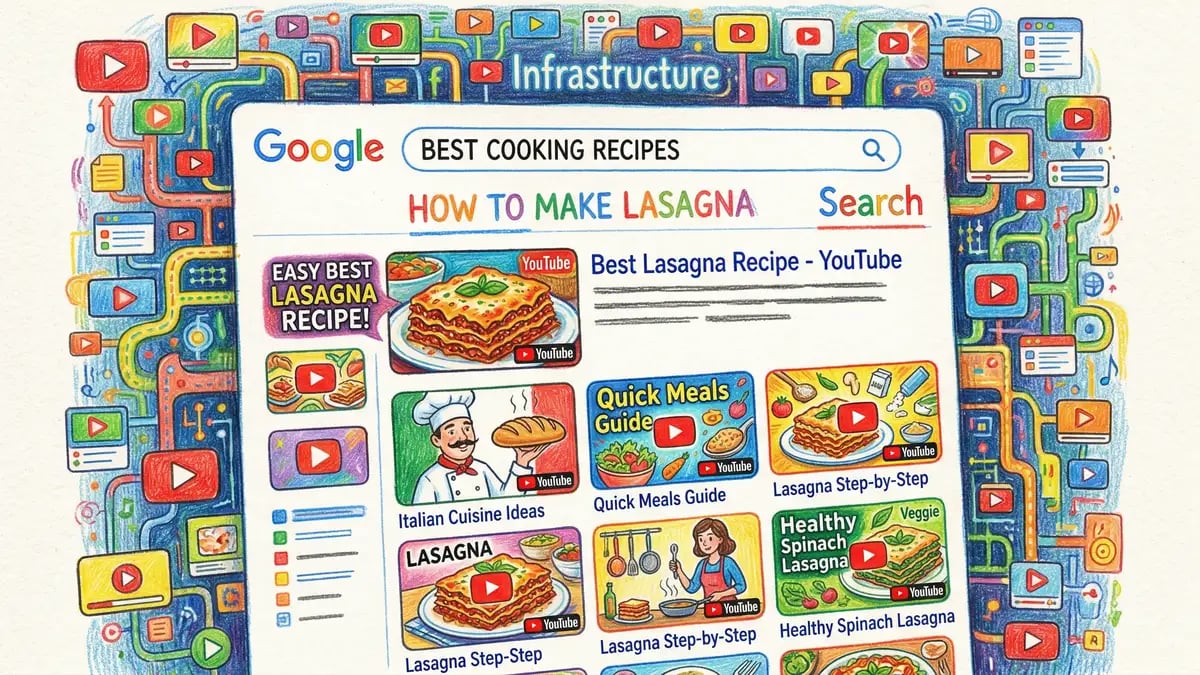
Here's the statistic that should change how you think about video: <strong>29.5% of Google AI Overviews cite YouTube</strong>, making it the single most-cited domain according to BrightEdge's 2025 research. YouTube isn't a social platform anymore—it's search infrastructure.
With 3+ billion searches per month and videos appearing in 62% of Google search result pages (80% of which are YouTube), the platform has become impossible to ignore for B2B SEO. According to Wyzowl's research, 93% of marketers say video marketing delivers good ROI—the highest of any media format for B2B.
YouTube SEO Best Practices for B2B
YouTube's algorithm prioritises watch time above all else. For B2B content, this means optimising for audience retention rather than keyword stuffing in titles and descriptions.
| Video Type | Optimal Length |
|---|---|
| General B2B marketing | Under 2 minutes |
| Educational/how-to content | 7–15 minutes |
| Product demonstrations | 2–4 minutes (build playlists) |
| YouTube Shorts | 15–35 seconds |
Successful B2B examples include Ahrefs (educational SEO content), Paddle (SaaS topics), and Todoist (productivity guidance). Each treats YouTube as a search channel, optimising titles as queries users actually type rather than clever marketing headlines.
Which Content Formats Drive Engagement in 2026
Socialinsider's 2025 benchmarks reveal which formats actually perform on LinkedIn—and the results might surprise you:
| Format | Engagement Rate | B2B Recommendation |
|---|---|---|
| Multi-image posts | 6.60% | Best for B2B—highest engagement |
| Native documents/PDFs | 5.85% | Ideal for thought leadership |
| Videos | 5.60% | 5x engagement; live gets 24x |
| Single images | Lower | Use sparingly |
| Text-only posts | Lowest | Pair with visuals |
Carousels deserve special attention: they create dwell time through the swipe mechanic, and they're the most shared format on LinkedIn. Best practice is 3-5 slides, with one clear takeaway per slide. For video, remember that 35% of viewers watch without sound—captions aren't optional.
Employee Advocacy: The Underused Multiplier
The data on employee advocacy is striking. MSLGroup research shows that messages shared by employees achieve 561% greater reach than the same content shared via brand channels. IBM found that leads from employee-shared messages are 7x more likely to convert.
561%
Greater reach via employees vs brand
MSLGroup research
8x
Higher CTR on employee-shared content
vs brand channel posts
7x
More likely to convert
Employee-sourced leads (IBM)

The trust factor explains these numbers: 92% of consumers trust recommendations from employees over advertising, according to Nielsen. For B2B specifically, the 2025 Edelman-LinkedIn B2B Thought Leadership Impact Report found that 59% of decision-makers believe thought leadership is more reliable than branded content.
Companies running formal advocacy programmes see £6.50 in sales pipeline value for every £1 spent. A DSMN8/Dropbox case study demonstrated a potential 91% reduction in paid media spend through employee advocacy alone.
Ready to integrate social media with your SEO strategy? Our team can audit your current social presence and build an integrated plan that drives pipeline.
Talk to Our TeamThe Case for Founder-Led Content
Content from company leaders receives 3x more engagement than company pages alone, according to LinkedIn's 2025 data. More importantly, B2B buyers place 4x more trust in content from executives than branded messaging.
key takeaway
55% of decision-makers use thought leadership for vendor vetting.
75% say thought leadership led them to research a product they weren't previously considering.
67% prefer thought leadership with an identifiable author vs faceless brand.
Prospects who follow Director+ executives on LinkedIn show 11% higher win rates and 120% larger deal sizes (Sendoso).
For agencies like Whitehat SEO, this means <a href="https://whitehat-seo.co.uk/our-team">founder visibility through platforms like the London HubSpot User Group</a> compounds over time—building authority that transfers to every piece of content the company produces.
How AI Search Engines Use Social Content
AI platforms now crawl social content alongside websites, learning brand authority from LinkedIn posts and strategic content distribution. Marketing agencies report hearing "I found you on ChatGPT" in discovery calls—a phrase that would have been nonsensical two years ago.
According to Gartner, 25% of all searches will be AI-driven by 2026. Backlinko reports an 800% year-over-year increase in referrals from large language models. The platforms treat social content differently:
- Perplexity AI has a "Social Focus" mode analysing social platforms, forums, and discussions
- Google AI Overviews now index Instagram content (as of July 2025) and appear on 13%+ of SERPs
- Reddit traffic from Google increased 39% year-over-year following a $60M Google deal in 2024
For B2B marketers, this means social content should be written with AI extraction in mind. LinkedIn articles and posts increasingly get cited in B2B queries. The key is making content standalone—each post should be comprehensible without context, with your brand name embedded in extractable passages.
Learn more about optimising for AI search engines in our <a href="https://whitehat-seo.co.uk/blog/how-to-rank-in-chatgpt-the-complete-aeo-guide-for-b2b-marketers">complete AEO guide for B2B marketers</a>.
Using HubSpot for Social Media Management
For B2B companies already invested in the HubSpot ecosystem, the platform's <a href="https://whitehat-seo.co.uk/blog/hubspot-social-media">social media management tools</a> offer a distinct advantage: every interaction feeds directly into your CRM, creating clear attribution from social engagement to revenue.
HubSpot Marketing Hub provides social tools in Professional (£890/month) and Enterprise (£3,600/month) tiers, supporting Facebook, Instagram, LinkedIn, X/Twitter, and YouTube—though notably lacking TikTok and Pinterest integration.
| Capability | HubSpot | Hootsuite | Sprout Social |
|---|---|---|---|
| CRM Integration | ★★★★★ | ★★☆☆☆ | ★★★☆☆ |
| Attribution Reporting | ★★★★★ | ★★☆☆☆ | ★★☆☆☆ |
| Social Listening | ★★☆☆☆ | ★★★★★ | ★★★★☆ |
| Platform Coverage | ★★★☆☆ | ★★★★★ | ★★★★☆ |
The Breeze AI Social Media Agent, launched at INBOUND 2024, analyses past performance, brand voice, and audience to generate platform-tailored post suggestions. All content requires human review before publishing—addressing concerns about generic AI content whilst delivering meaningful time savings. For companies needing to <a href="https://whitehat-seo.co.uk/hubspot-onboarding">get started with HubSpot</a>, social media integration is one of the faster wins.
Measuring Social Media's Impact on SEO
The challenge with social-to-SEO attribution is that 84% of sharing occurs via dark social channels—private messages, Slack, email forwards—where traditional analytics can't track. This is why self-reported attribution ("How did you hear about us?") remains essential on all forms.
the bottom line
84% of B2B buyers choose their preferred vendor before contacting sales (6sense 2024). Social media builds that mental shortlist even when conversion rates look modest (organic social converts at approximately 1.7%, paid social at 0.9%). Track branded search volume growth, backlink acquisition from social amplification, and self-reported attribution on lead forms to measure social's true SEO impact.
For comprehensive <a href="https://whitehat-seo.co.uk/website-audit">website and marketing performance analysis</a>, tracking social's indirect influence is as important as direct conversions.
Frequently Asked Questions
Does social media directly affect Google rankings?
No — Google has confirmed social signals are not direct ranking factors. However, social activity indirectly boosts SEO by generating backlinks, increasing branded search volume, and helping content get indexed faster. B2B companies with strong social presence consistently rank better because they earn more of what Google does count.
Which social platform is most effective for B2B lead generation?
LinkedIn dominates B2B social, delivering 80% of all B2B social media leads. The platform offers 229% ROI on organic activity over three years, making it the clear priority for resource-constrained B2B marketing teams.
How often should B2B companies post on LinkedIn?
Research suggests 3-5 posts per week, with companies posting at least weekly seeing 2x more engagement. Quality matters more than quantity — one data-rich, expertise-driven post outperforms multiple generic updates. Best times are Tuesday-Thursday, 9-11am.
Should B2B companies invest in YouTube?
Yes — YouTube is now essential for B2B SEO. Videos appear in 62% of Google search results, and YouTube is the most-cited domain in AI Overviews at 29.5%. Educational how-to content performs best at 7-15 minutes, whilst product demonstrations should be 2-4 minutes.
How do I measure social media's impact on SEO?
Track branded search volume growth, backlink acquisition from social amplification, and self-reported attribution on lead forms. Since 84% of sharing occurs via dark social channels that analytics can't track, asking 'How did you hear about us?' remains essential for understanding social's true impact.
Sources: Edelman-LinkedIn B2B Thought Leadership Impact Report 2025 · HubSpot State of Marketing 2025 · Socialinsider LinkedIn Benchmarks 2025 · BrightEdge AI Overview Citation Research 2025 · FirstPageSage B2B Marketing ROI Benchmarks 2025 · 6sense B2B Attribution Benchmark 2024 · Backlinko GEO Research 2025
Need Help Integrating Social Media With Your SEO Strategy?
Whitehat SEO helps B2B companies build integrated marketing strategies that turn social visibility into search authority and pipeline. As a HubSpot Diamond Partner, we connect the dots between channels.
Clwyd Probert
Founder, Whitehat SEO
Clwyd Probert is the founder of Whitehat, a London-based SEO and inbound marketing agency and HubSpot Platinum Partner since 2016. He specialises in helping B2B companies build predictable organic pipelines through ethical, data-driven digital marketing.