
Direct Answer: Social media marketing drives B2B success by building brand visibility among 95% of buyers not currently in-market, generating 80% of B2B leads through LinkedIn, and creating touchpoints across the average 13 content pieces buyers consume before purchasing. Companies using integrated social-CRM strategies report 3× higher lead conversion rates and measurable pipeline acceleration.
Key Takeaways
- LinkedIn generates 80% of B2B leads and dominates as the primary platform for professional networking and lead generation in 2026
- 95% of B2B buyers are not actively in-market at any given time, making brand-building content essential for future pipeline development
- B2B buyers consume an average of 13 pieces of content before sales contact, requiring integrated multi-channel strategies
- Social-CRM integration enables 3× higher lead conversion rates through attribution and buyer journey visibility
- Vanity metrics (impressions, followers) don't drive revenue—focus on engagement quality, lead generation, and pipeline attribution
- UK B2B companies allocate 12-18% of marketing budgets to social media, with LinkedIn and industry-specific platforms seeing highest ROI
The Scale Shift—5.2 Billion Users Have Changed Everything
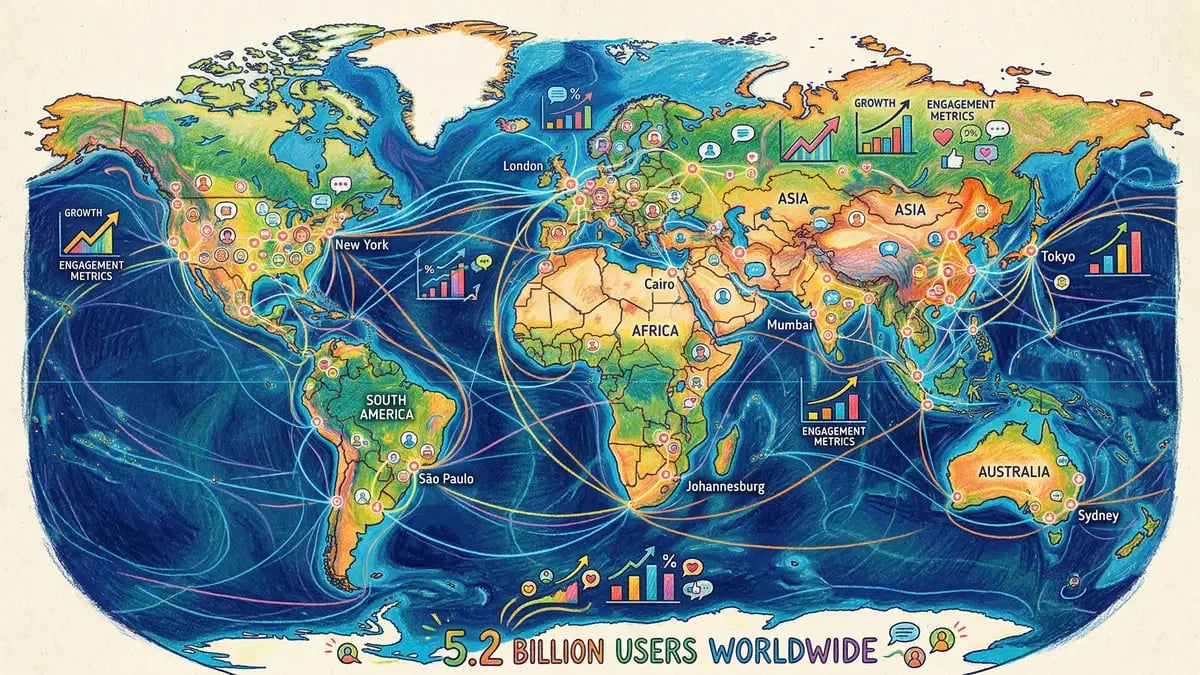
Social media has evolved from a consumer engagement tool into critical infrastructure for B2B marketing. With 5.2 billion global users and 4.8 billion mobile-first connections, the sheer scale of social platforms creates unprecedented opportunity for brands to reach decision-makers before they enter active buying cycles.
For UK B2B companies, this shift is particularly acute. The average decision-making unit now includes 6-10 stakeholders researching solutions independently on LinkedIn, Twitter/X, industry forums, and vertical-specific platforms. The buyer journey has become asynchronous and distributed—meaning your social presence must reach people at every stage of awareness, consideration, and evaluation, not just when they're ready to talk to sales.
The competitive advantage no longer goes to companies with the biggest ad budgets—it goes to those building genuine, consistent visibility among their ideal audience long before purchase intent emerges.
Key Statistics: Global and UK Social Media Penetration
Understanding where your audience lives is the first step to effective social media strategy:
- 5.2 billion global social media users (Q1 2026) represent 65% of global population
- 4.8 billion mobile social users indicate platform consumption is increasingly smartphone-first
- LinkedIn now reaches 1.08 billion users monthly, with 900 million monthly active professionals
- 89% of UK B2B decision-makers use LinkedIn as primary research channel (source: LinkedIn official data)
- Twitter/X maintains 600 million monthly active users with concentrated professional and technical audiences
- YouTube reaches 2.5 billion logged-in users monthly, making it the second-largest search engine for B2B product research
The implication is clear: your audience is already on social platforms, regardless of whether your company has optimized a presence there. The question is not "should we be on social media?" but rather "are we showing up where and when our buyers are researching?"
LinkedIn Dominates B2B Lead Generation—Here's Why
While social media platforms proliferate, LinkedIn has cemented itself as the indispensable platform for B2B marketing. The platform's unique value proposition combines professional identity verification, built-in search and discovery, native content distribution, and direct messaging infrastructure—features consumer platforms fundamentally lack.
LinkedIn's dominance in B2B is not accidental. The platform was designed specifically for professional networks, eliminating the noise of consumer-focused competitors. When a CFO, VP of Marketing, or Operations Director spends time on LinkedIn, they're actively considering business solutions. The intent signal is built into the platform itself.
Key Statistics: LinkedIn's B2B Dominance
- 80% of B2B leads are generated via LinkedIn (Statista 2026 B2B Marketing Report)
- LinkedIn generates 2-3× higher conversion rates than other social platforms for B2B companies
- 67% of B2B organizations use LinkedIn Ads to drive qualified lead generation
- LinkedIn Sales Navigator reaches 2+ million users monthly with dedicated paid subscription (high-intent buyers)
- Professional content on LinkedIn receives 2.5× higher engagement than promotional posts
- LinkedIn posts published on Tuesday-Thursday between 8am-2pm see 40% higher engagement (timing and consistency matter)
LinkedIn generates 80% of B2B leads and shows 2-3× higher conversion rates than other social platforms
LinkedIn's organic reach has declined due to algorithm changes, but the platform's paid advertising infrastructure remains exceptionally sophisticated. LinkedIn Ads targeting capabilities (by job title, function, industry, company size, skills) allow B2B marketers to reach specific personas with laser precision. For many B2B SaaS, software, consulting, and professional services companies, LinkedIn is the single highest-ROI marketing channel.
Measuring What Matters—ROI Beyond Vanity Metrics
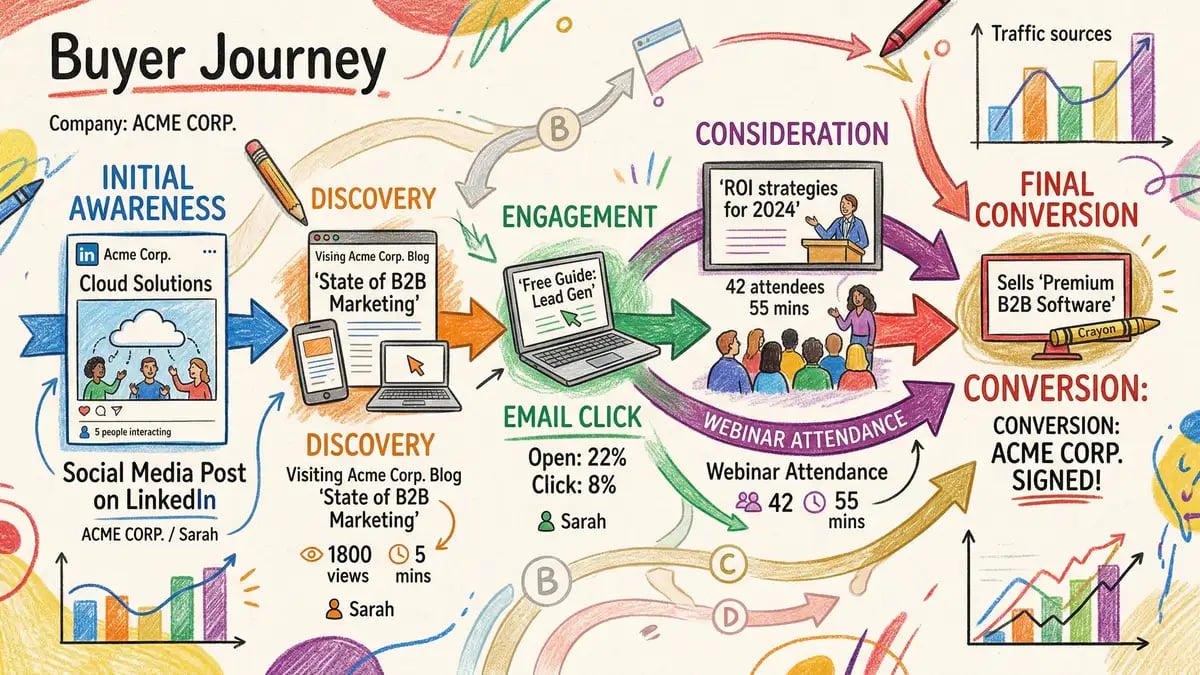
The most common mistake in B2B social media marketing is treating the channel as a broadcast medium and measuring success via vanity metrics: followers, impressions, shares. These numbers feel good in executive reports, but they're largely disconnected from revenue.
B2B buying cycles are long (6-18 months), multi-stakeholder (6-10 decision-makers per deal), and involve significant research before any direct sales contact. Measuring social media ROI therefore requires attribution systems that connect online behavior to pipeline and closed revenue.
Key Statistics: B2B Attribution and Conversion
- B2B buyers consume an average of 13 content pieces before sales contact (Gartner 2025)
- 88% of B2B buyers research solutions on their own before engaging sales, often starting on social platforms
- Social media influences 56% of B2B purchase decisions as a research and awareness channel (HubSpot State of Marketing 2025)
- Companies with integrated CRM-social analytics see 3× higher lead conversion rates compared to those using disconnected tools
- Multi-touch attribution (not last-click) reveals that social media contributes 18-22% of pipeline value across B2B companies
- Companies tracking social media touchpoints across the buyer journey see 42% faster sales cycles
The strategic implication: measure social media by its true contribution to revenue, not vanity metrics. This requires implementing:
- UTM parameters on every social link to track traffic source and campaign
- CRM integration that maps social-originated leads through the sales pipeline
- Lead source attribution that gives social credit across discovery, consideration, and decision stages
- Revenue impact analysis showing how social-influenced deals contribute to annual sales targets
The 95:5 Rule—Building Brand for Buyers Not Yet In-Market
At any given moment, only 5% of your total addressable market is actively in-market and ready to buy. The remaining 95% are not currently considering solutions—but they will be in 12-24 months. This insight fundamentally changes how you should approach social media strategy.
The companies winning in B2B are those building brand visibility and trust among the 95% during the long stretch when they're not buying. By the time the 95% enters active consideration, your company is already a recognized, trusted voice in their network.
This is where social media excels. LinkedIn posts, thoughtful industry commentary, company culture insights, and educational content build familiarity and authority long before sales conversations begin. Sales teams consistently report that prospects who engaged with company social content for 6-12 months prior to inbound request move through sales cycles 30-40% faster and close at higher deal values.
The implications for strategy are clear: social media is not a short-term lead generation channel. It's a long-term brand and authority building tool that creates massive advantage when prospects finally enter buying cycles.
Budget and Investment—What UK B2B Companies Are Spending
Understanding market benchmarks helps inform realistic budget allocation for your own social media strategy. UK B2B companies allocate budgets based on company stage, revenue, and target market size.
Key Statistics: B2B Social Media Investment
- UK B2B companies allocate 12-18% of annual marketing budgets to social media (up from 8-12% in 2022)
- LinkedIn advertising represents 45-50% of total social media spend for B2B organizations
- Content creation (in-house and freelance) represents 35-40% of social media budgets
- Social management tools and CRM integrations account for 10-15% of spend
- Mid-market B2B companies (£2-10M revenue) allocate £40k-£150k annually to social media
- Enterprise B2B companies (£50M+ revenue) allocate £250k-£1M+ annually with dedicated teams
Budget allocation should align with your company's growth stage and revenue goals. Early-stage companies should invest heavily in organic content and community building. Growth-stage companies benefit from a 60/40 mix of organic and paid. Mature companies often shift to 40/60 or higher paid proportion with sophisticated targeting and attribution.
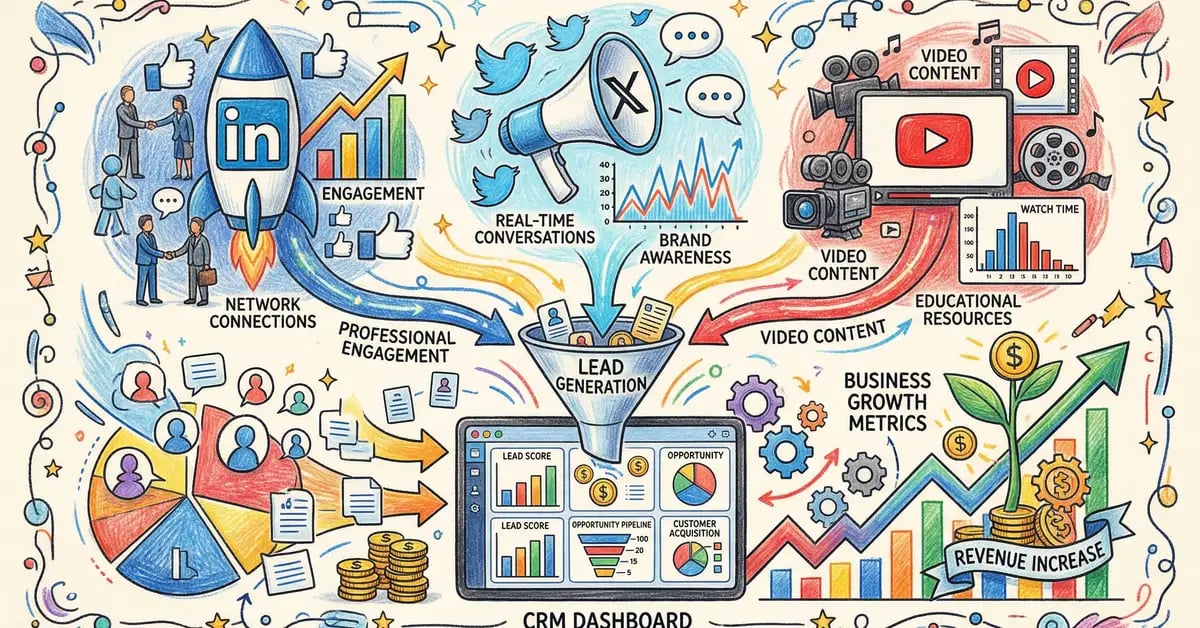
How HubSpot Transforms Social Media from Activity to Attribution
The single largest gap in most B2B social media strategies is the disconnect between social platforms and the CRM system where revenue is tracked. Sales teams can see that a deal closed, but marketing has no way to connect that closure back to the social media content or ads that initiated the buyer's journey.
HubSpot's unified CRM platform closes this gap. By integrating social media platforms (LinkedIn, Twitter, Facebook, Instagram) directly with your CRM, you can:
- Track every social touchpoint in a contact's timeline, showing exactly which posts, ads, and interactions they've engaged with
- Attribute leads to specific social campaigns, showing which LinkedIn ads, organic posts, or campaigns generated pipeline
- Measure revenue impact by tracking social-sourced deals through the entire sales process to closed revenue
- Score leads based on social engagement, prioritizing prospects who've engaged with multiple content pieces
- Create targeted nurture sequences based on social platform and content type engaged
- Benchmark performance across campaigns, platforms, and teams with unified reporting
Companies implementing social-CRM integration consistently report 30-50% improvement in lead quality, 25-35% faster sales cycles, and 40%+ improvement in sales team productivity. The ROI on CRM integration is typically realized within the first quarter.
Common Mistakes That Sabotage B2B Social Media Success
Even well-resourced teams make consistent mistakes that undermine social media performance. Understanding these pitfalls helps you build better strategy from the start.
1. Treating Social Media as Broadcast, Not Community
Many B2B companies use social platforms as a one-way broadcast channel—posting content, ads, and promotional messages without engaging with audience conversations. LinkedIn, Twitter, and other platforms reward engagement and authenticity. Companies that ask questions, respond to comments, and participate in industry conversations see 3-5× higher engagement rates than those using broadcast-only approaches.
2. Inconsistency in Posting and Messaging
Social media algorithms reward consistency. Companies posting multiple times per week see significantly higher reach and engagement than those posting sporadically. Without a consistent content calendar and clear messaging framework, your social efforts become scattered and ineffective.
3. Disconnected from CRM and Sales
If marketing and sales teams aren't aligned on social media strategy, the entire program suffers. Social-sourced leads that reach sales without proper context score poorly and move slowly. Without sales team feedback, marketing doesn't know which social campaigns drive quality leads. Integration and alignment are essential.
4. Focusing on Vanity Metrics Over Revenue Impact
Followers and impressions feel good but drive no revenue. The most successful B2B social media programs track clicks, conversions, lead quality, and pipeline influence. Without shifting measurement frameworks from vanity to revenue metrics, your budget justification becomes weak and resources get reallocated.
5. Selling Too Hard, Too Soon
B2B decision-makers avoid companies that immediately pitch products on social platforms. The primary purpose of social is awareness, education, and trust building. Sales messaging should represent only 10-15% of content. The remaining 85-90% should be educational, thought leadership, industry insights, and value-add content that builds authority.
Frequently Asked Questions
Which social media platform delivers best ROI for B2B companies?
LinkedIn is the highest-ROI platform for most B2B companies, generating 80% of B2B leads and showing 2-3× higher conversion rates than other platforms. However, the answer depends on your specific audience and business model. Software companies may find Twitter/X valuable for technical audience engagement. Companies serving manufacturers or industrial sectors may find YouTube or industry-specific forums more effective. The strategic approach is to focus 60-70% of effort on LinkedIn while testing other platforms for audience fit.
How do you measure social media ROI when B2B sales cycles are 6-18 months?
Long sales cycles require multi-touch attribution rather than last-click attribution. Implement UTM parameters on all social links, integrate social platforms with your CRM, and track every touchpoint across the buyer journey. Revenue attribution models should give social media credit based on its position in the journey (first-touch, multi-touch, position-based). Companies using sophisticated attribution typically find that social media influences 15-25% of closed revenue, even if not the last click before purchase.
What content types perform best on LinkedIn for B2B lead generation?
The highest-performing content types on LinkedIn are: (1) original professional insights and opinions from executives, (2) educational how-to content and industry guides, (3) company culture and employee spotlights, (4) industry trend analysis and thought leadership, and (5) customer success stories and case studies. Promotional product content performs poorly unless paired with significant paid amplification. Video content, particularly short-form (1-2 minutes) and native LinkedIn video, sees 5-8× higher engagement than text or image posts.
How does social media influence the B2B buyer journey before sales contact?
Research shows that 88% of B2B buyers conduct independent research on social platforms before any sales contact. Social media serves multiple functions: awareness (prospects discover you exist), education (they learn about solutions and industry trends), validation (they see social proof and peer recommendations), and building trust (consistent, valuable content builds credibility). On average, prospects engage with 13 pieces of your content across social platforms before sales outreach. This early stage is critical for positioning and building preference.
What budget should B2B companies allocate to social media marketing?
UK B2B companies typically allocate 12-18% of total marketing budgets to social media. For absolute budgets, mid-market companies (£2-10M revenue) should allocate £40k-£150k annually, while enterprise companies allocate £250k-£1M+. Within the social budget, allocate roughly: 45-50% to LinkedIn advertising, 35-40% to content creation and production, and 10-15% to tools and infrastructure. These percentages should shift based on performance data and revenue influence.
How do you integrate social media with HubSpot for lead attribution?
HubSpot's social media integration works through several mechanisms: (1) social media monitoring and engagement tools built into HubSpot, (2) lead source tracking that attributes contacts to specific social platforms or campaigns, (3) UTM parameter tracking on all social links to identify campaign performance, (4) social touchpoint logging in contact timelines, and (5) reporting dashboards that show social media's influence across the pipeline. Implementation requires connecting your social accounts to HubSpot, setting up UTM tracking across campaigns, and configuring lead source rules that properly categorize social-originated contacts.
Does organic social media still work for B2B companies or is paid advertising required?
Both organic and paid are necessary, but in different proportions. For brand building, thought leadership, and community engagement, organic content is essential—it's how you build genuine audience relationships. For lead generation, paid advertising is typically required because organic reach has declined significantly due to algorithm changes. The optimal strategy is 40-50% effort on organic content and community building, combined with 50-60% budget allocation to paid advertising for lead generation and sales acceleration.
How does UK B2B social media marketing compare to global benchmarks?
UK B2B companies follow similar strategic patterns to global peers, but with some regional differences. UK companies show slightly higher LinkedIn adoption (89% of decision-makers use LinkedIn) compared to global average (85%). Budget allocation to social media is comparable (12-18% of marketing budgets globally). However, UK companies show lower YouTube engagement for B2B lead generation compared to North America, and slightly higher focus on Twitter/X for professional audiences. Content preferences also skew toward more formal, data-driven thought leadership compared to US-style personal branding on LinkedIn.
The Strategic Imperative: Social Media as Revenue Infrastructure
B2B social media marketing in 2026 is no longer a discretionary channel for "engagement" or "brand awareness." It's fundamental infrastructure for revenue generation. With 5.2 billion social media users globally and 89% of UK B2B decision-makers on LinkedIn, your buyers are actively researching solutions on platforms where your company must maintain visible, credible, consistent presence.
The competitive advantage goes to companies that:
- Build long-term brand visibility among the 95% of buyers not yet in-market
- Align social media strategy with CRM systems for end-to-end attribution and revenue tracking
- Focus on authentic, valuable content that builds trust rather than interruptive promotion
- Measure success by pipeline influence and revenue impact, not vanity metrics
- Maintain consistency across platforms, messaging, and timing to build algorithmic advantage
- Integrate sales and marketing teams around social-originated leads and buyer engagement
Companies that execute on these principles consistently report 30-50% improvement in lead quality, 25-35% faster sales cycles, and 40%+ improvement in team productivity. Social media ROI compounds over 12-18 months as brand visibility increases, content library grows, and CRM attribution reveals the true influence of social on revenue.
Ready to Transform Your B2B Social Media Strategy?
If your current social media efforts feel disconnected from revenue, misaligned with sales, or dominated by vanity metrics, it's time to rebuild. Start by:
- Audit your current social presence: Assess where your audience actually spends time and what content resonates
- Integrate CRM and social platforms: Implement tracking and attribution that connects social to revenue
- Build a content strategy: Focus on 85-90% educational value with 10-15% promotional messaging
- Establish consistency: Commit to regular posting, community engagement, and quality standards
- Measure what matters: Shift reporting from vanity metrics to pipeline influence and revenue attribution
Accelerate Your B2B Social Media Results with HubSpot
Whitehat SEO specializes in building integrated social-CRM strategies that drive measurable pipeline growth. From strategy and content development to HubSpot implementation and attribution, we help B2B companies transform social media from activity to revenue.
About the Author
Clwyd Probert is CEO & Founder of Whitehat SEO, a UK-based growth strategy firm specializing in integrated B2B marketing, HubSpot implementation, and revenue-focused content strategy. With 12+ years of experience building and scaling high-growth B2B SaaS and professional services companies, Clwyd focuses on aligning marketing, sales, and operations around measurable revenue impact.
Clwyd regularly advises enterprise and mid-market companies on building social media strategies that integrate with CRM systems for end-to-end attribution. He speaks at industry conferences on B2B marketing ROI, HubSpot strategy, and buyer journey optimization.