
Direct Answer
B2B companies can use Instagram effectively for inbound marketing by focusing on Reels, carousels, and Stories. With 2 billion monthly active users and engagement rates 20 times higher than LinkedIn, Instagram offers significant potential for brand visibility and awareness-stage lead generation. The platform's algorithm prioritises watch time and shares, making authentic, engaging content essential for reaching business decision-makers.
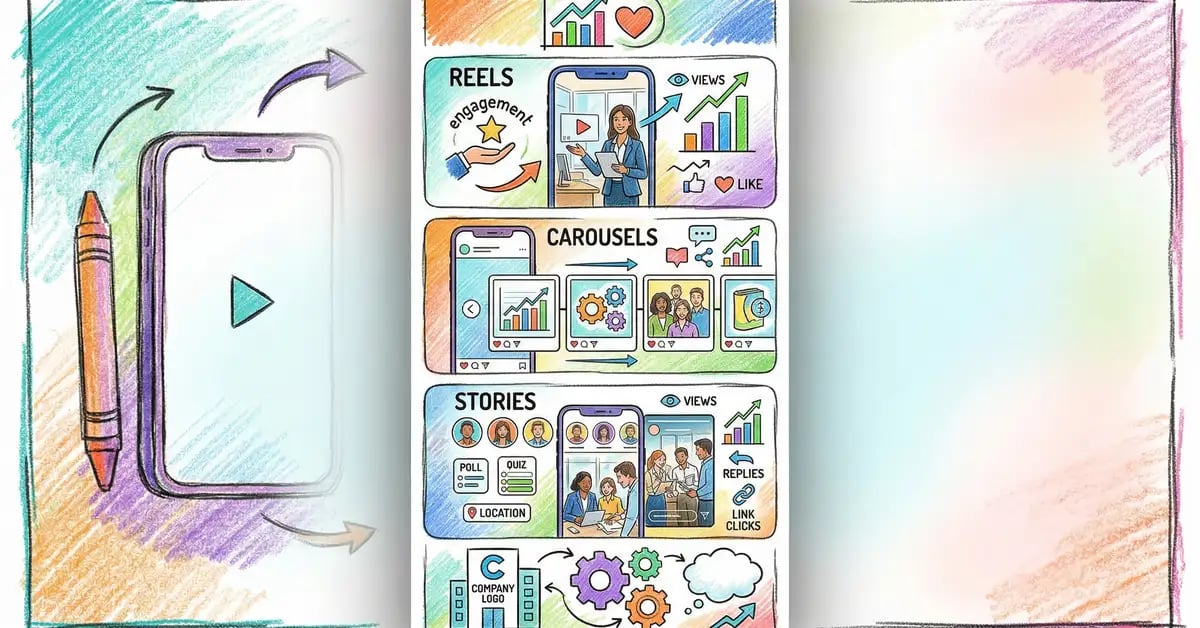
Why B2B companies can't ignore Instagram
Instagram's reputation as consumer-focused has caused B2B marketers to overlook it—a costly mistake. The platform reaches 2 billion monthly active users, with over 90% following at least one business account. Behind every decision-maker is a person scrolling Instagram during their commute, lunch break, or evening wind-down.
The engagement statistics are compelling. B2B content on Instagram generates 20x higher engagement than LinkedIn. According to BusinessWire research, 84% of C-level executives say social media content influences their purchasing decisions. Instagram's cost-per-click (£0.30-£1.60) is also significantly cheaper than LinkedIn's (£4.30-£7.20).
The UK market is substantial. Between 33-35 million UK users actively use Instagram, particularly strong in the 18-34 demographic—where many B2B companies struggle to build brand familiarity with the next generation of decision-makers. Instagram's role in comprehensive inbound marketing is clear: it builds mental availability. According to the Ehrenberg-Bass Institute, only 5% of B2B buyers are actively in-market at any time. The other 95% will decide months or years later. Instagram helps you be remembered when that moment arrives.
The 2025 Instagram algorithm prioritises engagement and originality
Understanding how Instagram's algorithm works in 2025 is essential. Adam Mosseri, Instagram's head, has been transparent: watch time, likes, and shares via direct messages matter most. In December 2024, Instagram removed hashtag following and limited posts to 5 hashtags—a shift toward keyword-based search within captions.
The algorithm works differently across surfaces. Feed posts prioritise engagement from existing followers. Reels focus on discovery, showing content to non-followers if first viewers engage quickly. Stories reward consistency with close followers. Explore surfaces content based on past behaviour.
For Reels—which account for 50% of time spent on Instagram—the first three seconds are critical. If viewers scroll past immediately, the algorithm stops showing it. This means starting with logos or lengthy introductions kills reach. The algorithm also rewards originality. Reposting from other platforms (especially with TikTok watermarks) reduces reach dramatically. Instagram wants native content created specifically for its platform.
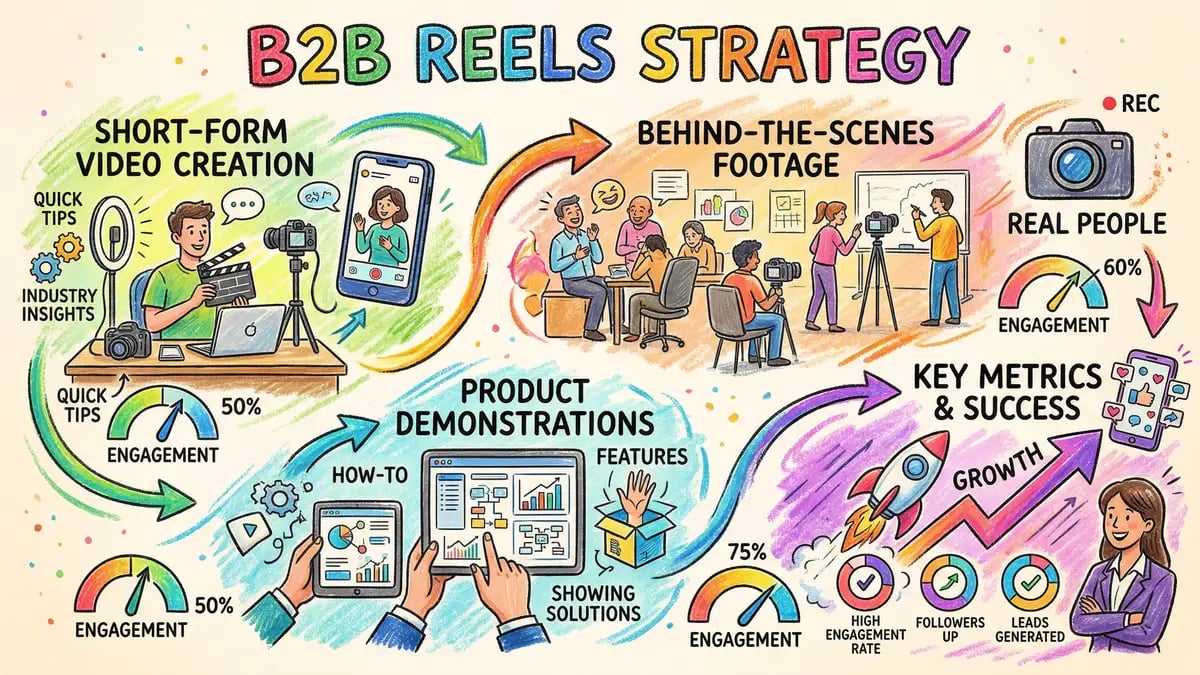
Content formats that deliver results
Not all Instagram content performs equally. Understanding which formats deliver the best results helps B2B marketers allocate resources effectively.
Reels dominate reach
Reels achieve a 30.81% reach rate—nearly a third of followers see them, plus non-followers through the Reels tab and Explore page. This reach is roughly double carousels and dramatically higher than static posts. Engagement rates for Reels have climbed to 6.92%. The optimal length for B2B Reels sits between 15-90 seconds. B2B companies find success with quick tips, behind-the-scenes glimpses, customer success stories, and thought leadership snippets.
Carousels deliver highest engagement
Whilst Reels win on reach, carousels achieve the highest engagement rate at 10.15%. Each swipe signals strong interest to the algorithm. Instagram allows up to 20 slides, though 6-10 performs best. B2B companies use carousels for breaking down complex concepts, sharing industry statistics, presenting case study results, and creating swipe-through guides or checklists.
Stories build relationships
Instagram Stories achieve a 70% completion rate. Stories don't generate the same reach as Reels but are valuable for maintaining regular touchpoints with existing audiences. B2B companies use Stories for daily updates, polls to drive engagement, behind-the-scenes moments, and amplifying feed posts.
Static posts still serve a purpose
Traditional single-image posts receive 125% less reach than Reels. However, they remain useful for announcements, awards or recognition, formal company updates, and professional photography that establishes brand credibility. The key is focusing limited resources on formats that deliver results: prioritise Reels for reach, carousels for engagement, and Stories for consistency.
Instagram versus LinkedIn for B2B marketing
The question isn't Instagram or LinkedIn—it's understanding what each platform does best. LinkedIn remains dominant for direct B2B lead generation. 82% of B2B marketers use LinkedIn for content distribution, and it's their highest-performing platform for capturing in-market buyers. LinkedIn's professional context and lead generation forms are unmatched for bottom-of-funnel activity.
Instagram excels at top-of-funnel brand building. Those 20x higher engagement rates translate to better memorability and stronger brand associations. Whilst LinkedIn feels like work, Instagram catches people in a more relaxed state where they're open to discovering new brands without pressure. The cost differential is significant. Instagram's £0.30-£1.60 CPC makes it dramatically cheaper than LinkedIn's £4.30-£7.20 for building awareness at scale.
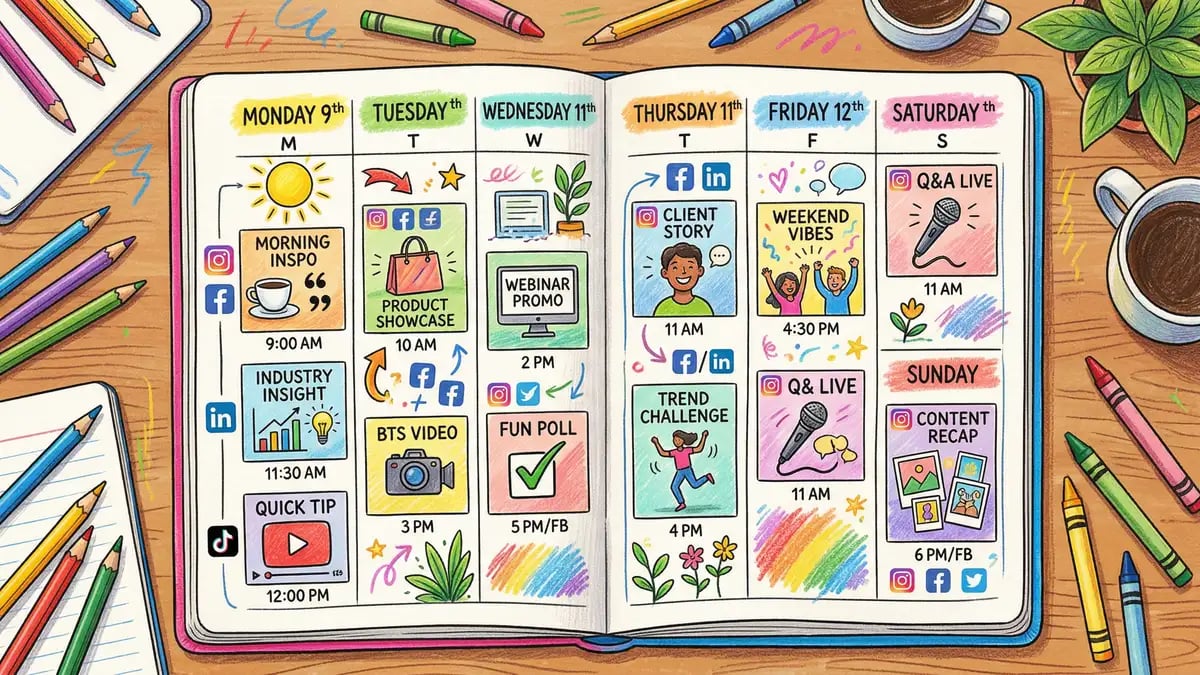
The strategic approach combines both platforms. LinkedIn captures existing demand; Instagram creates demand that doesn't exist yet. According to Forrester Research, over 50% of B2B organisations maintain Instagram presences specifically for brand building and awareness. They understand that not every channel needs to drive immediate leads to be valuable. Developing an integrated strategy that leverages Instagram's brand-building strength alongside LinkedIn's conversion efficiency represents best practice for B2B marketing in 2025.
HubSpot's tools for managing Instagram efficiently
For B2B companies already using HubSpot, the platform's native Instagram integration eliminates the need for additional social tools whilst providing attribution and reporting capabilities that justify your investment.
Scheduling and content creation
HubSpot's Marketing Hub Professional and Enterprise tiers support scheduling for feed posts, Reels, and Stories. You can create content directly within HubSpot or upload assets created elsewhere. The platform's Breeze AI copilot generates caption suggestions, saving time whilst maintaining brand consistency. The interface allows previewing posts, managing multiple accounts from a single dashboard, and batch scheduling weeks in advance.
Instagram Lead Ads integration
Instagram Lead Ads let users submit information without leaving the app—dramatically improving conversions compared to link-based approaches. HubSpot automatically syncs these leads into your CRM, creating contact records and triggering configured workflows. Leads enter your nurture sequences immediately.
Campaign attribution and reporting
HubSpot's campaign tracking associates Instagram posts with specific campaigns, then tracks their contribution to contacts, deals, and revenue. Using UTM parameters in your bio link and Stories links, you can trace Instagram traffic through your entire funnel—from initial click through to closed deals. The social analytics dashboard shows reach, impressions, follower growth, engagement rate by post type, best-performing content, and optimal posting times. These insights help refine your strategy over time.
Key Takeaways
- Instagram delivers 20x higher engagement than LinkedIn whilst costing 3-4x less per click
- Reels drive reach (30.81%), carousels drive engagement (10.15%), Stories build relationships (70% completion)
- The first three seconds of Reels are critical; avoid logos and lengthy introductions
- Use 3-5 highly relevant hashtags maximum; focus on keyword-rich captions instead
- Sustainable posting rhythm: 3-5 feed posts weekly, 1-2 Stories daily, 2-4 Reels weekly
- HubSpot's native Instagram integration provides attribution, scheduling, and Lead Ads sync to CRM
- Combine Instagram (awareness-building) with LinkedIn (lead-generation) for integrated B2B strategy
Building your strategy with limited resources
Most B2B marketing teams face a common challenge: Instagram's potential is clear, but time and resources are limited. Building an effective presence requires working smarter, not harder.
Realistic posting frequency
For B2B companies, a sustainable rhythm is 3-5 feed posts per week, 1-2 Stories daily, and 2-4 Reels per week. This maintains algorithm credibility without overwhelming your team. Consistency matters more than volume—better to post reliably three times weekly than ambitiously aim for daily posts and burn out after a month.
Batch content creation
Rather than creating daily, dedicate one day monthly to producing 2-4 weeks of content. Film multiple Reels in a single session with different backdrops to create variety. Design carousel templates you can populate with new content. Schedule everything in advance using HubSpot, freeing the rest of your month for other priorities.
Repurpose strategically
Every piece of content should work across multiple channels. Transform blog posts into carousel graphics. Convert webinar recordings into Reels. Turn client testimonials into Stories. Extract statistics into engaging visuals. This content multiplication means you're not creating unique assets for Instagram—you're adapting content that already exists.
Leverage AI tools
AI dramatically reduces content creation time. Use AI tools to generate caption drafts, suggest hashtags, create carousel designs, and edit video clips. HubSpot's Breeze AI generates captions based on your content. Canva's AI features design graphics from text prompts. This automation handles time-consuming parts, leaving humans to add brand voice and strategic direction.
Avoiding common Instagram mistakes
Understanding what not to do is often as valuable as knowing best practices. Common mistakes that undermine B2B Instagram efforts:
Treating Instagram like LinkedIn
The mistake: Posting overly corporate content—press releases, formal announcements—that works on LinkedIn but feels out of place on Instagram. Why it fails: Instagram users expect authentic, human, engaging content. Formal messaging gets scrolled past. The fix: Show humans behind your business. Share behind-the-scenes moments, employee spotlights, and client success stories told visually. Keep tone conversational.
Ignoring Reels
The mistake: Only posting static images whilst competitors dominate Reels. Why it fails: Reels receive 125% more reach and account for 50% of time spent on Instagram. The fix: Start simple. Film quick tips using your phone. Share brief testimonials. Record yourself answering common questions. Authenticity matters more than production quality.
Inconsistent posting
The mistake: Posting daily for two weeks, then going silent for a month. Why it fails: Instagram's algorithm rewards consistent accounts. Irregular posting signals unreliability. The fix: Establish a sustainable rhythm you can maintain—even twice weekly. Use scheduling tools to maintain consistency during busy periods.
Not responding to engagement
The mistake: Ignoring comments and direct messages. Why it fails: Engagement signals quality to the algorithm. You're missing relationship-building opportunities. The fix: Respond to every comment within 1-2 hours. Answer DM enquiries promptly. These interactions boost algorithm performance whilst building genuine connections.
Frequently Asked Questions
Is Instagram effective for B2B lead generation?
Instagram excels at awareness-stage engagement, delivering engagement rates 20 times higher than LinkedIn. Whilst it's not typically the platform for direct lead capture, it builds trust and brand visibility that influences later purchasing decisions. For direct leads, use Instagram Lead Ads that sync directly to your HubSpot CRM.
How often should B2B companies post on Instagram?
Aim for 3-5 feed posts per week, 1-2 Stories daily, and 2-4 Reels per week. Consistency matters more than volume. Regular posting signals algorithm credibility and keeps your brand top-of-mind.
What's the best time to post on Instagram for B2B audiences?
Weekday business hours typically perform best—particularly 9-11 AM and 1-3 PM, Tuesday through Thursday. However, use Instagram Insights to analyse when your specific audience is most active, as this varies by industry and geography.
How many hashtags should I use on Instagram?
Use a maximum of 5 hashtags following Instagram's December 2024 algorithm update. The platform now prioritises keyword-rich captions over hashtags. Focus on relevant, niche-specific tags rather than high-volume generic ones.
Ready to build your B2B Instagram presence?
Instagram represents significant opportunity for B2B companies willing to meet their audience where they spend time. With engagement rates 20 times higher than LinkedIn, dramatically lower costs per click, and algorithm changes that reward authentic content, the platform has matured beyond its consumer origins into a viable business marketing channel.
The key is approaching Instagram strategically—understanding what works for B2B audiences, which formats deliver results, how to integrate your presence with HubSpot for attribution clarity, and where to allocate limited time and resources for maximum impact.
About the Author
Clwyd Probert is the founder of Whitehat, a London-based SEO and inbound marketing agency and HubSpot Diamond Partner. With over 15 years of experience in digital marketing strategy, he helps B2B companies across the UK build sustainable organic growth through data-driven approaches.