Skip to content

WHAT SHOULD YOUR LIFE SCIENCES INBOUND MARKETING CHECKLIST INCLUDE?

Published: December 28, 2025 | Last Updated: December 28, 2025

By Whitehat SEO | 12-minute read

A comprehensive life sciences inbound marketing checklist should include: buyer persona development for scientific audiences, compliant content strategy with MLR review workflows, SEO-optimised technical content (whitepapers, webinars, application notes), HubSpot or CRM implementation for lead tracking, multi-touch attribution for long sales cycles, and LinkedIn-focused social distribution aligned with how scientists actually consume information online.

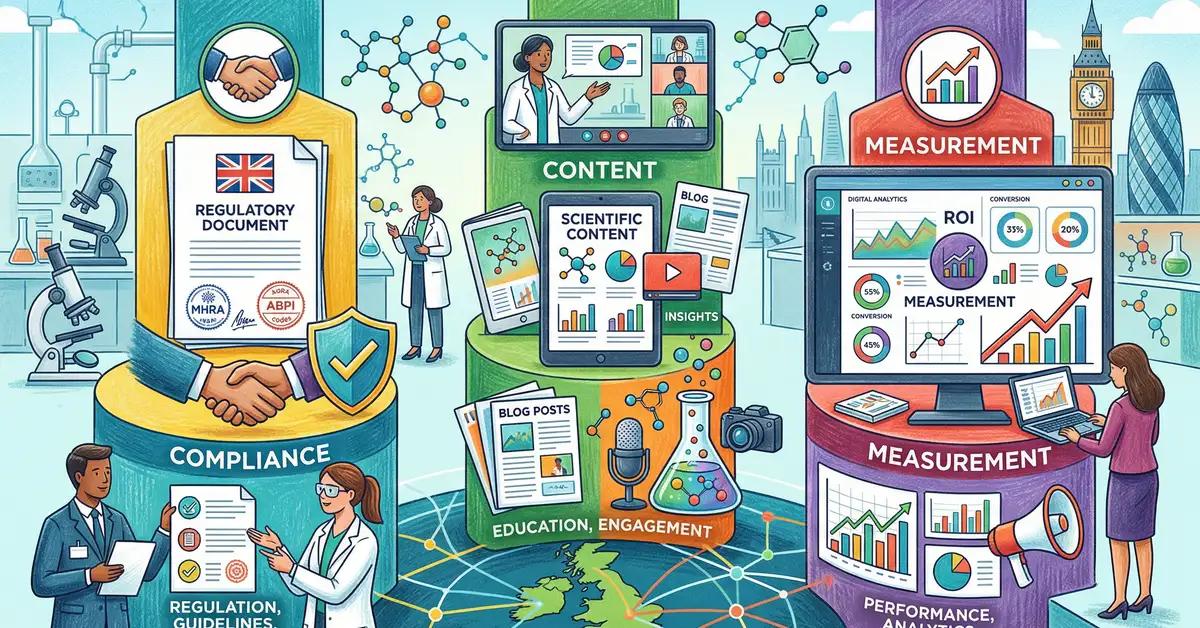
If you're a marketing director at a biotech, medtech, or life sciences company, you know the challenge: your sales cycles stretch 12-18 months, your buyers are sceptical scientists who demand evidence, and your marketing content must navigate Medical, Legal, and Regulatory (MLR) approval processes that can kill momentum. Traditional B2B marketing playbooks don't account for these complexities.

life-sciences-inbound-marketing-checklist

Yet the opportunity is significant: 73% of B2B marketers in life sciences now incorporate content marketing into their digital strategies, but only 28% have a documented content marketing strategy. That gap represents your competitive advantage. Companies with documented content strategies achieve 6× higher conversion rates than those without.

This checklist provides the tactical framework you need—covering everything from building buyer personas that resonate with scientists to implementing HubSpot workflows that satisfy regulatory requirements without sacrificing marketing velocity.

Why life sciences marketing requires a specialised approach

Scientists are fundamentally different buyers. As Hamid Ghanadan, biochemist and author of "Persuading Scientists," explains: "Scientists are a difficult audience to persuade—driven by curiosity, yet cautiously sceptical." This scepticism isn't obstinacy; it's trained behaviour. Years of peer review and experimental rigour have hardened scientists against unsubstantiated claims and promotional language.

The data confirms this shift to digital-first research: 60% of healthcare professionals prefer digital engagement when making buying decisions, according to McKinsey research cited in industry reports. Meanwhile, 62% of B2B buyers in life sciences read 3-7 pieces of content before engaging with sales. Your prospects are conducting exhaustive research independently—your marketing must meet them where they are, with the depth and rigour they demand.

Three factors make life sciences marketing uniquely challenging:

  • Regulatory constraints: MLR review processes can add 2-6 weeks to content publication timelines. Claims must be substantiated. Promotional language triggers compliance red flags.
  • Extended sales cycles: Only 43% of B2B healthcare sales close within 6 months; 21% take over a year. Traditional lead-to-opportunity metrics break down when attribution spans 18+ months.
  • Technical depth requirements: Generic "thought leadership" doesn't cut it. Scientists expect application notes, protocols, webinar recordings, and peer-reviewed citations.

This is where partnering with a specialist life science marketing agency accelerates results. Agencies with deep sector experience understand how to balance compliance requirements with marketing velocity—and they bring battle-tested frameworks rather than forcing you to learn through expensive trial and error.

The 15-point inbound marketing checklist for life sciences

Here's your comprehensive checklist. Each element addresses a specific challenge unique to marketing in regulated scientific industries:

1. Define buyer personas for scientific audiences

Don't settle for generic "lab director" personas. Map specific roles: Principal Investigators making grant decisions, Lab Managers controlling procurement budgets, R&D Directors evaluating strategic platforms. Document their publication behaviour, conference attendance, research focus, and decision-making authority. 59% of life science marketing decision-makers are CEOs, presidents, or directors—your personas must reflect this seniority.

2. Map content to buyer journey stages

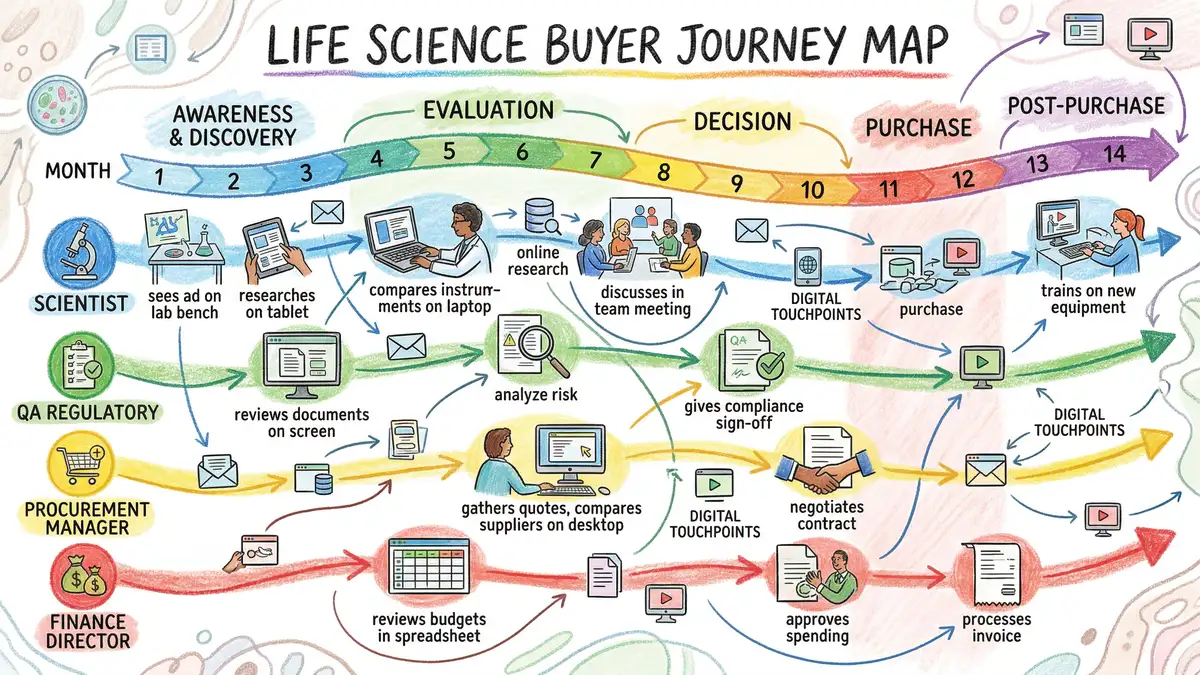
Scientific buyers consume content differently at each stage. Awareness stage: educational webinars, literature reviews, mechanism-of-action explainers. Consideration stage: comparative application notes, technical specifications, workflow integration guides. Decision stage: case studies with quantified outcomes, implementation timelines, validation data. Match content type to where the prospect sits in their research process.

3. Develop MLR-compliant content workflows

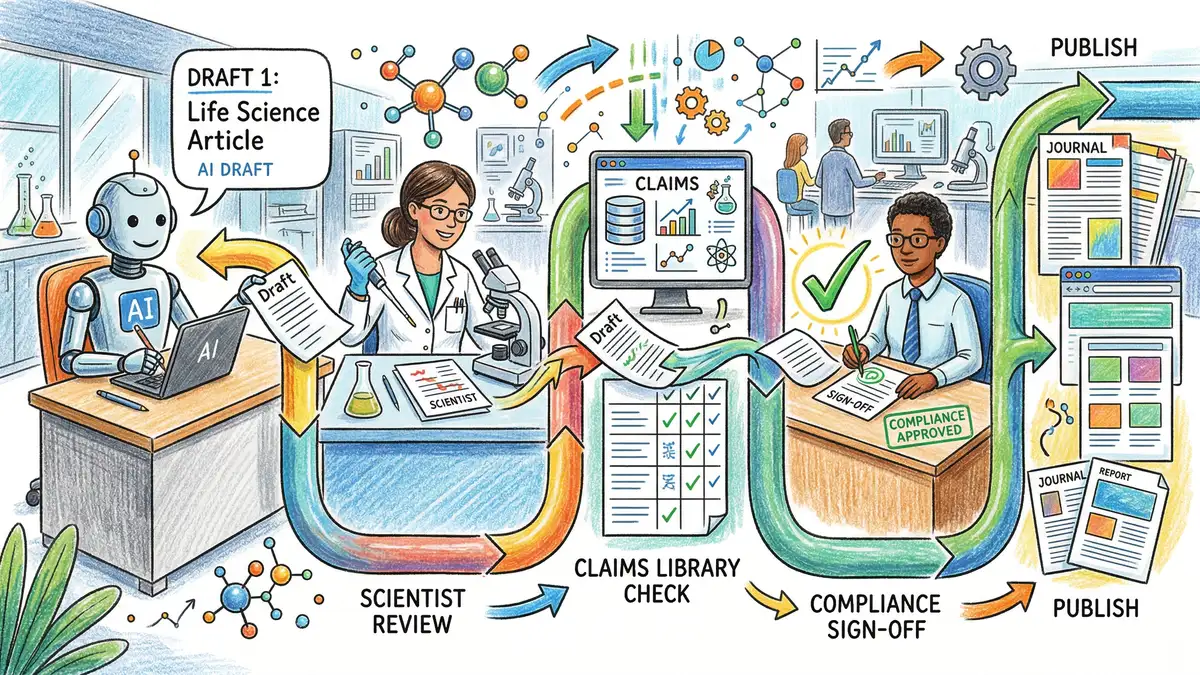
Regulatory review doesn't have to kill momentum. Create tiered approval levels: tier 1 (educational content, no claims) requires single Medical/Legal reviewer; tier 2 (comparative content) requires full MLR committee; tier 3 (promotional materials) requires extended review plus adverse event monitoring plan. Pre-approve content modules (mechanism diagrams, standard disclaimers) for rapid assembly. Document approval trails in your CRM—when audits happen, you'll need them.

4. Create cornerstone content (whitepapers, application notes)

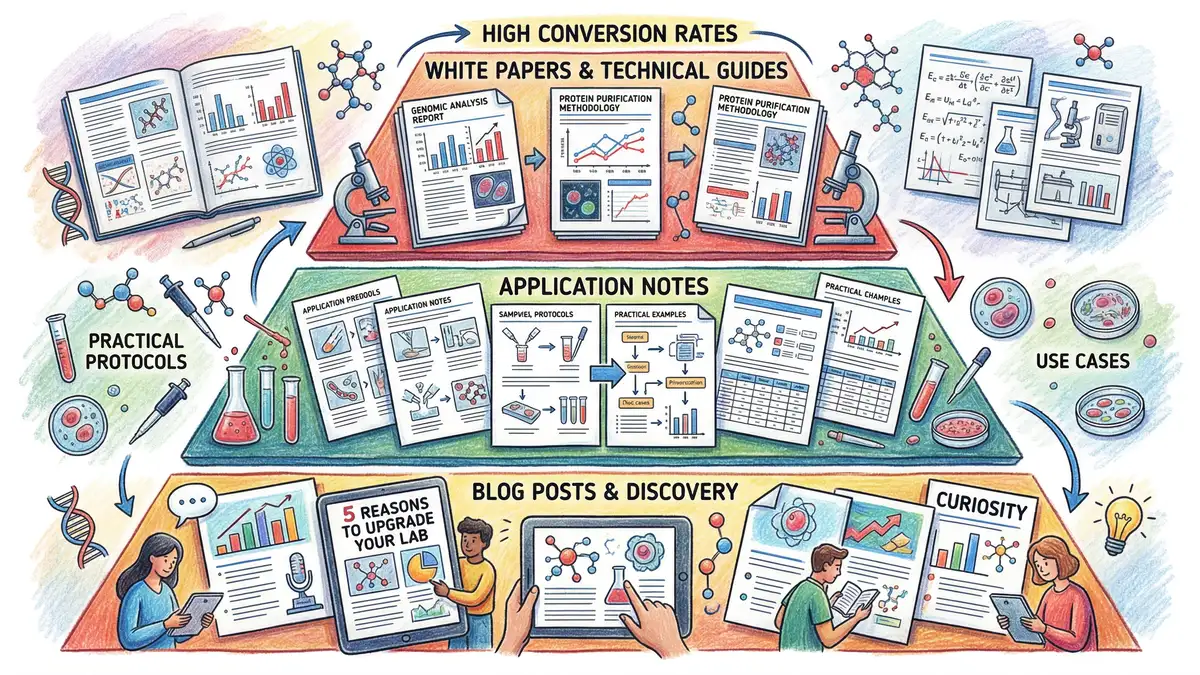
Scientists don't trust blog posts—they trust peer-reviewed citations and technical documentation. Develop authoritative assets: 20-page technical whitepapers, validated protocols, application notes showing your solution in action, webinar recordings with live Q&A. Gate this high-value content to capture qualified leads. Companies investing in professional content creation see dramatically higher engagement from scientific audiences.

5. Implement technical SEO foundation

SEO leads have a 14.6% close rate versus 1.7% for outbound leads, according to HubSpot. For life sciences, this means optimising for highly specific long-tail keywords: "CRISPR gene editing efficiency protocols," "automated western blot systems comparison," "GMP-compliant cell culture media." These low-volume, high-intent queries drive qualified traffic. A comprehensive SEO audit identifies quick technical wins while building your long-term organic visibility strategy.

6. Build topic clusters around scientific keywords

Organise content into hub-and-spoke architecture. Pillar page: "Complete Guide to Single-Cell RNA Sequencing." Cluster content: "scRNA-seq for immune profiling," "10X Genomics vs. BD Rhapsody comparison," "scRNA-seq data analysis workflows," "sample preparation protocols for scRNA-seq." This signals topical authority to search engines and creates comprehensive resource hubs that keep scientific readers engaged. Learn more about effective pillar page and content hub strategy.

7. Configure HubSpot/CRM with life sciences properties

Standard CRM fields miss critical life sciences context. Add custom properties: Research Focus Area, Grant Funding Status, Publication Record, Technology Platform Currently Used, Regulatory Pathway (IND, 510k, PMA), Disease Model/Application Area. These fields enable precise segmentation and attribution. HubSpot drives 129% more inbound leads and 50% more deals closed when properly configured. Professional HubSpot onboarding and implementation ensures your platform reflects the unique buying process of scientific customers.

8. Design lead scoring for long sales cycles

Traditional lead scoring breaks with 18-month cycles. Implement progressive scoring: engagement scoring (content downloads, webinar attendance, email opens) plus fit scoring (company size, research budget, technology need). Set thresholds that account for the long nurture: 30 points = subscriber, 60 points = marketing qualified, 90 points = sales-ready. Decay scores for 90+ days of inactivity. Weight high-intent actions heavily: whitepaper download (+15), pricing page view (+25), demo request (+50).

9. Create email nurture sequences for different personas

Scientists ignore generic email blasts. Build persona-specific sequences: Principal Investigators receive grant funding strategy content and publication-quality data; Lab Managers get workflow efficiency guides and purchasing justification templates; R&D Directors receive competitive intelligence and strategic roadmaps. Trigger sequences based on content engagement, not arbitrary time delays. Provide genuine value at every touchpoint—scientists will disengage at the first hint of promotional fluff.

10. Establish LinkedIn thought leadership presence

21% of life science researchers prefer LinkedIn for sharing content, far exceeding Twitter or Facebook. Build executive presence: your CEO and CSO should publish weekly insights on industry trends, research breakthroughs, regulatory changes. Share third-party validation (customer publications, analyst reports, partnership announcements). Join relevant LinkedIn groups—participate genuinely, don't spam. LinkedIn is where scientific buying committees research vendors before ever visiting your website.

11. Launch webinar programme (51% average attendance benchmark)

Scientific audiences engage with webinars at dramatically higher rates than other formats. The average life sciences organisation hosted 23 webinars in 2024 with 51% attendance rates—substantially higher than typical B2B webinar performance. Format matters: 45-60 minute technical deep-dives with live Q&A outperform 30-minute product pitches. Feature external experts (academic collaborators, KOLs) for credibility. Record and gate the replay—it becomes evergreen lead generation content.

12. Implement multi-touch attribution model

First-touch attribution lies when the sales cycle spans 18 months and 15+ touchpoints. Implement W-shaped or custom attribution: weight first touch (awareness), lead creation (consideration), and opportunity creation (decision) equally. Track content engagement alongside conversion events—that technical whitepaper downloaded 8 months ago influenced the deal. Connect HubSpot to your CRM (Salesforce, HubSpot CRM) with proper closed-loop reporting. This visibility justifies marketing spend to sceptical CFOs.

13. Set up reporting dashboards with industry benchmarks

What's a "good" conversion rate in life sciences? How many content downloads should you expect per 1,000 visitors? Build dashboards that compare your performance to validated industry benchmarks—this transforms abstract metrics into actionable insights. Track: cost per marketing qualified lead, MQL-to-SQL conversion rate (target: 13-20% for B2B life sciences), sales cycle length by source, content engagement by persona type, pipeline generated by marketing (target: 30-40% of total).

14. Integrate sales and marketing alignment processes

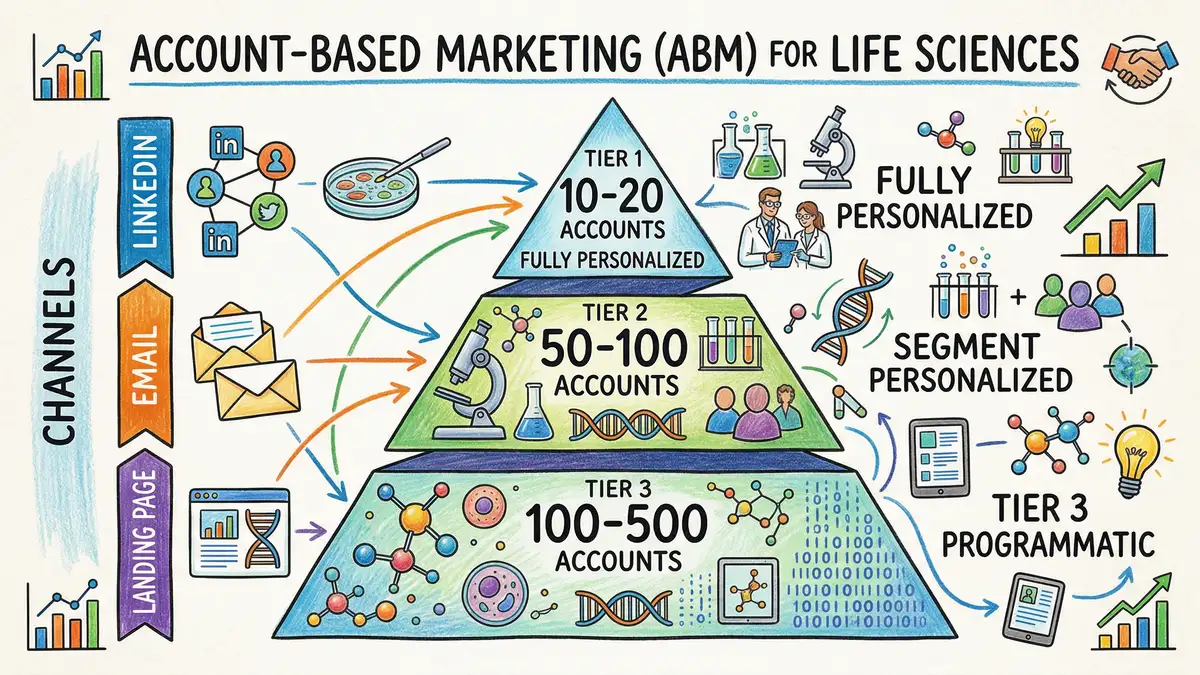
Misalignment kills pipeline. Establish shared definitions: what constitutes a marketing qualified lead? When should a lead be assigned to sales? What follow-up is expected within 24 hours? Create feedback loops: sales reports lead quality monthly, marketing adjusts scoring criteria based on win/loss patterns. Run joint account-based marketing campaigns for strategic accounts. Schedule weekly sales-marketing standups to review pipeline, not just to argue about lead quality.

15. Schedule quarterly content audits and optimisation

The life sciences landscape shifts rapidly—new techniques, updated regulatory guidance, emerging competitive claims. Audit your content quarterly: update statistics, refresh screenshots, add new case studies, remove outdated claims that could create compliance risk. High-performing content should be expanded (turn a blog post into a comprehensive guide). Underperforming content should be consolidated or retired. Search engines reward fresh, current content—and so do scientists researching purchase decisions.

Content that scientists actually trust

David Chapin of Forma Life Science Marketing offers a crucial distinction: instead of lead generation, life sciences marketing is about "need generation." Scientists don't respond to aggressive sales tactics—they respond to content that helps them understand problems they didn't know they had or solutions they didn't know existed.

This changes everything about content creation. You're not "capturing leads"—you're building long-term credibility with an audience that will remember promotional oversells and punish them with permanent disengagement.

Content types that build scientific trust:

Content Type Why It Works Implementation Tip
Application Notes Shows your technology in action solving real problems Include methods, results, troubleshooting
Validated Protocols Provides actionable, reproducible methods Partner with customers to co-develop
Customer Publications Peer-reviewed validation from trusted sources Create citation library on website
Technical Webinars Live Q&A addresses specific experimental contexts Feature external speakers (KOLs, customers)
Comparison Data Scientists expect head-to-head performance metrics Present data fairly; acknowledge limitations

The crucial insight: B2B buyers are 60-90% through their purchase cycle before contacting a vendor. By the time a scientist fills out your "Contact Sales" form, they've already read your content, compared you to competitors, discussed options with colleagues, and formed strong opinions. Your content shaped those opinions months before the sales conversation started.

This is where expertise in generating inbound leads for life science companies becomes critical. Creating content that scientists trust requires more than marketing skills—it requires understanding the scientific method, experimental design, and the specific challenges of each research application.

How to create compliant content without killing velocity

MLR review is where most life sciences marketing strategies die. Marketing creates content. Legal/Regulatory red-pens it to oblivion. Medical demands more data. The content sits in review purgatory for 6 weeks while competitors publish freely. Momentum dies.

There's a better way. Smart life sciences companies implement tiered compliance workflows that balance risk management with marketing agility:

Three-tier MLR workflow system:

Tier 1: Educational Content (Fast Track)

Approval time: 48-72 hours • Single Medical reviewer • No product claims • No comparative statements • Examples: blog posts, technique guides, industry trend analysis, webinar recordings on general scientific topics

Tier 2: Technical Content (Standard)

Approval time: 1-2 weeks • Medical + Legal review • Product specifications allowed • Comparative claims with substantiation • Examples: application notes, product datasheets, technical whitepapers, webinars featuring product demonstrations

Tier 3: Promotional Content (Full MLR)

Approval time: 3-6 weeks • Full MLR committee • Adverse event monitoring plan • Sales training materials • Examples: product launch materials, trade show displays, sales presentations, direct mail campaigns, paid advertising

The strategic insight: most inbound marketing content should be Tier 1 or Tier 2. If you're routing blog posts through full MLR review, you've fundamentally misunderstood content marketing. Educational content that positions your expertise (without making product claims) moves quickly through compliance—and that content is exactly what scientists are searching for.

Additional velocity techniques:

  • Pre-approved content modules: Get disclaimers, mechanism-of-action diagrams, and standard claims approved once, then reuse them across multiple assets.
  • Documented approval trails: Use HubSpot workflows or project management tools to track every approval with timestamps and reviewer names. When audits happen, you'll demonstrate compliance rigor.
  • Clear claim substantiation: Maintain a citation library with every piece of supporting data. Medical reviewers approve content faster when substantiation is immediately available.
  • Regular compliance training for marketers: Marketing teams who understand compliance requirements write compliant first drafts, reducing review cycles.

This is one area where structured marketing coaching accelerates implementation. Building compliant workflows from scratch takes trial and error. Working with advisors who've implemented these systems across multiple life sciences companies compresses that learning curve dramatically.

Setting up HubSpot for life sciences success

HubSpot is the marketing automation platform of choice for growth-stage life sciences companies, but the out-of-box configuration misses critical scientific buying context. Here's how to configure HubSpot properly from day one:

Essential custom properties for life sciences:

Contact-level properties:

  • Research Focus Area (dropdown: oncology, immunology, neuroscience, cardiovascular, infectious disease, other)
  • Primary Application (multiple choice: drug discovery, diagnostics, basic research, clinical trials, manufacturing)
  • Technology Platform Currently Used (text)
  • Publication Record (checkbox: first author, corresponding author, cited researcher, none)
  • Grant Funding Status (dropdown: actively funded, between grants, not grant-dependent)
  • Technical Expertise Level (dropdown: novice, intermediate, expert, thought leader)

Company-level properties:

  • Organisation Type (dropdown: pharma, biotech, academic, CRO, diagnostic, medical device, hospital/health system)
  • Regulatory Pathway (multiple choice: IND, 510k, PMA, CE Mark, not regulated)
  • Development Stage (dropdown: discovery, preclinical, phase I/II/III, commercial, research tool)
  • Procurement Process (dropdown: individual purchase authority, requires quote, tender/RFP process)
  • Budget Authority Level (dropdown: <£10k, £10k-£50k, £50k-£250k, £250k+)

Lead scoring for long sales cycles: Standard B2B lead scoring fails in life sciences. Scientists download whitepapers 18 months before they're ready to buy. They attend webinars for education, not vendor evaluation. Your scoring model must account for this.

Recommended two-dimensional scoring:

Fit Score (demographic)

  • Company size matches ICP: +20
  • Target industry/application: +15
  • Budget authority: +15
  • Job title indicates decision-maker: +10
  • Grant-funded (if relevant): +10

Engagement Score (behavioural)

  • Whitepaper download: +15
  • Webinar attendance: +20
  • Pricing page view: +25
  • Case study view: +10
  • Email opens (per open): +2
  • 90+ days inactive: -15

A contact needs both high fit and high engagement to be sales-ready. Scoring 90 engagement points but only 20 fit points indicates an interested party at the wrong company (student, competitor, academic without budget). Conversely, 70 fit points but only 10 engagement points indicates a perfect-fit company that hasn't engaged deeply enough yet.

Integration considerations: Life sciences companies often use specialised systems—LIMS (Laboratory Information Management Systems), ELN (Electronic Lab Notebooks), Veeva CRM for pharma commercial teams. HubSpot integrations with these systems enable true closed-loop attribution. For example, connecting HubSpot to Veeva shows which marketing campaigns influence field-driven opportunities.

Getting this right from the start matters. HubSpot drives 129% more inbound leads and 50% more deals closed when properly configured, according to partner implementation data. Poor initial setup creates technical debt that's expensive to unwind later. Professional HubSpot onboarding services specialised for life sciences ensure your platform reflects scientific buying behaviour from day one.

Measuring ROI with long sales cycles

When your average sales cycle stretches 12-18 months, traditional marketing metrics become meaningless. Measuring "cost per lead" ignores that 80% of those leads won't be sales-ready for a year. Tracking "MQL to SQL conversion in 30 days" misses the entire nurture journey.

You need metrics that account for the long game whilst still providing monthly visibility to leadership. Here's the measurement framework that works:

Three-horizon measurement framework:

Short-term metrics (this month):

  • Content engagement: Downloads, webinar registrations, email open rates, time on site
  • New subscriber growth: Rate of database expansion with qualified contacts
  • Campaign performance: Cost per content download by channel
  • SEO visibility: Ranking improvements for target keywords, organic traffic growth

→ These indicate whether your content resonates and reaches the right audience

Medium-term metrics (this quarter):

  • Marketing qualified leads (MQLs): Contacts reaching engagement threshold
  • MQL to SQL conversion rate: Target 13-20% for B2B life sciences
  • Pipeline contribution: Opportunities with marketing touchpoints (target: 30-40% of pipeline)
  • Content performance by stage: Which assets drive progression through the funnel

→ These show whether engagement translates to sales-ready opportunities

Long-term metrics (this year):

  • Marketing-sourced revenue: Closed deals with documented marketing influence
  • Customer acquisition cost (CAC): Total marketing spend ÷ new customers acquired
  • Sales cycle length by source: Do marketing-sourced deals close faster?
  • Content ROI: Revenue influenced by specific assets vs. creation cost

→ These prove marketing's contribution to actual business outcomes

Multi-touch attribution is non-negotiable. With 15+ touchpoints over 18 months, first-touch and last-touch attribution both lie. Implement W-shaped or custom attribution that weights:

  • First touch (awareness): How did they first discover you? Weight: 30%
  • Lead creation (consideration): What converted them from anonymous to known? Weight: 30%
  • Opportunity creation (decision): What triggered sales engagement? Weight: 30%
  • Middle touches (nurture): All engagement in between. Weight: 10%

This gives credit to the webinar they attended 8 months ago, the whitepaper that converted them to MQL, and the case study that finally convinced them to request a demo.

For companies using HubSpot alongside Salesforce, proper CRM integration enables closed-loop reporting that connects marketing activities to won revenue. This visibility transforms marketing from a cost centre to a revenue driver in leadership's eyes. Strategic guidance through account-based marketing for life sciences ensures your measurement approach aligns with how scientific buying committees actually make decisions.

Case study evidence from life sciences inbound marketing

The most frequently cited example in life sciences marketing is Aptuit's transformation under BioStrata's guidance, as documented by agency founder Paul Avery: 1,600% increase in organic traffic and £50 generated for every £1 invested in SEO and content marketing.

But the more instructive lesson isn't the headline number—it's the methodology that produced it. Aptuit didn't just "do content marketing." They implemented a systematic approach:

What actually drove Aptuit's results:

Technical foundation first

Comprehensive site audit identified 200+ technical issues. Fixed site architecture, page speed, mobile responsiveness, schema markup. You can't build on a broken foundation.

Strategic keyword targeting

Mapped 1,000+ long-tail scientific keywords to buyer journey stages. Targeted queries like "outsource formulation development" and "pre-clinical DMPK studies"—low volume but precisely what prospects search when ready to buy.

Content depth, not breadth

Created 50+ comprehensive guides (2,000-5,000 words each) covering every service line with technical depth. Each guide functioned as a "Wikipedia-level" resource for that topic.

Conversion path optimisation

Every piece of content offered clear next steps: download detailed service brochure, request case study, schedule technical consultation. Traffic without conversion path is vanity metric.

Sustained effort over 18+ months

Results didn't appear overnight. Traffic growth was gradual but compounding. By month 18, organic traffic had become Aptuit's primary lead source.

Other companies delivering exceptional results include:

  • Abcam: Built comprehensive antibody search platform with 6,000+ product pages optimised for scientific keywords. Dominates organic search for antibody-related queries.
  • Thermo Fisher Scientific: Extensive educational content library (webinars, application notes, protocols) positions them as go-to resource long before purchase consideration.
  • Genscript: User-generated content strategy encouraging customers to publish protocols and reviews, creating authentic validation that scientists trust.

The common thread: these companies invest in becoming authoritative resources, not just vendors. They answer questions scientists are actually asking. They provide depth that respects scientific rigour. And they sustain effort over years, not quarters.

If you're ready to build a similarly effective inbound programme, partnering with a specialist life science marketing agency that understands both the scientific domain and modern inbound methodology accelerates time to results. You'll avoid the expensive mistakes that come from applying generic B2B tactics to scientific audiences.

Frequently Asked Questions

How is inbound marketing different for life sciences compared to other B2B industries?

Life sciences inbound marketing faces three unique challenges: MLR regulatory review processes that add weeks to content publication, sales cycles extending 12-18 months requiring different attribution models, and sceptical scientific audiences demanding technical depth with peer-reviewed evidence. Generic B2B tactics fail because scientists immediately detect promotional language and disengage. Content must demonstrate genuine expertise whilst navigating compliance constraints.

What content types work best for marketing to scientists?

Scientists trust technical documentation over promotional content. High-performing content types include: application notes showing real experimental results, validated protocols with reproducible methods, technical whitepapers (2,000-5,000 words) with proper citations, webinars featuring external experts or customers, peer-reviewed customer publications, and head-to-head comparison data presented fairly. Blog posts and infographics underperform unless they contain substantial technical depth.

How do I create compliant marketing content in a regulated industry?

Implement three-tier approval workflows: Tier 1 educational content (no product claims) requires single Medical reviewer and 48-72 hour turnaround; Tier 2 technical content (product specs, comparative claims) requires Medical + Legal review over 1-2 weeks; Tier 3 promotional materials require full MLR committee review over 3-6 weeks. Pre-approve content modules for reuse, maintain citation libraries for substantiation, and document all approval trails. Most inbound content should be Tier 1 or 2, not requiring full promotional review.

How long does it take to see ROI from life sciences inbound marketing?

Expect 6-12 months for initial results (traffic growth, lead generation, content engagement) and 18-24 months for full pipeline impact (closed revenue, marketing-sourced deals). Life sciences sales cycles are inherently long—scientists download content 8-12 months before purchase consideration begins. Early wins include organic traffic growth, content downloads, and MQL generation. Revenue attribution requires patience as deals close 12-18 months after first touch. Companies that quit before 12 months typically fail; those that sustain effort see compounding returns.

What marketing automation platform should life sciences companies use?

HubSpot is the optimal choice for growth-stage life sciences companies (£5M-£50M revenue) due to its unified platform (marketing, sales, service), robust integration capabilities with scientific systems (LIMS, Veeva, lab notebooks), and cost-effectiveness compared to enterprise solutions. HubSpot drives 129% more inbound leads when properly configured. Larger enterprises often use Marketo or Eloqua integrated with Salesforce, but implementation complexity and cost make these unsuitable for most biotech/medtech companies. Critical success factor: proper initial configuration with life sciences-specific properties and workflows.

How do I measure marketing attribution with 12-18 month sales cycles?

First-touch and last-touch attribution both fail with long cycles. Implement W-shaped or custom multi-touch attribution weighting first touch (awareness: 30%), lead creation (consideration: 30%), opportunity creation (decision: 30%), and middle touches (nurture: 10%). Track three-horizon metrics: short-term (monthly: content engagement, traffic growth), medium-term (quarterly: MQL generation, pipeline contribution), and long-term (annual: revenue influenced, CAC, sales cycle length). Use HubSpot or Salesforce closed-loop reporting to connect every marketing touchpoint to eventual revenue. Accept that full attribution clarity takes 18+ months as deals close.

Your next steps: from checklist to implementation

This checklist provides the strategic framework, but implementation is where most life sciences companies struggle. The gap between knowing what to do and actually doing it—whilst navigating compliance, limited marketing bandwidth, and sceptical scientific leadership—is where results are won or lost.

The data tells a clear story: companies with documented content strategies achieve 6× higher conversion rates, yet only 28% of life sciences marketers have documented their strategy. That's your competitive window. Act now whilst competitors continue running random acts of marketing without strategic direction.

Ready to implement a life sciences inbound marketing strategy that actually works?

Whitehat is a HubSpot Diamond Solutions Partner specialising in marketing for biotech, medtech, and life sciences companies. We understand both the scientific domain and modern inbound methodology—which means you get strategic guidance that actually fits your regulatory environment and buying cycles.

Schedule a Consultation Explore Life Sciences Services

You're also welcome to join the world's largest HubSpot community—the London HubSpot User Group—where marketing leaders from across industries share strategies and learn from each other's successes and failures. It's free, it's valuable, and it's where smart marketers go to stay ahead.

References & Citations

  1. L7 Creative. (2025). Life Sciences Content Marketing Guide: 5 Proven Strategies for 2025. Available at: https://www.l7creative.com/marketing-insights/life-sciences-content-marketing-2025/
  2. Livestorm. (October 2024). Life Sciences Marketing: Guide to Strategies & Trends. Available at: https://livestorm.co/blog/life-sciences-marketing
  3. SCORR Marketing. (November 2024). 2024 Life Science Marketing Trends Report. Available at: https://scorrmarketing.com/resources/2024-life-science-marketing-trends-report/
  4. Napier B2B. (March 2024). Key Insights from HubSpot's State of Marketing Report 2024. Available at: https://napierb2b.com/2024/03/key-insights-from-hubspots-state-of-marketing-report-2024/
  5. BioScoutr. (September 2024). Mastering Lead Generation in the Biotech & Pharma Industry. Available at: https://bioscoutr.com/blog/mastering-lead-generation-biotech-pharma-industry
  6. Whitehat SEO. (2025). Life Science Marketing: An Effective Inbound Marketing Strategy. Available at: https://blog.whitehat-seo.co.uk/life-science-marketing-an-effective-inbound-marketing-strategy

About Whitehat SEO

Whitehat is a London-based HubSpot Diamond Solutions Partner and full-service inbound marketing agency. Founded in 2011, we specialise in helping B2B companies—particularly in life sciences, biotech, and medtech—build predictable marketing programmes that generate qualified pipeline and prove ROI.

Our CEO, Clwyd Probert, is a guest lecturer at University College London and leads the world's largest HubSpot User Group. Our values—Help First, Do the Right Thing, Always Be Learning—guide everything we do.

Need strategic marketing guidance for your life sciences company? Get in touch to discuss how we can help.