
Video has become non-negotiable in B2B sales. While many sales teams still rely on email and phone calls, the data shows that video — whether personalised, one-to-one recordings or structured product demos — dramatically improves prospecting outcomes. In 2026, businesses that integrate video into their sales processes are closing deals faster, booking more meetings, and generating higher-quality leads than their competitors.
This guide covers everything you need to know about B2B video sales prospecting: the business case, which video types work at each sales stage, how to select the right tools, integrating video with HubSpot, and measuring ROI. Whether you're just starting with video or scaling an existing program, you'll find actionable strategies backed by 2026 data.
Key Takeaway
91% of businesses now use video marketing, and video in cold emails increases reply rates by 26%. When paired with HubSpot and AI personalisation, video shortens sales cycles by 23% and delivers consistent ROI across team sizes.
1. Why Video Matters in B2B Sales
The traditional B2B sales process — outbound emails, discovery calls, and PowerPoint decks — still works, but it's slow. Video compresses this cycle by building trust and clarity before the first conversation.
According to recent data, 96% of B2B buyers prefer video for gaining product insights, and 70% say video helps them decide faster. These aren't niche figures — they represent the mainstream shift in how enterprise buyers evaluate solutions.
91%
of Businesses
Use video marketing in 2026
+26%
Reply Rates
When video is in cold emails
-23%
Sales Cycle
Reduction in time to close
Beyond the numbers, video changes the psychology of the sales process. A 90-second personalised video from you — mentioning the prospect's company, their recent news, or a specific pain point — feels human. It breaks through the noise of generic outreach and positions you as someone who has done research and genuinely wants to help.
The ROI is equally compelling: 93% of video marketers report positive returns, and landing pages with video see 80% higher conversions. For sales teams specifically, adding video to email sequences increases meeting booking rates by 40%.
2. Video Types by Sales Stage
Not all video is created equal in sales. The type and format you use should depend on where the prospect is in their journey. Here's how to think about it:
Awareness Stage: Personalised Outreach Videos
Short, 30–90 second videos sent in cold emails or LinkedIn messages. These introduce you, acknowledge the prospect's business or recent activity, and make a soft ask for a conversation. Tools like Loom and Vidyard excel here.
Consideration Stage: Product Demo Videos
Once interest is expressed, demo videos (3–7 minutes) walk prospects through your product. These can be pre-recorded and sent via email or shared on a dedicated landing page. They serve as a step between email and a live demo call.
Decision Stage: Case Study & Social Proof Videos
Testimonials from current customers, case study walk-throughs, and ROI breakdowns help prospects build confidence in your solution. These are longer (5–12 minutes) and address specific objections.
Post-Sale: Onboarding & Training Videos
After a deal closes, video helps customers get to value faster, reducing time-to-productivity and support tickets. These tend to be modular and searchable within a knowledge base.
The key is matching the format to the audience's mindset. Cold prospects have low attention spans and need intrigue. Warm prospects want to understand functionality. Decision-makers want proof and peace of mind. Structure your videos accordingly.
3. The Video Sales Tools Landscape
The market for video sales tools has exploded. In 2026, you have options ranging from simple screen recording to AI-powered personalisation at scale. Here are the key categories and leading platforms:
Screen Recording & Quick Video Tools
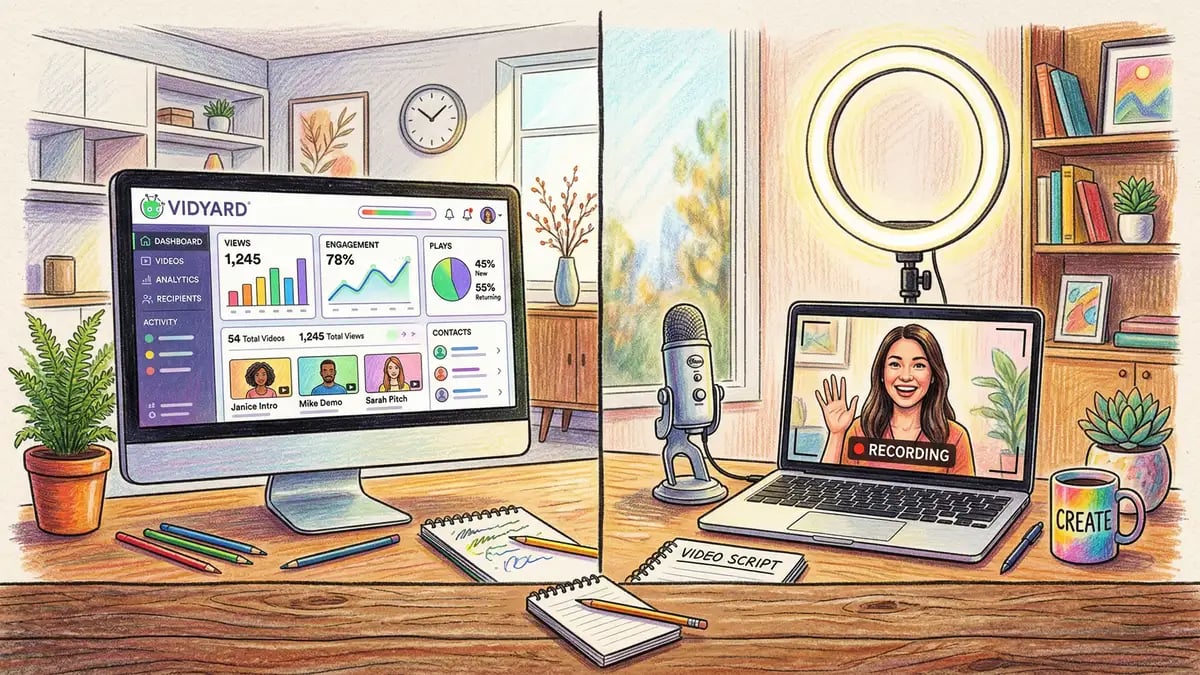
Loom is the category leader. It captures your screen and webcam, allows instant annotations, and generates a shareable link in seconds. Ideal for quick product walkthroughs and asynchronous updates. The pricing is generous for small teams, and the learning curve is virtually zero.
Vidyard sits at the enterprise end. Beyond recording, it provides video hosting, detailed analytics (play time, drop-off points), and integrations with CRM platforms. If you're serious about measuring video ROI, Vidyard's analytics are unmatched. It integrates natively with HubSpot, Salesforce, and Outreach.
AI Video Generation & Personalisation
This is where the market is shifting. AI video tools allow you to create or personalise video at scale without hiring a video production team. Usage surged to 41% adoption among businesses in 2026, up from just 18% in 2024.
HeyGen specialises in AI avatar videos. You write a script, choose an avatar, and it generates a professional-looking video in minutes. For cold outreach at scale, this is game-changing — imagine sending 100 personalised videos with the prospect's name and company embedded in the script, all generated from a single template.
Synthesia operates in the same space, with additional features for multilingual videos and deeper integrations. If your market is global, this is worth evaluating.
Runway and other video editing tools are becoming accessible to non-technical users, allowing quick turnarounds on polished, branded videos without outsourcing to a production agency.
Hosted Video Platforms
Wistia is built specifically for marketing and sales teams. It offers excellent video analytics, customisable players, and integrations with marketing automation platforms. If you're hosting a library of sales-focused videos, Wistia provides better branding and tracking than YouTube.
Vimeo sits between YouTube and Wistia — professional hosting with team collaboration and detailed view analytics.
Ready to integrate video into your B2B sales process? Learn how HubSpot makes video tracking seamless
Explore HubSpot Integration4. Integrating Video with HubSpot
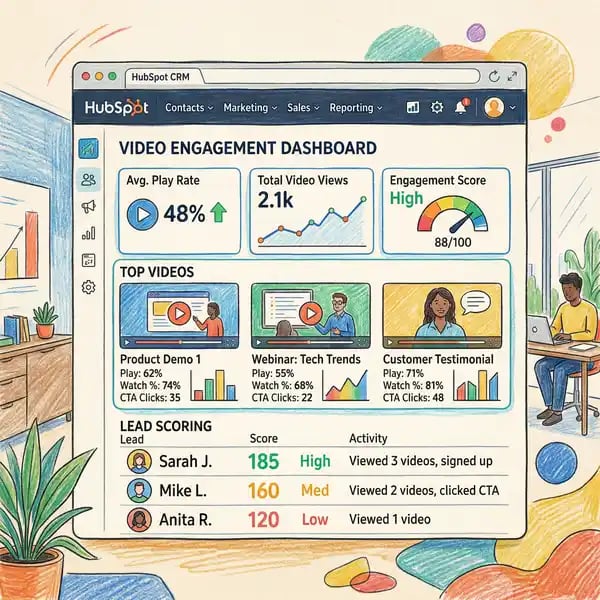
HubSpot is the central hub for most B2B sales teams. Integrating video into your HubSpot workflow ensures that video engagement is tracked, attributed, and accessible to the entire team.
Native Integrations
Vidyard integrates directly with HubSpot, pulling video view data into the contact record. You'll see how long a prospect watched, whether they rewatched sections, and when they viewed. This intelligence informs your next move — if someone watched 90% of your demo, they're qualified for a call. If they watched 10% and dropped off, you might send a different follow-up.
Loom and Wistia don't have native HubSpot integrations, but you can embed video links in emails and track engagement through HubSpot's standard email open and click rates.
Custom Workflows
Many teams use Zapier or Make (formerly Integromat) to automate video workflows. For example: when a contact is added to a specific list, automatically send them a Loom recording via email. Or: when someone watches a Vidyard video beyond 80%, trigger a workflow to move them into a sales sequence.
The flexibility of these automations transforms video from a one-off tactic into a systematic part of your sales process.
Attribution & Sales Cycle Measurement
One of the biggest wins from integrating video with HubSpot is visibility into which videos move deals forward. By tracking video engagement alongside deal progression, you can identify which types of videos correlate with faster closes.
Set up custom properties in HubSpot to log which videos were sent at each stage. Over time, you'll have data showing that 60% of deals that received a personalised outreach video in week 1 moved to the next stage within 14 days, versus only 30% of deals without video. That's your business case for scaling the program.
5. AI-Powered Personalisation at Scale
The challenge with personalised video outreach is that it doesn't scale. Recording 100 individual videos for 100 prospects is prohibitively time-consuming. This is where AI video is transformative.
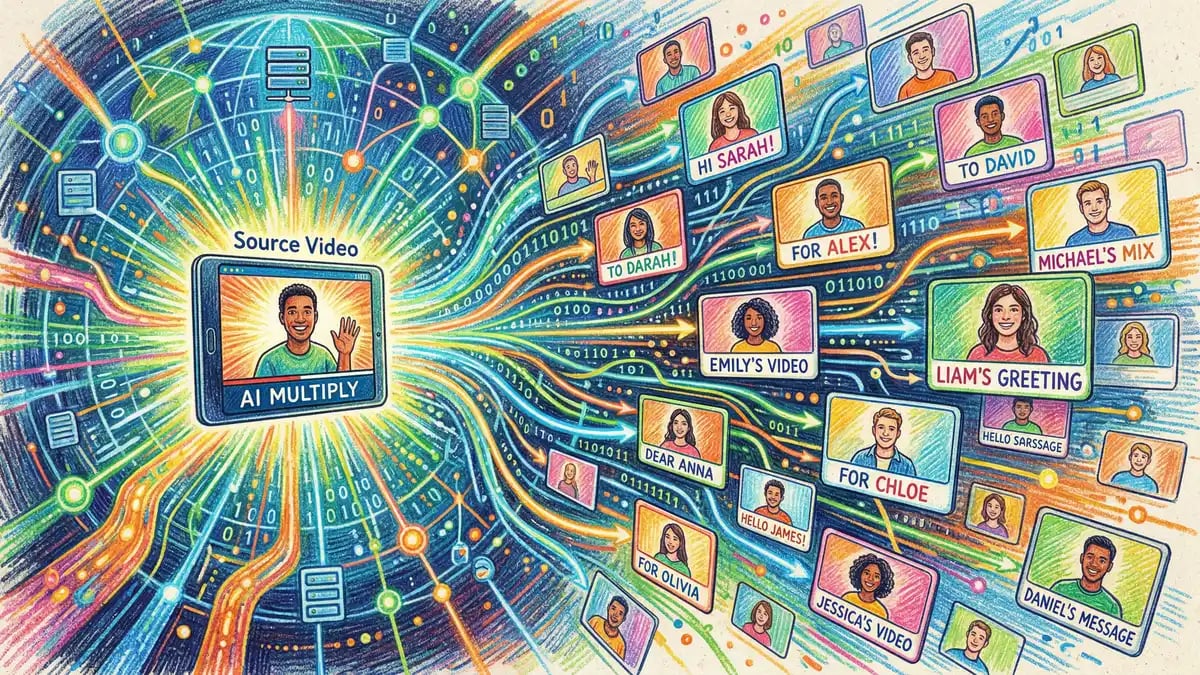
With AI video generation, you create a single video script with variable fields — , , — and the system generates unique videos for each prospect. At scale, this allows you to send truly personalised videos to hundreds of prospects without the manual effort.
Best Practice Insight
AI video performs best when it feels human. Avoid over-scripting or using a robotic avatar. HeyGen and Synthesia offer realistic avatars and natural speech patterns that prospect don't immediately perceive as AI. The closer it feels to a real person, the higher the engagement.
The adoption curve is steep — 41% of businesses use AI video creation today — because the ROI is compelling. You can launch a campaign to 500 prospects with personalised videos in a day, versus weeks of manual recording. And the engagement rates rival or exceed manual videos because the personalisation feels genuine.
One caution: disclose when video is AI-generated if it's not obvious. Transparency builds trust, and the regulatory landscape is still evolving around AI video. Leading with authenticity protects your brand.
6. Recording, Scripts & Technical Setup
Even with AI tools available, most video sales still involves you on camera or recording your screen. Here's what you need to know about setup, scripting, and delivery.
The Basics: Gear & Environment
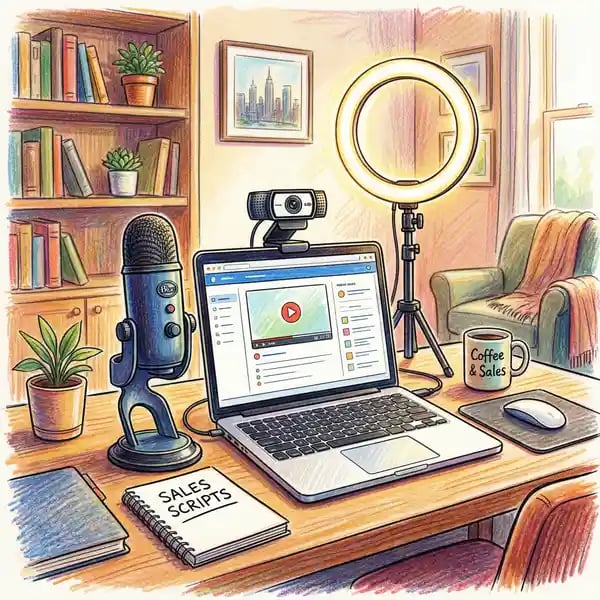
You don't need broadcast equipment. A quality USB microphone (Blue Yeti or Audio-Technica AT2020) is your first investment — audio quality matters far more than video. A laptop or monitor with good lighting, and you're ready to record. Most prospects would rather watch a clear, well-lit, well-spoken 1-minute video than a cinematic 5-minute production that's poorly presented.
If you're on camera, position yourself with a clean background (no clutter), and ensure lighting comes from in front, not behind. If you're screen recording, close notifications, use a presentation-ready background, and clear your desktop before hitting record.
For cold outreach videos, record at eye level in a quiet space. Your prospect wants to feel like you've set aside time just for them — ambient noise or a chaotic background undermines that sense of respect.
Scripting for Personalised Outreach
A strong outreach video script has a simple arc: introduce yourself, acknowledge why you're reaching out, deliver one key insight or offer, and make a soft ask.
Example script (90 seconds):
"Hi [Name], I'm [Your Name] from [Your Company]. I noticed your recent expansion into [Market], and I thought of you because we work with similar B2B SaaS companies to cut their customer acquisition costs by 30% through video in their sales process. I put together a short case study I think you'd find valuable, and I'd love to grab 15 minutes next week to walk through it. What does Tuesday or Wednesday look like?"
This script: (1) personalises via their recent activity, (2) establishes credibility through peer comparison, (3) offers value upfront, (4) makes a low-friction ask. It's conversational, not salesy.
Demo Videos: Structure & Pacing
Product demo videos should be tightly scripted and focused. A 5-minute demo isn't five minutes of screen motion — it's five key features or outcomes, each explained in 45–60 seconds. Break it into chapters: Introduction, Problem, Solution, Results, CTA. Add captions for accessibility and searchability.
Avoid reading slide text verbatim. Instead, speak naturally to the screen — "Here you can see the dashboard automatically tracks these metrics, saving your team 8 hours per week." Show action, don't narrate menus.
7. Measuring ROI & Scaling Your Program
The ultimate question: does video sales prospecting pay for itself? The answer is yes, but you need to measure correctly.
| Metric | What to Track | Why It Matters |
|---|---|---|
| Video Views | Number of times videos are watched, by type | Baseline engagement; if views are low, revisit distribution |
| Completion Rate | % of viewers who watch to the end | Indicates content relevance; high drop-off suggests need to edit |
| Reply Rate | % of emails with video that get replies vs. email-only | Direct measure of prospecting impact; should see 26%+ uplift |
| Meeting Booking Rate | % of conversations that convert to booked meetings | Indicates sales qualification; video should increase conversion |
| Deal Velocity | Days from first video to close for video-engaged deals | The 23% sales cycle reduction shows up here |
| Cost Per Acquisition | Total video tool spend ÷ deals won via video-engaged leads | The ultimate ROI measure; most teams see payback in 3–6 months |
Start with these core metrics. Many teams get derailed by tracking everything — vanity metrics like view counts don't tell you if video is moving deals. Focus on metrics that tie video to revenue: reply rates, meeting bookings, and deal velocity.
Common Measurement Mistakes
Don't compare video performance to your all-time email average — compare it to a control group sent in the same timeframe without video. Don't count a contact as engaged if they opened an email with a video link but didn't actually watch the video. And don't measure ROI too early; allow 60–90 days for video deals to mature and close.
Scaling Strategy
Once you've proven ROI on a small cohort, scale by:
1. Systematising — Document which types of videos work for which sales stages and segments. If personalised outreach videos have a 35% reply rate for your ICPs (Ideal Customer Profiles), standardise that approach and train the team.
2. Automating — Use Zapier, Make, or native HubSpot workflows to trigger video sends based on contact attributes. Example: when a lead is added to the "high-intent" list, automatically enrol them in an email sequence that includes a product demo video on day 3.
3. Transitioning to AI — Once you have proven, repeatable scripts and know your winners, invest in HeyGen or similar to generate personalised videos at scale. This multiplies your team's output 10–100x.
4. Training the team — Video prospecting is a skill. Invest in workshops where your sales team learns recording basics, scripting, and when to deploy video. Many teams have one champion; scaling requires distributed competency.
8. Addressing Challenges & Objections
Video prospecting isn't perfect. Here are common obstacles and solutions:
Challenge: Privacy & Recording Consent
When recording on-camera videos, you own the recording. When recording a prospect's screen or voice (e.g., recording a demo call), ensure you have consent. It's both legal best practice and builds trust. Always disclose if you're recording.
Challenge: Video Fatigue & Authenticity
If every email from your team includes video, prospects may feel overwhelmed. Balance video with traditional email. And as noted earlier, ensure AI video feels human and authentic — if it screams "automated," you lose trust.
Challenge: Production Time & Cost
Screen recordings are fast (1–3 minutes). AI video generation is seconds. On-camera videos for cold outreach take longer and should be batched. Set a weekly "video recording day" where you shoot 20 videos in one session, then distribute them over the following weeks.
Challenge: Outdated Videos
Product demo videos go stale when your product changes. Version control your videos and retire outdated ones. AI-generated videos are easier to update — just tweak the script and regenerate.
9. The Future: What Gartner & the Data Say
Looking ahead, the trends are clear:
Digital-first sales interactions are dominant. Gartner reports that 80% of B2B sales interactions now happen in digital channels. This trend won't reverse. The salespeople winning are those who optimise their digital presence — and video is the highest-bandwidth digital medium.
Buyers prefer human interaction, but not always. Gartner's 2030 forecast notes that 75% of B2B buyers prefer human interaction over AI. But 25% don't. And of those who prefer human, many are open to AI interactions if they're efficient and personalised. The opportunity is in hybrid approaches — use AI video to pre-qualify and segment, then deploy human sales for the final stages.
Attribution will become precise. As tools like Vidyard and Outreach deepen CRM integrations, the connection between video and pipeline will be crystal clear. This will accelerate adoption — it's hard to fund something when ROI is ambiguous, but easy when you can show "45% of this month's closed deals had video engagement."
AI video will commoditize. HeyGen, Synthesia, and competitors will continue to improve and lower prices. By 2027, generating personalised videos at scale will be as simple as sending personalised emails is today. The barrier will shift from "can we generate video at scale?" to "do we have the strategy and messaging to justify sending it?"
10. FAQ: Common Questions About B2B Video Sales Prospecting
Should I use my face or screen recording?
For cold outreach, your face (or at least your face + screen share) builds connection. Prospects want to know who they're talking to. For product demos or technical walkthroughs, screen recording is often enough. For maximum impact on critical prospects, combine both — your face in a webcam corner while you show product on screen.
How do I measure video ROI if my CRM doesn't track it?
Use a simple UTM or custom parameter on the link you send. Create two email lists: one with video, one without (or do it stage-by-stage). Compare reply rates, meeting booking rates, and deal velocities over a 90-day window. Even without automated tracking, you can see the impact.
Is video prospecting appropriate for all industries?
Yes. Whether you're selling SaaS, consulting, professional services, or industrial products, video builds trust faster than text. The only exception is highly regulated industries (finance, pharma) where video might introduce compliance issues — even then, it's usually fine with proper disclaimers.
Can I use AI video for cold outreach?
Absolutely. AI video with personalised variables (name, company) performs at or above manual video. The key: make it feel human. Choose realistic avatars, natural speech, and ensure the messaging is genuine. Avoid disclosing it's AI unless your market specifically values transparency about technology.
What's the minimum investment to start?
Loom (free tier or $12/month) and a USB microphone ($50–150) will get you started. Vidyard for enterprise analytics is $40–100/month. HeyGen for AI video is $25–100/month. Total monthly investment: under $200 for a team of 5. Most teams break even on ROI in 3–4 months.
Conclusion: Making Video Prospecting Part of Your DNA
Video sales prospecting is no longer a "nice to have" — it's a competitive advantage. Teams using video close deals 23% faster, book 40% more meetings from sequences, and maintain higher engagement rates across every stage of the funnel.
The market has made it easy. Tools are affordable and user-friendly. AI video generation is mature enough to scale. HubSpot integrations close the loop between video engagement and deal progression. The only question is execution.
Start small — pick one segment, one type of video, one tool. Measure ruthlessly. Then scale what works. Within 90 days, you'll have data showing whether video is moving the needle. In most cases, it will, and you'll be ready to make it core to how your team sells.
For teams ready to integrate video with HubSpot and build a system that tracks ROI end-to-end, Whitehat can help design and implement your video sales motion. We've worked with dozens of B2B companies to integrate video, measure impact, and scale it across sales teams.
Ready to Transform Your Sales with Video?
Let's discuss how integrated video prospecting can shorten your sales cycle, improve deal quality, and give your team a competitive edge.
Clwyd Probert
Founder, Whitehat
Clwyd helps B2B SaaS and tech companies close deals faster using video, HubSpot automation, and data-driven sales systems. He's worked with companies from pre-revenue startups to Series B teams, focusing on building sales motions that scale.
Sources: Wyzowl 2026 Video Marketing Report | Salesloft Research | Vidyard Video Sales Analytics | Forrester B2B Buyer Research | Gartner Sales Insights 2026