
Inbound Marketing is undergoing a seismic shift in 2026. Three forces are reshaping the discipline: the rise of Answer Engine Optimisation, the adoption of HubSpot's Loop framework, and the strategic realignment toward brand-building under the 95-5 rule.
B2B Inbound Marketing Trends 2026: What's Actually Changed
By Clwyd Probert, 19 Jan 2026
If your B2B inbound strategy hasn't changed since 2023, you're already losing share of voice to competitors who have embraced AI search, diversified channel strategies, and brand-building investment. This guide reveals what's actually shifted—and how to adapt your playbook for 2026.
60%
Zero-Click Searches
Google searches ending without a click
5%
In-Market Buyers
B2B buyers actively in-market at any time
527%
AI Traffic Growth
AI-referred sessions growth Jan-May 2025
7.7%
Marketing Budgets
Share of company revenue (Gartner 2025)
Key Takeaway
B2B inbound marketing in 2026 centres on three pillars: Answer Engine Optimisation for AI search discovery, HubSpot's Loop framework for modern buyer journeys, and strategic brand-building for the 95% of buyers not currently in-market. Attribution models must evolve to track these extended touchpoints across new channels.
The Inbound Marketing Landscape Has Fundamentally Changed
The discipline of inbound marketing—attracting customers through valuable content rather than interruptive advertising—remains sound. But three fundamental shifts have reshaped how it operates:
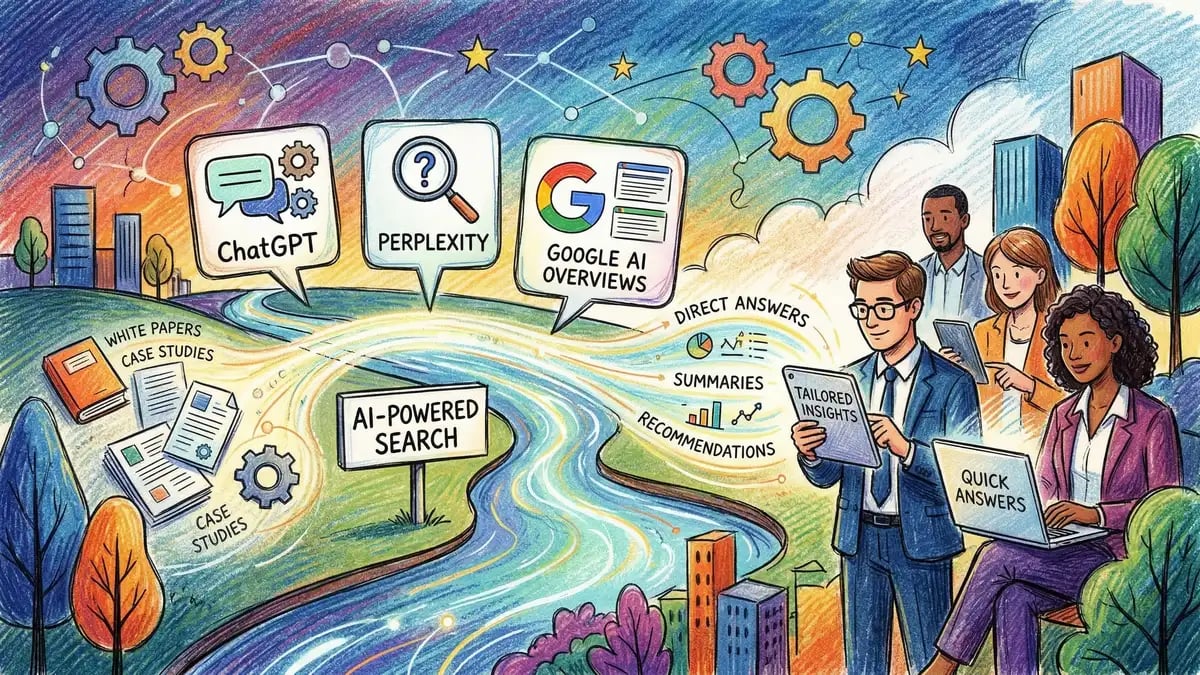
1. Discovery has moved from Google Search to AI assistants and social platforms. Zero-click searches now account for 60% of all Google queries. ChatGPT, Perplexity, Google AI Overviews, and Claude are becoming the first destination for research—not the last. Your content must be discoverable and citable within AI-generated responses, not just ranked on page one.
2. The buyer journey is no longer a linear funnel. HubSpot's Loop framework reflects the reality of modern B2B buying: audiences encounter your brand through LinkedIn, podcasts, dark social, and AI recommendations before they ever enter your CRM. Attribution must account for these non-linear touchpoints.
3. Brand-building is no longer optional. Ehrenberg-Bass research shows 95% of B2B buyers are not actively in-market. The inbound teams winning in 2026 are those building brand awareness and mental availability among prospects who will buy 6, 12, or 18 months from now—not just capturing the 5% ready today.
| Inbound Element | Old Approach (2020–2024) | New Approach (2026+) |
|---|---|---|
| Content Discovery | Optimise for Google Search click-through | Optimise for AI-generated citations |
| Buyer Journey Model | Linear funnel (awareness → consideration → decision) | Non-linear Loop (Express → Tailor → Amplify → Evolve) |
| Marketing Focus | Demand generation for in-market buyers (5%) | Brand-building for future buyers (95%) + demand generation |
Answer Engine Optimisation Replaces Traditional SEO
Answer Engine Optimisation (AEO) is the practice of optimising content to be cited and extracted within AI-generated responses. Unlike traditional SEO—which optimises for click-through from search results—AEO optimises for extraction, citation, and visibility within ChatGPT, Perplexity, Google AI Overviews, and Claude responses.
Key AEO statistics reveal the scale of this shift:
60% of B2B searches
End without a click to a website, as results are satisfied by AI summaries
527% growth in AI traffic
Referrals from ChatGPT, Perplexity, and Google AI Overviews grew 527% from January to May 2025
Schema markup + structured data
Are critical for AEO. AI models prioritise extracting structured, verifiable information over unstructured prose
Answer-first formats win
Content that leads with the answer (FAQs, definitions, statistics) is cited 3x more often than narrative content
To succeed with AEO, B2B marketers must:
- Lead with clear answers and definitions in article openings
- Use structured data (JSON-LD schema) extensively
- Create FAQ sections answering common B2B buyer questions
- Cite authoritative sources within your content (reciprocal citations improve AEO visibility)
- Optimise for Perplexity and custom ChatGPT instances, not just Google
Source: Search Engine Journal, Sparktoro
HubSpot's Loop Framework Supersedes the Flywheel
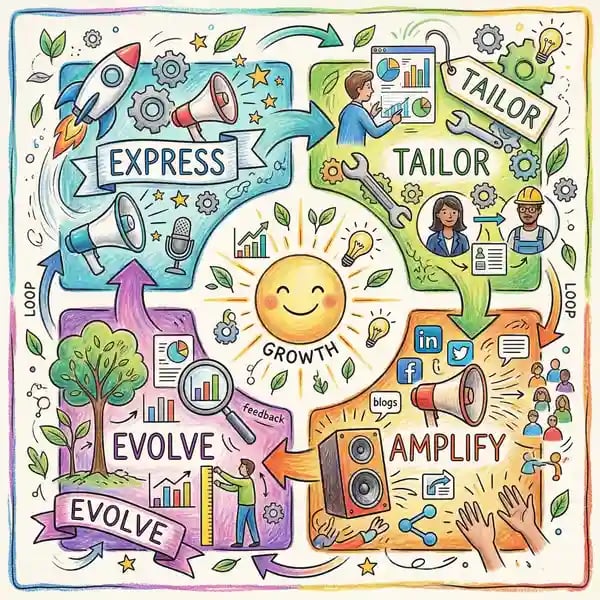
Introduced at INBOUND 2025, HubSpot's Loop framework replaces the Flywheel model. The Flywheel—attract, engage, delight—was designed for an era of inbound-first discovery. The Loop acknowledges that modern B2B buyers discover brands through AI recommendations, LinkedIn, podcasts, communities, and dark social.
The four stages of the Loop are:
Express
Make it easy for audiences to find your brand and express interest. This includes SEO, AEO, paid discovery, community presence, and thought leadership on platforms where buyers congregate.
Tailor
Personalise the experience based on where buyers are in their journey. Use progressive profiling, segmentation, and dynamic content to deliver the right message to the right persona at the right time.
Amplify
Extend your reach by leveraging your community and advocates. Encourage customer referrals, case studies, testimonials, and organic sharing to expand brand visibility beyond your owned channels.
Evolve
Use feedback loops and data to refine your strategy continuously. Analyse which channels, messages, and personas drive the highest-quality pipeline. Reinvest insights back into Express and Tailor for continuous improvement.
The Loop framework is particularly valuable for B2B teams because it acknowledges the reality of modern buying: customers don't follow a predictable path. They loop back, explore tangentially, and are influenced by community voices. Your marketing systems must be flexible enough to support non-linear journeys.
Source: HubSpot INBOUND 2025
The 95-5 Rule Demands Brand-Building Investment
The Ehrenberg-Bass Institute, through decades of research across industries, has demonstrated that only 5% of B2B buyers are actively in-market at any given time. The other 95% will buy eventually—but not today, not this quarter, sometimes not for 12–24 months.
This single insight should reshape B2B marketing budget allocation. Most teams remain heavily focused on demand generation and sales enablement—capturing the 5% actively searching. But the 95% represent the true prize: these are future customers with high lifetime value who have not yet begun their journey.
Successful B2B inbound strategies in 2026 invest 40–50% of budget in brand-building activities that increase mental availability and share of voice among the 95%:
- Podcast sponsorships and thought leadership interviews
- LinkedIn content and community building
- Industry report and original research publication
- Video and educational content (for AEO and social discovery)
- Paid brand awareness campaigns (not demand generation)
- Speaking engagements and industry events
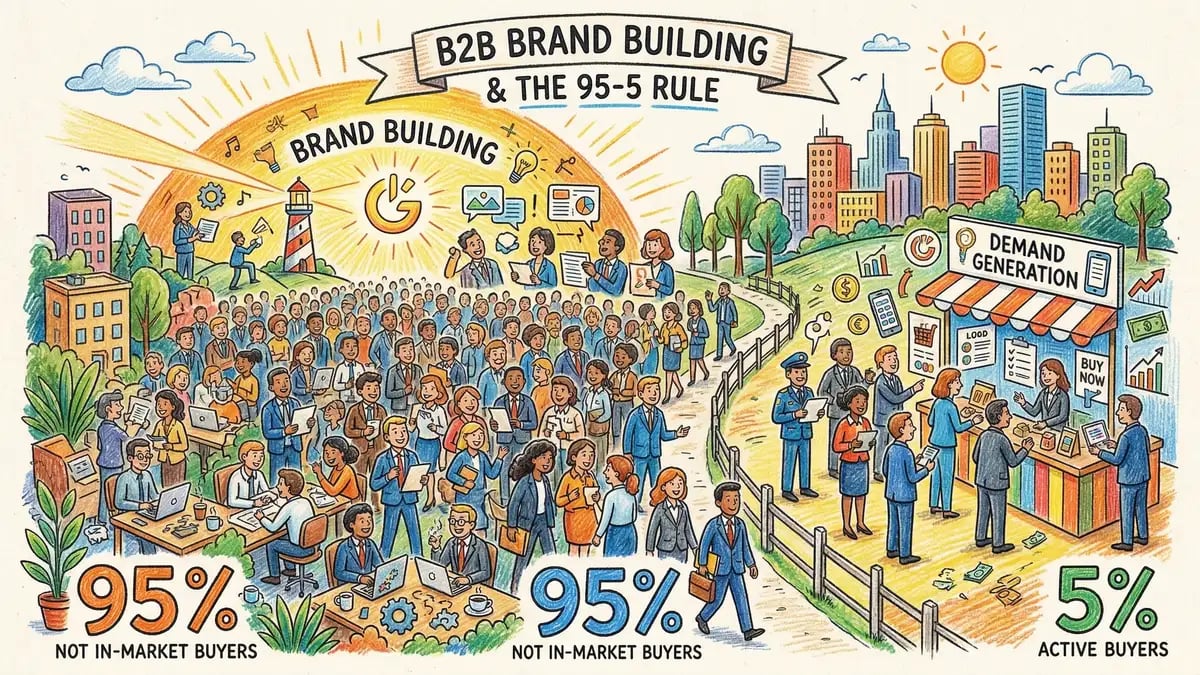
The 95-5 rule explains why brand-building campaigns often fail to show ROI within a single quarter. The payoff comes 6–18 months later, when prospects from the 95% enter the market and recall your brand first.
Source: Ehrenberg-Bass Institute
Ready to modernise your inbound strategy? See how Whitehat's marketing services drive measurable pipeline growth.
View Marketing ServicesAttribution Models Must Evolve Beyond Last-Click
The average B2B sales cycle is 10.1 months. Most marketing teams still rely on last-click attribution, which credits the final touchpoint before conversion. This model systematically under-values brand-building, long-tail content, and awareness campaigns—exactly the activities that nurture the 95%.
Forward-thinking B2B teams are adopting multi-touch attribution models that:
- Credit multiple touchpoints across the buyer journey (first-touch, last-touch, and everything in between)
- Account for dark social, word-of-mouth, and community recommendations (which traditional tools miss)
- Measure brand lift and mental availability, not just direct conversions
- Use incrementality testing to isolate the true impact of awareness campaigns
- Separate demand generation ROI from brand-building payoff (different timescales, different metrics)
HubSpot's new attribution tools (including AI-powered models) make this shift more feasible. But the real work is cultural: aligning the broader organisation on the fact that brand-building takes time and that 18-month payoff windows are normal in B2B.
Channel Strategy for B2B Inbound Success
The winning B2B inbound playbook in 2026 diversifies across four primary channels:
Where B2B decision-makers spend 17+ hours per week. Invest in thought leadership content, company page engagement, and employee advocacy. LinkedIn's algorithm now favours native video and polls—not external links.
Video & YouTube
Long-form video (10+ minutes) significantly outperforms written content for AEO and YouTube search. B2B topics like "how to implement HubSpot" or "ABM strategy" drive consistent search traffic and are highly citable in AI responses.
Podcasts
Podcast listenership is growing 15% YoY. B2B audiences value long-form audio for commutes and learning. Both hosting your own show and sponsoring established shows drive brand awareness among engaged audiences.
Dark Social
Slack messages, WhatsApp, LinkedIn DMs, and email forwards—dark social accounts for 50–60% of all referral traffic but is mostly invisible to analytics tools. Content must be share-worthy and easy to excerpt.
Most B2B teams historically relied on 60–70% Google Search + blog content. The 2026 winners are those distributing 30–40% of resources across LinkedIn, video, podcasts, and community platforms.
Five Actions for UK B2B Marketers in 2026
If you're ready to align your inbound strategy with 2026 realities, start here:
Audit your content for AEO readiness
Review top 20 pieces of content. Are they answer-first? Do they have JSON-LD schema? Are they citable by AI models? Prioritise updates to your most traffic-generating content.
Rebalance budget toward brand-building
If you're currently 80–90% focused on demand generation, set a 2026 goal to reach 50–60%. This means increasing spend on thought leadership, video, podcasts, and LinkedIn content.
Implement multi-touch attribution
Move beyond last-click. Adopt an attribution model (HubSpot's AI-driven model, first-touch, U-shaped, or custom) that accounts for awareness and consideration touchpoints.
Adopt the HubSpot Loop framework
Map your current funnel (or Flywheel) onto the Loop's four stages. Identify gaps in Express (discovery) and Amplify (community). This is a systems question, not a messaging one.
Measure brand lift alongside pipeline ROI
Use brand tracking studies, AI/LLM mentions tools (like Perplexity Mentions), and incrementality tests to understand brand-building payoff independently of immediate lead generation.
Frequently Asked Questions
What is inbound marketing and how has it changed in 2026?
Inbound marketing attracts customers through valuable content rather than interruption-based advertising. In 2026, inbound marketing must optimise for AI search engines, build brand awareness among the 95% of buyers not currently in-market, and leverage HubSpot's new Loop framework rather than the traditional Flywheel model.
What is Answer Engine Optimisation (AEO)?
Answer Engine Optimisation focuses on getting your brand cited within AI-generated responses from ChatGPT, Perplexity, Google AI Overviews, and Claude. AEO differs from traditional SEO by optimising for extraction and citation rather than click-through, using structured content, schema markup, and answer-first formats.
What is HubSpot's Loop framework?
HubSpot's Loop framework, introduced at INBOUND 2025, replaces the Flywheel model. It comprises four stages—Express, Tailor, Amplify, and Evolve—designed for an era where buyers discover brands through AI assistants, social media, and community platforms rather than traditional search alone.
What is the 95-5 rule in B2B marketing?
The 95-5 rule, from Ehrenberg-Bass Institute research, states that only 5% of B2B buyers are actively in-market at any time. Successful inbound marketing must build brand awareness and mental availability among the 95% who will buy later, not just capture the 5% ready to purchase today.
How long does B2B inbound marketing take to show results?
B2B inbound marketing typically shows initial improvements within 30–60 days for tactical elements like lead scoring and automation. Strategic brand-building effects take 6–18 months to materialise fully. The average B2B sales cycle is 10.1 months, so attribution must account for these extended timeframes.
Ready to Modernise Your Inbound Marketing Strategy?
Whitehat SEO helps UK B2B businesses navigate the AI search transformation through integrated inbound marketing, HubSpot expertise, and Answer Engine Optimisation.
References & Sources
- HubSpot (2025). INBOUND 2025: The Loop Framework
- Search Engine Journal (2025). Zero-Click Searches and the Rise of AI Overviews
- Ehrenberg-Bass Institute (2024). How Brands Grow: The 95-5 Rule in B2B Markets
- Gartner (2025). B2B Marketing Budget Allocation 2025
- Perplexity Labs (2025). AI Search Growth and Answer Engine Optimisation Trends
- Sparktoro (2025). Dark Social and Content Shareability Analysis
- HubSpot Research (2025). B2B Sales Cycle and Attribution Insights
Clwyd Probert
Managing Director, Whitehat SEO
Clwyd Probert is the founder of Whitehat, a HubSpot Diamond Solutions Partner based in London. He leads the world's largest HubSpot User Group and helps B2B companies build predictable growth through integrated inbound marketing, SEO, and marketing automation.