
Direct Answer: UK marketers must build GDPR compliance into day-to-day operations: collect only necessary data, obtain clear opt-in consent for marketing, be transparent at every touchpoint, and configure your systems (especially HubSpot) to enforce consent automatically. Post-Brexit UK GDPR remains broadly aligned with EU GDPR, and 2025 regulatory changes have raised penalties, making proper setup essential.
Key Takeaways
- Lawful basis matters: For marketing emails, obtain affirmative opt-in consent. Record how and when consent was captured. Make withdrawal easy via unsubscribe/preference centres.
- Transparency is mandatory: Clearly explain what data you collect, why, who you share it with, and how long you retain it. Link to a privacy notice at every capture point.
- 2025 enforcement is tougher: The ICO now has enforcement powers aligned to GDPR penalty levels (up to £17.5 million or 4% of turnover) for PECR and cookie violations.
- Configure systems to enforce rules: Use HubSpot's data privacy settings, consent capture, and "send only with legal basis" restrictions so compliance is automatic, not manual.
- Privacy-led marketing performs better: Cleaner lists, better engagement, fewer complaints, and stronger customer trust compound over time.
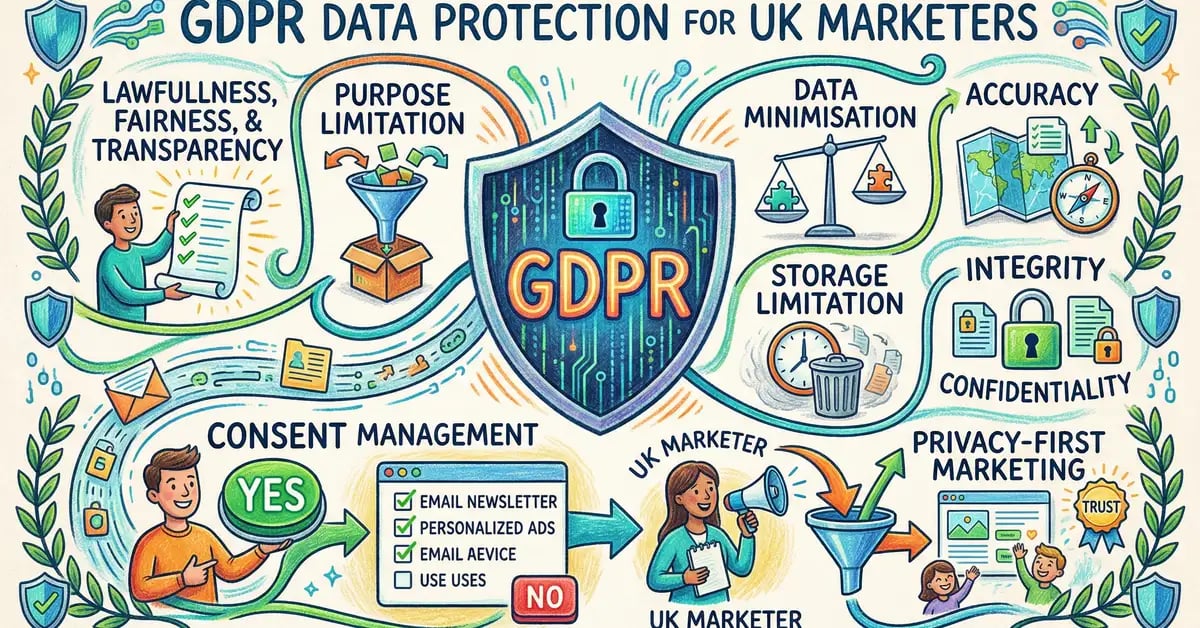
What is UK GDPR and does it apply to your marketing?
UK GDPR is the UK's retained version of the General Data Protection Regulation, which became law after Brexit. It governs how organisations collect, store, use, and share personal data. For marketers, this is critical: every email address, CRM record, website tracking identifier, form submission, and event registration is personal data, and UK GDPR applies to how you handle it.
In practice, UK GDPR remains broadly aligned with EU GDPR. The key difference is administration: the UK Information Commissioner's Office (ICO) oversees UK enforcement, while EU data protection authorities handle EU compliance. However, 2025 reforms have strengthened enforcement and introduced targeted updates to UK law, particularly around marketing and cookie rules.
A simple principle: if you market to UK individuals (including B2B contacts, because they're still people), UK GDPR applies. If you also market to EU residents or process their data, EU GDPR may apply as well, which means you may need to navigate cross-border requirements and representation rules.
Post-Brexit, the UK remains outside the EU data protection framework, but the ICO's regulatory approach is pragmatic: UK GDPR is designed to enable compliant business, not block it. However, penalties are now higher, and the ICO's enforcement activity has increased, so getting compliance right is a genuine business priority.
GDPR essentials for marketers: consent, transparency, and data rights
Core principle: Be clear, be fair, don't hoard data, don't surprise people, and make it easy to say "no". This mindset is the foundation of compliant marketing.
1. Lawful Basis for Marketing (and why "I found your email on LinkedIn" doesn't work)
Every time you process personal data, GDPR requires a lawful basis. For most marketing emails, the safest and clearest basis is explicit consent. This means getting clear, affirmative agreement (usually via an unticked checkbox or opt-in toggle) that the person wants to receive marketing from you.
In some B2B scenarios, you might consider legitimate interests (for example, a newsletter to existing clients), but you still must comply with UK-specific rules (the Privacy and Electronic Communications Regulations, or PECR) for electronic marketing, and you must always respect opt-outs, preferences, and transparency. When in doubt, use consent.
2. Consent That Actually Holds Up
Valid consent requires a "clean yes": it must be clear, specific, informed, and given by affirmative action. Pre-ticked boxes don't count. Burying consent language in a wall of text doesn't count. If your form copy makes people squint to understand what they're agreeing to, it will not satisfy the ICO.
Best practice checklist:
- Use unticked checkboxes or explicit opt-in toggles for marketing communications.
- Keep consent separate from other terms—no bundling operational data collection with marketing opt-ins.
- Record how, when, and where consent was captured (form name, date/time, URL or source).
- Make it easy to withdraw consent via unsubscribe links and preference centres in every email.
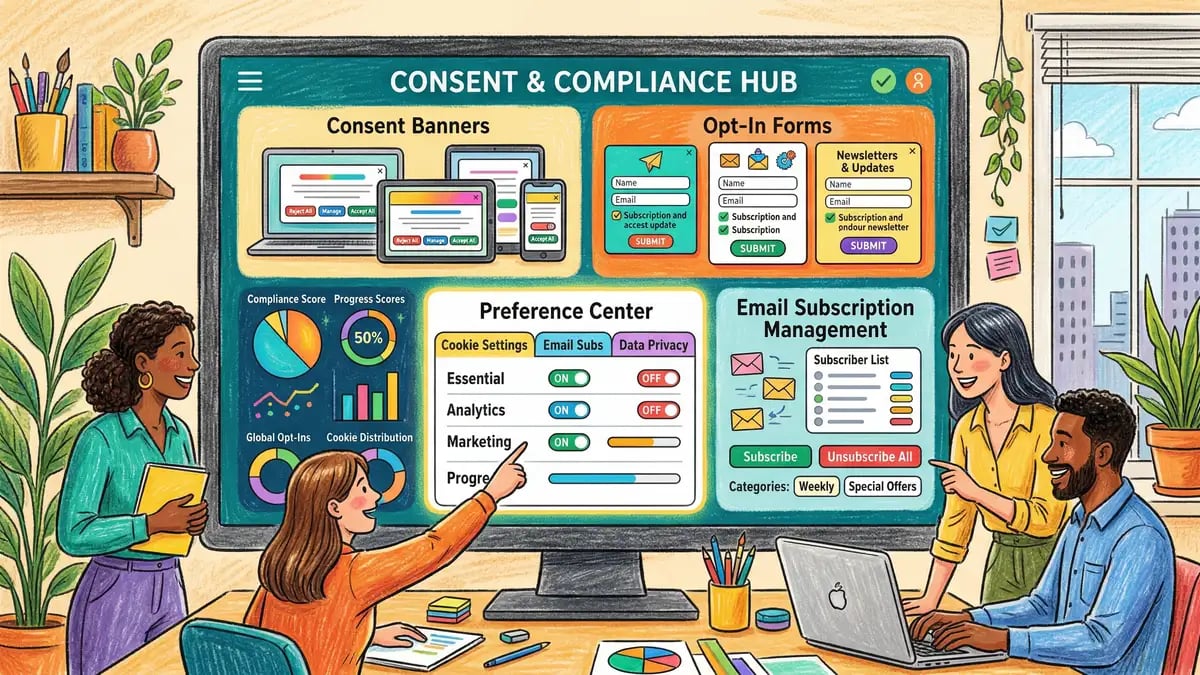
- If you use HubSpot, enable data privacy settings and restrict marketing sends to contacts with a recorded legal basis.
3. Transparency: Say What You Do (and Do What You Said)
GDPR requires transparency about data collection and use. Specifically, you must clearly communicate why you're collecting data, what you'll use it for, who you'll share it with, and how long you'll keep it. This should be documented in a privacy notice or privacy policy.
Implementation approach:
- Link to a clear privacy notice at every data capture point: forms, chat widgets, booking pages, event registrations.
- Use plain English (not legal jargon) to explain what someone will receive if they opt in to marketing.
- Provide a preference centre (or at minimum, clear unsubscribe and preference management) in every marketing email.
- Update your privacy notice when your data practices change (for example, if you start sharing data with a new partner).
4. Data Subject Rights: Plan for the "Delete Me" Moment
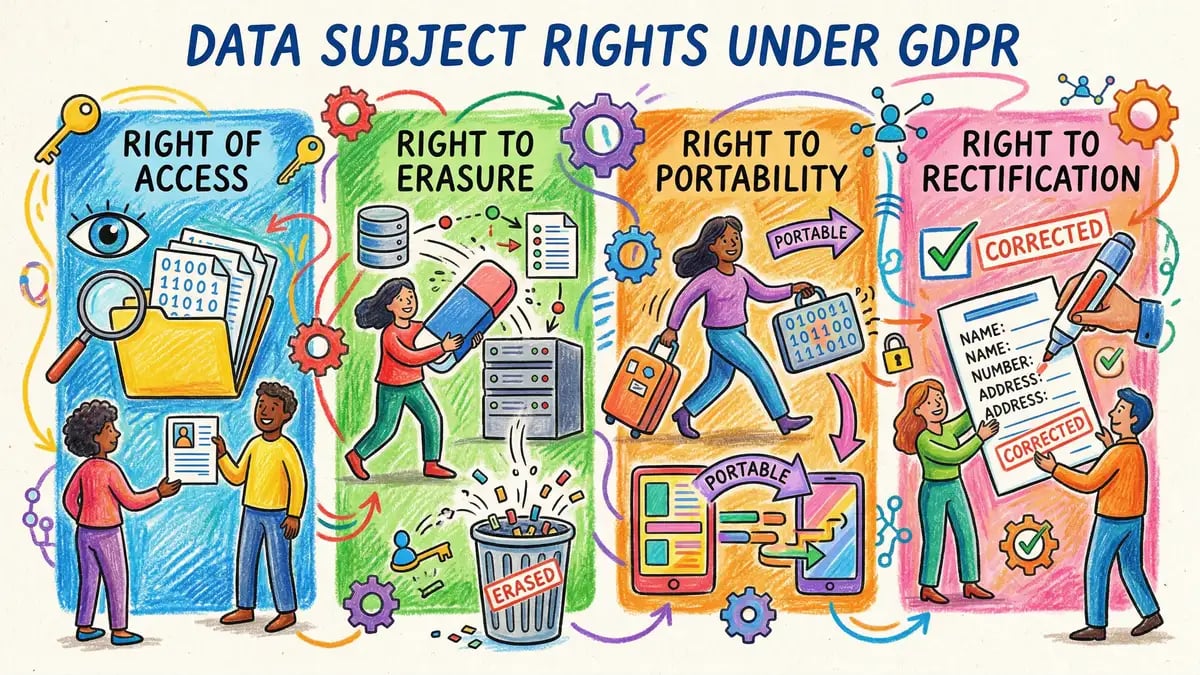
Under GDPR, people have rights: they can request access to their data, ask for corrections, request deletion, object to processing (including direct marketing), or ask for portability. When a data subject access request (DSAR) lands in your inbox, your team should not be improvising.
The ICO provides detailed guidance on calculating the one-month response period and handling different types of requests. A simple internal playbook—who receives DSARs, how you verify identity, how you collect data from all systems, and your response timeline—transforms a stressful situation into a managed process.
5. Data Minimisation: Don't Collect What You Can't Protect
Data minimisation is a marketer's superpower. The principle is simple: collect only the data you actually need. This reduces risk, simplifies operations, and improves data quality. Fewer unnecessary form fields mean faster conversions. Fewer spreadsheet exports mean less chance of accidental exposure. Fewer data silos mean cleaner segmentation and better reporting.
Security and minimisation go hand in hand. Make sure vendors (email service providers, CRM, analytics platforms, ad networks) are properly configured with consent enforcement. "It's only marketing data" is not a valid excuse for poor security—marketing databases are often the easiest entry point for reputational damage and regulatory action.
What changed in 2025 for UK marketers?
Headline: UK GDPR remains closely aligned with EU GDPR. However, 2025 reforms have sharpened enforcement, updated rules around cookies and electronic marketing, and raised penalties. For marketers, the practical takeaway is clear: the cost of sloppy consent and cookie management has risen significantly.
PECR Penalties Now Aligned to GDPR Levels
The ICO confirms it has a full range of enforcement tools for breaches of the Privacy and Electronic Communications Regulations (PECR), which govern electronic marketing and cookies in the UK. For serious infringements, the ICO can issue fines up to £17.5 million or 4% of global annual turnover, whichever is higher. This brings PECR penalties into line with GDPR penalties, making cookie banners and consent mechanisms board-level risk management issues, not just UX considerations.
Targeted UK Reforms Post-Brexit
The UK has introduced amendments to its GDPR framework as part of post-Brexit reforms. These are the first substantial updates to GDPR since 2018, and the UK approach remains broadly aligned with EU law. Key areas include updates to accountability requirements, clarifications on lawful basis for certain marketing activities, and targeted changes to cookie and consent rules.
Cookie Rules: Some Flexibility, but Marketing Cookies Still Need Consent
2025 changes introduced limited flexibility for certain low-risk cookies (for example, session cookies that don't track users across sites). However, marketing and advertising cookies typically still require explicit consent. The safest approach is to maintain clear, compliant cookie consent mechanisms, categorise cookies (necessary vs. marketing), and keep documented records of third-party vendors and their purposes. If you use HubSpot, configure data privacy settings and consent capture to enforce these rules by default.
A practical GDPR checklist for marketing teams
Approach: Compliance becomes manageable when you treat it as a repeatable marketing process. Audit what you collect, fix consent at the source, configure your platforms to enforce legal basis automatically, and document your rights-request procedures. Below is a step-by-step checklist your team can action today.
Step 1: Map your data flow (30 minutes, not 30 days)
List all your data capture points (forms, chat, bookings, events), where data is stored (CRM, email service, analytics), and where "leaks" might happen (exports to Google Sheets, downloads to personal inboxes, third-party integrations). If you can't explain where a contact came from and why you have a legal basis to email them, that's your starting point for remediation.
Step 2: Fix opt-in at the point of capture
Add clear, specific consent language to every form and landing page. Separate marketing opt-ins from operational messaging (for example, order confirmations). Link to your privacy notice. If you use HubSpot, turn on data privacy settings and configure "send only with legal basis" rules so marketing emails are blocked to contacts without recorded consent.
Step 3: Make subscription preferences effortless
Every marketing email should include an unsubscribe link and ideally a preference centre where people can choose which types of communication they want to receive. This improves list quality and reduces complaints. Document your approach and align it with best-practice standards like the CAN-SPAM Act and PECR.
Step 4: Sort your cookie story (before your next campaign launch)
Confirm which cookies and tracking scripts fire on your key pages (homepage, main landing pages, checkout). Categorise them: necessary (session management, security), analytics (performance data), and marketing (retargeting ads, lead tracking). Ensure consent is captured where required and keep a record of vendors and their purposes. Test your cookie banner to confirm it's blocking marketing cookies until consent is given.
Step 5: Operationalise data subject rights (so you don't panic-reply)
Build a short internal playbook: who receives data access requests, how you verify the requester's identity, how you collect and compile data from all systems (CRM, email, analytics, social ads), how you calculate the one-month response deadline, and who signs off on the final response. The ICO provides worked examples for handling these requests and calculating deadlines correctly.
Step 6: Configure automation to enforce consent and prevent accidental sends
Modern marketing automation platforms support consent enforcement as a native feature. In HubSpot, configure privacy settings, enable consent capture on forms, and create rules that prevent marketing emails being sent to contacts without a recorded legal basis. This removes the need for manual compliance checks and turns enforcement into automation. If you're starting from scratch, our HubSpot onboarding team can help you set this up correctly from day one.
Turning privacy into a marketing advantage
Here's the counterintuitive truth: privacy-led marketing tends to be better marketing. When your growth engine is built on permission and transparency, you spend less time repairing reputational damage and more time compounding results.
One reason GDPR-friendly marketing works: it filters out low-intent contacts. Your list may be smaller, but it's healthier. Fewer bounces, fewer complaints, better engagement, clearer segmentation, more accurate analytics, and more predictable revenue. And the trust angle is real: recent research suggests 73% of shoppers prefer brands that manage email data transparently, which translates directly to retention and word-of-mouth.
Consumer research consistently shows that people aren't rejecting personalisation or innovation. They're rejecting opacity. Brands that give people clear visibility and control over their data—and respect those preferences—win on trust. And trust converts.
Frequently Asked Questions
Does GDPR still apply to UK businesses after Brexit?
Yes. The UK adopted GDPR into domestic law as the UK GDPR, and it applies to any organisation processing personal data about UK individuals. If you market to EU residents or process their data, EU GDPR may also apply, which means you may need to manage dual compliance and cross-border data transfer restrictions. The 2025 enforcement reforms mean the practical need for compliance is as strong as ever.
Do small businesses need to comply with GDPR for marketing?
Yes. GDPR applies to organisations of any size when they process personal data—including marketing data like email addresses, CRM records, and tracking identifiers. While documentation and procedures can be proportionate to your size and risk, the essentials (lawful basis, transparency, security, and honouring rights) still apply. Non-compliance carries the same penalties regardless of company size.
What's the best way to get valid marketing consent under GDPR?
Use clear, specific, plain-language opt-in at the point of data capture (usually via an unticked checkbox or explicit toggle). Keep a record of when and how consent was given. Make withdrawal easy by including unsubscribe links and preference options in every email. Consider double opt-in (sending a confirmation email and requiring a second click) to strengthen proof and improve list quality. Avoid bundling consent into other terms or hiding it in long privacy notices.
What penalties can UK marketers face for non-compliance?
Penalties depend on the severity of the breach. The ICO can issue enforcement notices requiring remediation, and for serious infringements, it can impose significant fines: up to £17.5 million or 4% of annual global turnover for GDPR breaches, and the same penalties now apply to serious PECR violations (electronic marketing, cookies, etc.). These are not theoretical risks—the CMS GDPR Enforcement Tracker recorded over 2,245 fines across the EU and UK as of 2025, totalling around €5.65 billion.
Can I still use marketing automation and cookies under GDPR?
Absolutely. GDPR doesn't ban marketing automation or cookies—it requires you to use them responsibly. This means configuring your platforms to enforce consent, lawful basis, and preferences automatically. HubSpot, for example, supports consent capture, legal basis tracking, and can enforce "send only to contacts with opt-in consent" rules. For cookies, use a compliant consent banner that clearly categorises cookies (necessary vs. marketing) and doesn't fire marketing/analytics cookies until consent is given. Document your vendors and their purposes.
What's the difference between UK GDPR and EU GDPR in practice?
UK GDPR and EU GDPR are broadly similar in their core principles. The main differences are administrative: the UK Information Commissioner's Office (ICO) enforces UK GDPR, while individual member states' authorities enforce EU GDPR. The UK has introduced targeted reforms in 2025, particularly around marketing and cookies, but these don't create a significant divergence. If you market to both UK and EU audiences, you'll typically need to comply with both frameworks, though a "global" compliance approach often works if you follow the stricter requirements of either regime.
Final thoughts
GDPR compliance doesn't have to slow marketing down. The teams that are winning in 2025 are the ones who have baked privacy into their systems from the start: cleaner consent mechanisms, clearer messaging, better segmentation, reduced compliance risk, and stronger customer trust.
If you want a practical sanity check on your forms, cookie setup, email management, HubSpot configuration, or data flow, we can help. Whitehat SEO specialises in HubSpot onboarding and compliance setup, and we'll help you build a system that's both compliant and commercially effective.
About the author
Clwyd Probert is the founder of Whitehat SEO and a HubSpot Diamond Partner. He specialises in helping UK B2B and B2C companies align compliance, privacy, and marketing automation for sustainable growth. Clwyd has worked with 200+ organisations on GDPR implementation, HubSpot onboarding, and privacy-led marketing strategy.