
Key Takeaway
B2B networking in 2026 has fundamentally shifted: 61% of buyers prefer rep-free experiences, and success now depends on referrals (2.9% conversion), community engagement (£6.40 revenue per £1 spent), LinkedIn algorithm mastery, AI-powered outreach compliance, rapid event follow-up (5-minute rule = 8x higher conversion), and account-based marketing. Traditional cold prospecting is dead; relationship-driven strategies dominate.
Why Modern B2B Buyers Avoid Sales Reps
The 2026 B2B buyer is self-sufficient and suspicious of traditional sales approaches. According to Gartner's 2025 research, 61% of B2B decision-makers prefer rep-free experiences, meaning they actively avoid contact with sales professionals during the early stages of their buying journey. This shift didn't happen overnight—it's the cumulative effect of improved access to information, vendor research tools, and a growing preference for autonomous decision-making.
The research reveals additional insight into buyer behaviour: 94% of B2B buyers rank vendors before initiating contact, and 75% prefer to stay rep-free as long as possible. These numbers underscore a harsh reality for sales teams—your prospect has already formed opinions about your company before anyone picks up the phone. They've reviewed your website, read customer testimonials, compared you against competitors, and made initial judgments about fit.
This environment demands a complete rethink of B2B networking strategy. The tactics that worked five years ago—cold calling, blast emails, trade show booth presence—generate friction rather than relationships. The winning approach combines five core strategies: referral-led growth, community engagement, algorithm-aware content, AI-augmented outreach with compliance guardrails, and event follow-up velocity.
61%
Prefer Rep-Free
B2B buyers avoid sales contact
94%
Research First
Rank vendors before contact
75%
Extended Rep Avoidance
Prefer rep-free as long as possible
Source: Gartner 2025 B2B Buyer Research
Strategy 1: Referral-Led Growth—The 5x Advantage
Referrals represent the highest-converting channel in B2B networking, and the numbers validate why this strategy dominates in 2026. Referred leads convert at 2.9%—nearly 3x higher than outbound cold prospecting (0.5–1%), and 5x more qualified than inbound organic leads on average.
What makes referrals so powerful? Trust transfer. When a respected peer recommends your solution, the prospect receives implicit social proof that your offer is legitimate and valuable. The sales cycle shortens dramatically because the referrer has already pre-qualified the lead and vouched for your credibility. Referral customers also demonstrate higher lifetime value, lower churn, and greater expansion revenue—they stay longer and buy more.

Building a referral programme requires intentional infrastructure. The playbook includes: identifying advocates (existing happy customers and strategic partners), systematizing the referral request process (ideal timing is 30–60 days post-sale), providing incentive structures (monetary rewards, exclusive benefits, or recognition), and measuring referral velocity (tracking source-to-conversion time). The best B2B companies embed referral requests into their customer success processes—making it a natural part of the relationship rather than a transactional ask.
One often-overlooked element: internal referral programs. Your employees have networks. Sales teams, customer success managers, and executives typically have extended professional networks that contain untapped pipeline. Companies that incentivize and track employee referrals find unexpected acceleration in their prospecting velocity. The same trust-transfer dynamic applies—colleagues' recommendations carry weight in B2B buying committees.
Strategy 2: Community-Led Growth—The Multiplier Effect
Community-led growth (CLG) has exploded in B2B over the past two years. 48% of B2B companies now allocate dedicated budget to community initiatives, and the ROI is compelling: £6.40 of revenue generated for every £1 spent on community. That 6.4x return dramatically outpaces most paid advertising channels.
Community works because it shifts from seller-to-buyer dynamics to peer-to-peer connection. Members join communities to solve problems, share knowledge, and build relationships with people facing similar challenges. Your brand becomes the facilitator of those connections rather than the protagonist in a sales pitch.
The London HubSpot User Group exemplifies this model. Founded by community members rather than HubSpot corporate, the group hosts monthly meetups attracting 50–100 marketing and sales professionals. Attendees connect, learn from peers, and naturally gravitate toward HubSpot solutions—not because they're sold to, but because the community solved their problems. Member companies often become customers because they see the platform in action and hear real success stories from trusted peers.
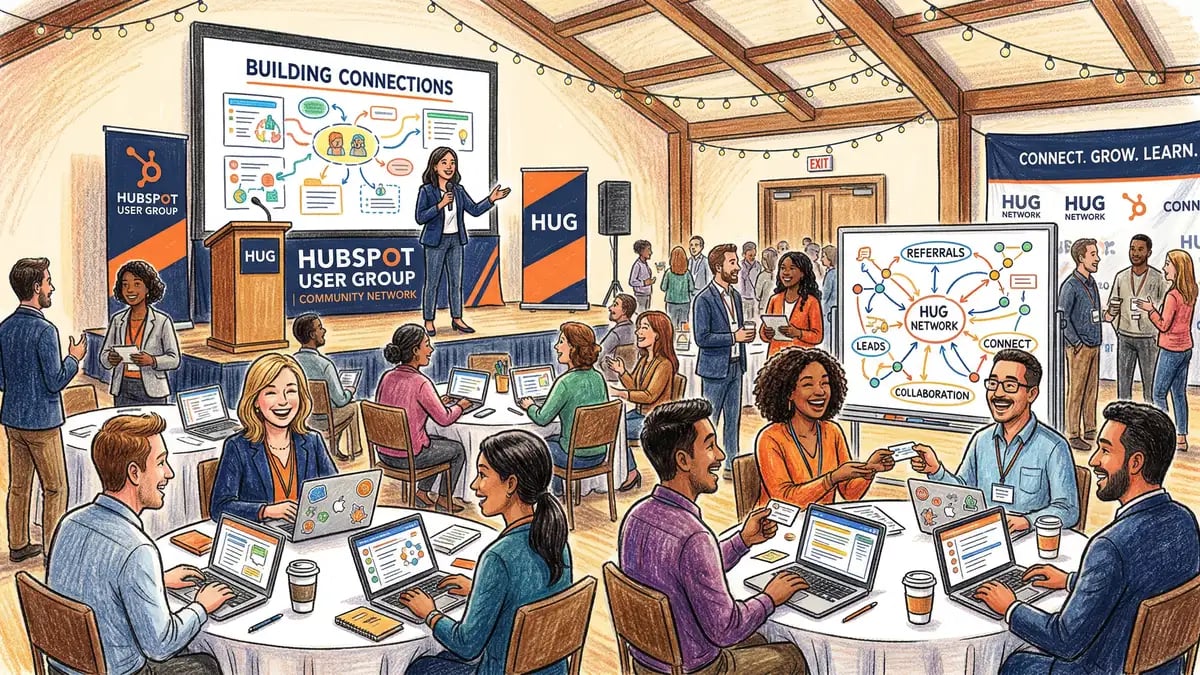
Building community requires patience and resourcing. The model doesn't generate immediate pipeline—it builds brand affinity over 6–12 months. Success depends on: selecting the right foundation (your product category, target customer segment, or use case), recruiting community managers who are genuinely passionate (not just assigned), creating consistent value (events, content, networking opportunities), and eventually monetizing through sponsorships, training, or certification.
Community-led growth particularly resonates with technical and practitioner audiences. SaaS companies serving engineers, data teams, marketing ops professionals, and sales enablement specialists often see the strongest CLG outcomes. The network effect compounds: more members attract more events and content, which attracts more members, creating self-sustaining momentum.
Strategy 3: LinkedIn Algorithm Mastery—Format, Frequency, Timing
LinkedIn is the primary digital networking platform for B2B professionals. The platform's algorithm has fundamentally shifted in 2026 to prioritize relevance over virality—meaning your network's actual engagement matters far more than reaching the platform's broadest possible audience. This change favors authentic, niche content over viral trends.
Content format dramatically influences algorithmic distribution. The LinkedIn Official Blog 2026 research shows stark differences in engagement multipliers:
| Content Format | Engagement Lift | Context |
|---|---|---|
| Video | +69% | Native video clips (30–90 seconds) drive strongest engagement; production quality matters less than authenticity |
| Carousel | +45% | Multi-slide educational carousels; LinkedIn's native carousel format outperforms image stacks |
| Personal Article | +800% | Long-form published articles from personal profiles receive 8x reach vs. company page content |
| Comments | +200% | Each comment discussion doubles post reach; threaded conversations boost visibility dramatically |
Source: LinkedIn Official Blog 2026
The personal article advantage is particularly striking. LinkedIn's algorithm rewards content published from individual profiles far more aggressively than company page content. This creates an asymmetry: your CEO or thought leaders publishing long-form analysis receives 8x the reach compared to the same content posted to your company page. Companies that leverage their executive team as content creators see exponential growth in brand visibility and inbound pipeline.
Posting frequency matters but requires nuance. Posting 2–5 times per week optimizes for visibility without algorithm penalties for oversaturation. The sweet spot depends on your audience (sales professionals tolerate higher frequency; technical audiences prefer quality over volume). Within that frequency band, Tuesday–Thursday 8–10 AM generates the highest engagement across B2B segments—peak times when decision-makers check LinkedIn before diving into daily meetings.
The hierarchy is clear: personal profile video > personal article > carousel > company page content. Teams that embrace this reality—empowering employees to be content creators rather than centralizing all content to company channels—outpace competitors in reach and lead generation velocity.
The Company Page Trap
Common mistake: Concentrating all content production on your company LinkedIn page to maintain brand control.
The reality: Company page content receives a fraction of the reach of personal creator content. The algorithm interprets company pages as promotional, and B2B audiences follow people, not brands. Decentralizing content creation to employees with relevant expertise dramatically increases visibility and lead flow—with minimal additional brand risk if you provide clear content guidelines.
Strategy 4: AI in Outreach—Compliance, Scale, and Reputation Risk
AI adoption in B2B sales and marketing has become mainstream. 94% of B2B companies have adopted some form of AI in their sales and marketing operations—from lead scoring and email personalization to full conversation simulation and outreach automation. AI dramatically improves prospecting speed and message personalization at scale, but it introduces compliance and reputation risks that require careful governance.
The compliance landscape is complex. GDPR Article 21 grants EU residents an explicit right to opt out of automated decision-making and profiling. Outbound email campaigns powered by AI must comply with CAN-SPAM regulations (clear unsubscribe links, sender identification, honest subject lines). Email deliverability depends on domain reputation—mass volume from new sending domains triggers spam filter flagging that can tank entire campaigns.
Best practices for AI-powered outreach: (1) Use established, warm-up sending domains rather than new infrastructure; (2) Start with low daily volume (50–100 emails/day) and increase gradually; (3) Segment audiences to avoid blanket sends; (4) Maintain manual review of AI-generated copy—chatbots sometimes produce inappropriate tone or factual errors; (5) Provide clear opt-out mechanisms and respect unsubscribe requests immediately; (6) For EU prospects, include explicit language confirming they're opting into communication, and provide the right to object under Article 21; (7) Track bounce rates and adjust sending to maintain deliverability above 95%.
The reputational stakes are high. A single campaign that triggers mass unsubscribes or spam complaints can permanently damage domain reputation, forcing you to abandon the sending domain entirely. Conservative, compliant outreach velocity is far preferable to aggressive volume that generates short-term results followed by deliverability collapse.
Strategy 5: Event Follow-Up Velocity—The 5-Minute Advantage
Trade shows, conferences, and webinars generate significant opportunity for B2B networking, but most companies squander that opportunity through poor follow-up execution. 80% of leads from events are never followed up with at all—they go dark, the prospect moves on, and the opportunity disappears.
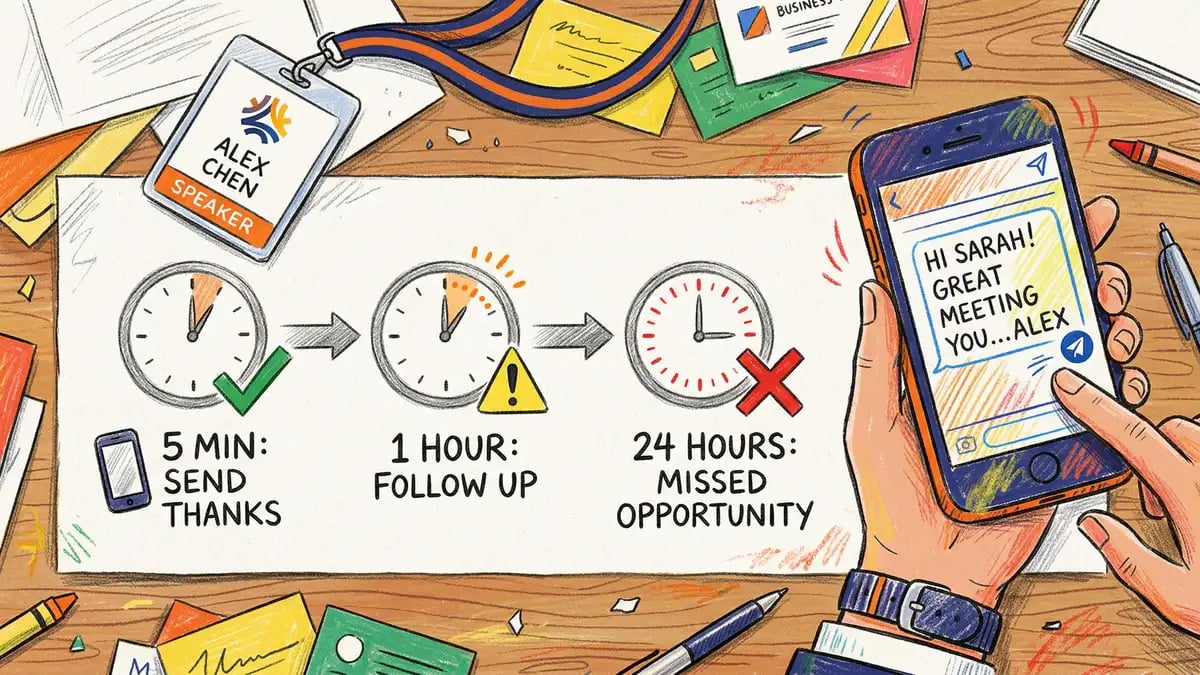
For leads that are followed up with, timing is everything. Contacting within 5 minutes of a conversation yields 8x higher conversion rates compared to following up 24 hours later. This creates operational pressure—if your event team is using paper business cards and manually entering data days later, you've already lost 95% of your conversion opportunity.
The winning operational model: digital lead capture on-site (tablet or mobile app), real-time data synchronization to your CRM, and automated 5-minute follow-up via sales team alerts or immediate email. Within 24 hours, sales should have converted warm leads into scheduled meetings—the 48-hour standard for demo scheduling from event leads represents best-in-class performance.
This timing advantage compounds. Leads contacted within 5 minutes are 8x more likely to convert, yes—but they're also more likely to take the meeting, share budget info, and commit to evaluation timelines. That initial velocity cascades through the entire sales cycle.
Strategy 6: Account-Based Marketing—Personalization at Scale
Account-based marketing (ABM) represents a fundamental shift from volume-based prospecting to precision targeting of high-value accounts. Rather than casting wide nets and hoping for inbound response, ABM teams identify their ideal customer profile (ICP), research the buying committee at target accounts, and coordinate highly personalized outreach across sales, marketing, and customer success. The results are dramatic: companies using ABM report 208% increase in average deal value, 40% shorter sales cycles, and significantly higher close rates.
The ABM process follows a structured four-step framework:
Research & ICP Definition
Define your ideal customer profile based on company size, industry, use case, and revenue threshold. Research target accounts using public data (Crunchbase, LinkedIn, company websites), analyst reports (Gartner, Forrester), and intent signals from your website analytics.
Buying Group Mapping
Map the buying committee at each target account. Identify economic buyers (who controls budget), influencers (who shapes evaluation), users (who will actually use the product), and champions (your internal advocates). Map their roles, reporting lines, LinkedIn profiles, and decision criteria.
Coordinated Outreach Campaign
Launch multi-touch campaigns coordinating sales outreach, marketing content, LinkedIn engagement, and event invitations. Personalize based on buying committee member role—economic buyers care about ROI, users care about usability, influencers care about strategic fit. Vary channels (email, LinkedIn, direct mail, phone) to break through noise.
Measurement & Iteration
Track account engagement across all channels (website visits, content downloads, email opens, LinkedIn interaction, meeting conversations). Measure conversion velocity (time from first touch to qualified opportunity). Double down on accounts showing engagement signals, pause underperforming accounts, refine messaging based on feedback.
ABM typically requires dedicated tools for account data aggregation, engagement tracking, and campaign orchestration. Best-in-class ABM programmes invest in account intelligence platforms (6sense, ZoomInfo, Apollo) that surface account engagement signals in real time, enabling sales teams to strike when intent is highest.
The 40% reduction in sales cycle length is particularly valuable. By coordinating multi-stakeholder engagement across the buying committee and personalizing messaging for each stakeholder's priorities, you compress deal cycles from 6–9 months to 4–5 months. In B2B, cycle time directly translates to revenue acceleration—shorter cycles mean faster cash flow and higher rep productivity.
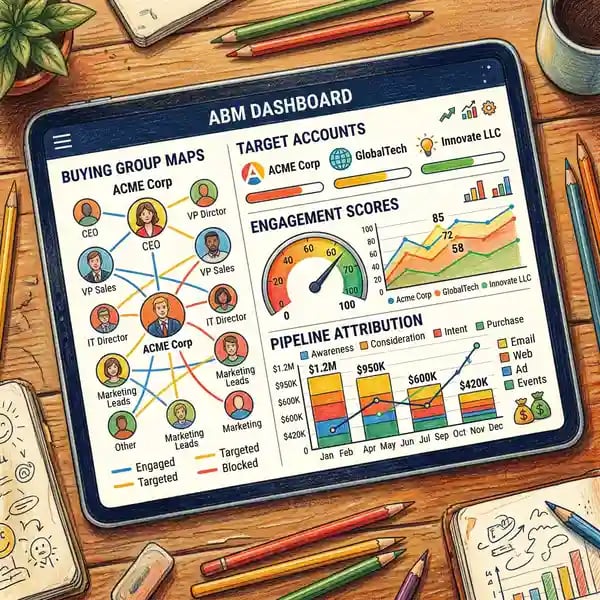
ABM also creates a natural feedback loop between sales and marketing. When marketing's job is to influence a specific set of identified accounts (rather than driving broad demand generation), sales and marketing align on shared targets. Marketing tracks which content engages which stakeholders, shares that intelligence with sales, and refines messaging based on what's actually moving accounts forward. This alignment eliminates the friction between teams—both are driving the same pipeline.
The barrier to ABM entry is lower than many assume. You don't need advanced technology—a simple spreadsheet of 20–50 target accounts, a shared view of each account's buying committee, and coordinated outreach (phone + email + LinkedIn) generates results. Enterprise ABM platforms are optional (nice to have) rather than required (must-have).
Integrating the Six Strategies: A Unified Networking Operating Model
The six strategies outlined above don't operate in isolation. The most effective B2B networking programmes weave them together into a unified operating model:
Referral Foundation
Build your referral programme on top of your best customer relationships. Reward advocates who refer others. Track referral quality and conversion. Create systematic processes to keep referrals flowing consistently.
Community as Force Multiplier
Supercharge referrals by building community around your customers and target buyers. Communities compound referral velocity—when community members see the product in action and form relationships with peers, they naturally recommend to others.
Referral + community create a stable, repeatable pipeline foundation. On top of that:
LinkedIn Content Engine
Layer consistent LinkedIn publishing (personal articles, video, carousels) to build brand awareness and create opportunities for inbound inquiry. Content from your team creates permission for outreach—people who've followed your insights are more receptive to conversation.
AI-Powered Outreach
Use AI to personalise and scale outreach to accounts with intent signals. AI amplifies ABM velocity—you can research and contact 10x more accounts within your ICP, increasing hit rate and pipeline volume.
The final layer: convert opportunity into meetings and closed deals.
Event Follow-Up Velocity
Execute flawlessly on event follow-up (5-minute rule). Events are compression points where multiple stakeholders are present—follow up immediately to convert warm conversations into meetings.
ABM for Account Closure
Use ABM structure (buying group mapping, multi-stakeholder engagement, personalised messaging) to shepherd qualified opportunities through the sales cycle to close. Shorter cycles, higher deal values, faster ramp on new reps.
Frequently Asked Questions
How do I get started with a referral program if I don't have advocates yet?
Can we build community without dedicated community manager budget?
What's the minimum frequency to see results from LinkedIn publishing?
How do I balance AI-powered outreach with personalization without violating compliance?
What's the best way to implement the 5-minute follow-up rule with remote teams?
How many target accounts should we include in ABM?
Ready to transform your B2B networking strategy? Let's align your entire go-to-market engine around these six proven strategies and drive exponential pipeline growth.
Learn More About HubSpot CRMConclusion: From Broadcast to Relationship-Driven Networking
B2B networking in 2026 has fundamentally shifted. The broadcast model—casting wide nets through cold calls and mass emails—has collapsed. Buyers have too many information sources, too many alternative vendors to evaluate, and too much control over their buying process to be coerced into conversations they don't want.
The winning organisations have pivoted to relationship-driven networking: building referral programmes that leverage satisfied customers, creating community around their solutions to compound word-of-mouth, publishing consistent thought leadership to establish authority and attract inbound, using AI to personalise outreach at scale while maintaining compliance, executing flawlessly on event follow-up to capture momentum, and structuring ABM programmes to coordinate multi-stakeholder engagement through complex sales cycles.
The six strategies are interdependent. Referrals + community create stable baseline pipeline. LinkedIn content + AI outreach expand opportunity volume. Event follow-up + ABM convert opportunity into revenue. Companies that excel at all six report doubled pipeline velocity, compressed sales cycles, and higher deal values. The competitive advantage no longer goes to the loudest sales team—it goes to the most thoughtful, systematic, relationship-focused organisations.
Sources: Gartner 2025 B2B Buyer Research, LinkedIn Official Blog 2026, DataBox, Insider Intelligence, 6sense
Ready to build a relationship-driven B2B networking strategy?
Whitehat SEO helps B2B companies align their go-to-market engine across referrals, community, content, AI-powered outreach, and ABM. We work with SaaS, professional services, and enterprise companies to accelerate pipeline velocity and compress sales cycles.
Clwyd Probert
Founder, Whitehat SEO
Clwyd specialises in B2B go-to-market strategy, sales acceleration, and demand generation for SaaS and enterprise companies. He's built and scaled sales teams at high-growth startups and worked with 50+ B2B companies to transform their networking and prospecting models. When he's not optimising sales funnels, he's speaking at industry events about the intersection of community, content, and revenue.