
Social Media Marketing for Architects: Platform-by-Platform Strategy
Published 17 March 2026 | Updated 17 March 2026 | By Whitehat SEO Team
56%
Of architecture firms allocate to digital marketing
6%
Average marketing spend (up from 1.5% in 2020)
2.5x
More reach with Instagram Reels vs static posts
5%
Target engagement rate for architecture content
Key Takeaways
- Architecture firms now dedicate 56% of marketing budgets to digital channels
- Different platforms serve different purposes: discovery (Instagram, Pinterest) vs. trust-building (Houzz, LinkedIn)
- Instagram Reels deliver 2.5x more reach than static imagery
- A structured content calendar (2–4 weeks ahead) is essential for consistency
- YouTube and Houzz excel for portfolio showcase and lead conversion
- Individual LinkedIn posts outperform company pages algorithmically
The Social Media Ecosystem for Architects
Social media has become a critical business development tool for architecture firms. The landscape has evolved far beyond simple portfolio sharing. Today's architectural social media strategy must recognise that different platforms serve fundamentally different functions in the buyer's journey.
Rather than spreading your team thin across every network, successful architecture firms adopt a platform-specific strategy that aligns with how prospective clients actually discover and evaluate architectural services on each channel.
The ecosystem breaks into two strategic pillars:
- Discovery Platforms (Instagram, Pinterest): Where architects showcase visual work and educate audiences on design trends. These channels drive awareness and position your firm as thought leaders.
- Trust-Building Platforms (LinkedIn, Houzz): Where conversion happens. Reviews, credentials, and past projects build credibility and generate qualified leads.
Why Platform Selection Matters
Architecture is a highly visual, relationship-driven business. Not every platform suits every firm. A residential designer's Instagram strategy differs dramatically from a commercial firm's LinkedIn approach. Understanding your ideal client and where they spend time is the foundation of effective social media marketing.
Instagram Strategy: Visual Storytelling and Reels
Instagram remains the dominant platform for architectural visual content. With 2.5 billion monthly active users and algorithmic favouritism toward video, Instagram Reels have become non-negotiable for reach.
Instagram Reels: The Engagement Engine
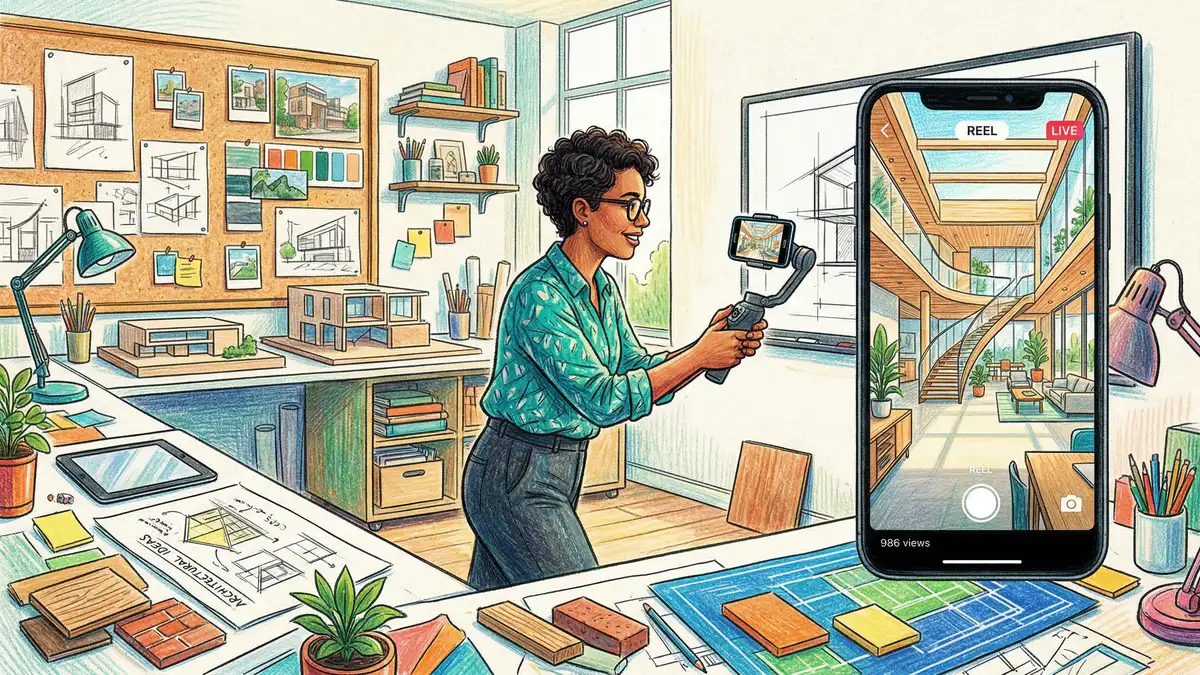
Reels generate 2.5x more reach than static carousel posts. For architecture firms, Reels work best when showing:
- Before-and-after transformations (renovation projects, space redesigns)
- Process documentation (design presentation walkthroughs, material selections)
- Design trends and insights (colour palettes, spatial planning tips)
- Quick interior design hacks (lighting solutions, space-maximisation tricks)
- Site to completion timelapses (construction sequences, fit-out progression)
Optimal Posting Frequency and Hashtag Strategy
Research indicates 3–5 Instagram posts per week is optimal for architecture firms. This includes:
- 2 Reels per week (highest priority)
- 1–2 carousel posts (project case studies, design processes)
- 1–2 Stories per week (behind-the-scenes, team culture, timely updates)
Hashtag strategy should layer branded, niche, and broad hashtags. For architecture firms, effective hashtag combinations include:
- Branded: #YourStudioName
- Niche: #ResidentialArchitecture, #ContemporaryDesign, #ArchitectureStudio
- Broad: #InteriorDesign, #ArchitectureLovers, #DesignInspiration
Engagement on architecture and construction content approaches 5% on average, significantly higher than many other industries. Responding to comments within the first hour boosts algorithmic visibility.
Stories and Engagement Mechanics
Stories create daily touchpoints without cluttering your feed grid. Use them for time-sensitive announcements, project milestones, team introductions, and calls-to-action that drive traffic to your website or DM.
LinkedIn for Architects: Thought Leadership and B2B Reach
LinkedIn is where architects build professional credibility and generate qualified B2B leads. Critically, individual posts from team members outperform company page posts algorithmically—a counterintuitive insight that many firms miss.
Individual vs. Company Page Strategy
Encourage your architects, principals, and directors to share original insights on LinkedIn. Content that performs well includes:
- Design methodology and philosophy pieces
- Industry trend analysis and predictions
- Project case studies with lessons learned
- Thought pieces on sustainability, future of work, urbanism
- Team milestones and employee spotlights
The company page remains useful for official announcements, award wins, and news roundups—but individual thought leadership drives 40% more engagement on average.
Content Hierarchy for LinkedIn
LinkedIn's algorithm favours:
- Posts that generate comments and shares (particularly in the first hour)
- Native content (text and images posted directly, not external links)
- Conversational, authentic voice over corporate messaging
- Posts from company employees over the company page itself
Include a clear call-to-action: "What's your approach to [topic]?" or "Would you handle this design differently?" These generate the conversational engagement LinkedIn's algorithm rewards.
Need help with social media strategy for your architecture firm? See our SEO for Architects service.
View SEO for ArchitectsHouzz: Reviews, Portfolios, and High-Intent Leads
Houzz operates differently from Instagram or LinkedIn. It's a review-and-recommendation platform where homeowners actively search for architectural and design services. For residential firms, Houzz is a lead-generation powerhouse.
Houzz vs. Instagram vs. LinkedIn: Platform Comparison
| Platform | Primary Function | Best For | Key Metrics |
|---|---|---|---|
| Discovery & Inspiration | Building awareness, showcasing aesthetics, driving website traffic | Reach, impressions, website clicks, engagement rate | |
| B2B Trust & Thought Leadership | Institutional work, thought leadership, B2B partnerships, corporate clients | Engagement, profile views, connection requests, qualified inquiries | |
| Houzz | Lead Generation & Reviews | Residential work, service inquiries, high-intent homeowners, reviews | Ideabook saves, reviews, inquiries, conversion rate |
| Evergreen Inspiration | Interior design, home décor, long-tail traffic, design trends | Outbound clicks, repins, profile traffic, 6-month+ content lifespan | |
| YouTube | Portfolio Search & Education | Portfolio showcases, process videos, design education, long-form storytelling | Watch time, views, subscriber growth, external link clicks |
Maximising Houzz for Residential Firms
Houzz success depends on three factors:
- Complete profile: High-resolution project photos, firm description, services, credentials, and license information.
- Ideabooks: Curated project collections grouped by style, room type, or service. Ideabooks drive engagement and showcase your design range.
- Reviews: Proactively request reviews from completed clients. Response time and quality matter—Houzz prioritises responsive firms in rankings.
Unlike Instagram, where aesthetic and inspiration drive engagement, Houzz is transactional. Homeowners are actively looking to hire. Your profile should emphasise credentials, testimonials, project case studies, and service areas.
Pinterest and YouTube: Long-Tail Traffic and Extended Reach
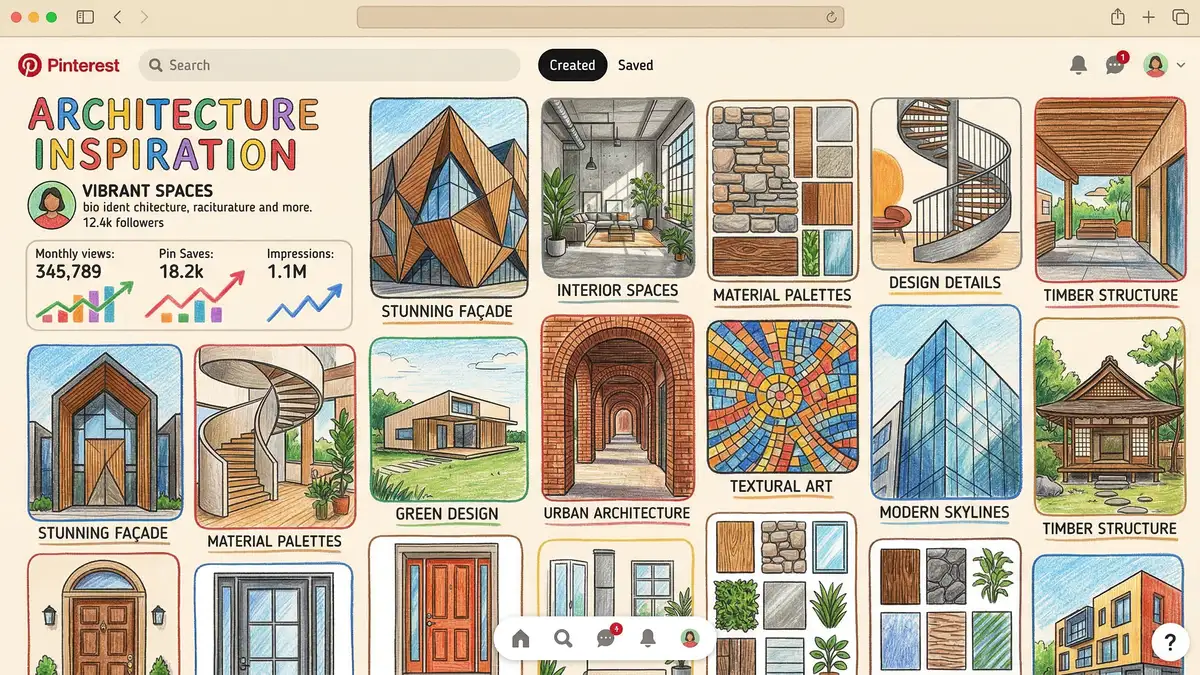
Pinterest for Interior Architects and Residential Design
Pinterest differs fundamentally from Instagram. It's a visual search engine where users actively save design inspiration for future projects. Content on Pinterest has a lifespan of 3–6 months, far longer than Instagram's 3–5 day peak.
For interior architects and residential designers, Pinterest drives consistent, long-tail traffic. Pins should include:
- Style guides and mood boards
- Room-specific design ideas (bedroom layouts, kitchen configurations, office setups)
- Colour palette inspiration
- Sustainability and eco-friendly design trends
- Space-saving solutions for small homes
Each pin should link back to your website or blog. Unlike Instagram Reels, which aim for viral virality, Pinterest drives consistent, qualified referral traffic to service pages and portfolio pieces.
YouTube: The Portfolio Search Engine
YouTube isn't just for vlogs—it's a search engine where architects and designers search for portfolio inspiration, process walkthroughs, and design education. Watch time is the key metric, not subscribers.
Effective architecture YouTube content includes:
- Project walkthroughs (narrated tours of completed projects, design decisions explained)
- Design process videos (concept development, material selection, space planning)
- Client interviews (testimonials, project outcomes, transformation stories)
- Design trends and predictions (emerging styles, technology in architecture)
- Educational content (design principles, spatial planning tips, material guides)
Optimise titles, descriptions, and tags for keywords like "architect portfolio," "interior design process," and "office design ideas." YouTube's search algorithm rewards watch time—longer, valuable videos outrank short clips.
Content Planning and Social Calendar Framework
Consistency beats perfection in social media. A structured content calendar prevents scrambling and ensures each platform receives appropriate attention. Recommended planning horizon: 2–4 weeks ahead, with flexibility for real-time opportunities.
Weekly Content Allocation
| Platform | Frequency | Content Type | Optimal Days/Times |
|---|---|---|---|
| 3–5 per week | 2 Reels, 1–2 carousels, 1–2 Stories | Tuesday–Thursday, 6–9 AM / 5–7 PM (local time) | |
| 2–3 per week | 1–2 thought leadership posts, 1 company update | Tuesday–Thursday, 7–9 AM / 12–1 PM | |
| 1–2 per day | Design inspiration pins, room ideas, mood boards | Thursday–Friday, 2–6 PM (when users plan weekends) | |
| Houzz | 1 per week | New project uploads, Ideabook updates, client testimonials | Monday–Wednesday (when clients research) |
| YouTube | 2–4 per month | Long-form project walkthroughs, design education, interviews | Wednesday, 1–2 PM (content can go live outside peak hours) |
Content Pillars for Architecture Firms
Organise your content strategy around these pillars:
- Hero Imagery (40%): Stunning project photography, architectural photography, design aesthetics.
- Process Documentation (30%): Behind-the-scenes, design decisions, client walkthroughs, before-and-afters.
- Educational Content (20%): Design tips, trend analysis, sustainability, spatial planning advice.
- Community & Culture (10%): Team spotlights, awards, milestones, thought leadership.
Video Content Strategy: From Inspiration to Conversion
Video content has become essential across all platforms. From Instagram Reels to YouTube walkthroughs to LinkedIn Stories, video drives engagement far more effectively than static imagery.
Video Content Framework
Create a video library covering these categories:
- Hero Videos (2–4 minutes): Cinematic project showcases, architectural transitions, design narratives.
- Process Videos (1–3 minutes): Before-and-afters, space transformations, design selections.
- Reels (15–60 seconds): Design tips, quick transformations, trend insights, aesthetic inspiration.
- Stories (5–15 seconds): Daily updates, team moments, project progress, announcements.
- Testimonials (30–90 seconds): Client interviews, project outcomes, transformation stories.
Production and Distribution Strategy
You don't need Hollywood production values. Smartphone videos with clear audio, consistent lighting, and compelling narratives often outperform expensive productions. Key production principles:
- Invest in a gimbal or tripod for smooth, professional-looking shots
- Use natural lighting whenever possible; supplement with affordable LED panels
- Add captions (80% of social media videos are watched without sound)
- Hook viewers in the first 2 seconds—the critical attention window
- Repurpose one long-form video into 4–6 short-form Reels or Stories
Measuring Social Media ROI: Metrics That Matter
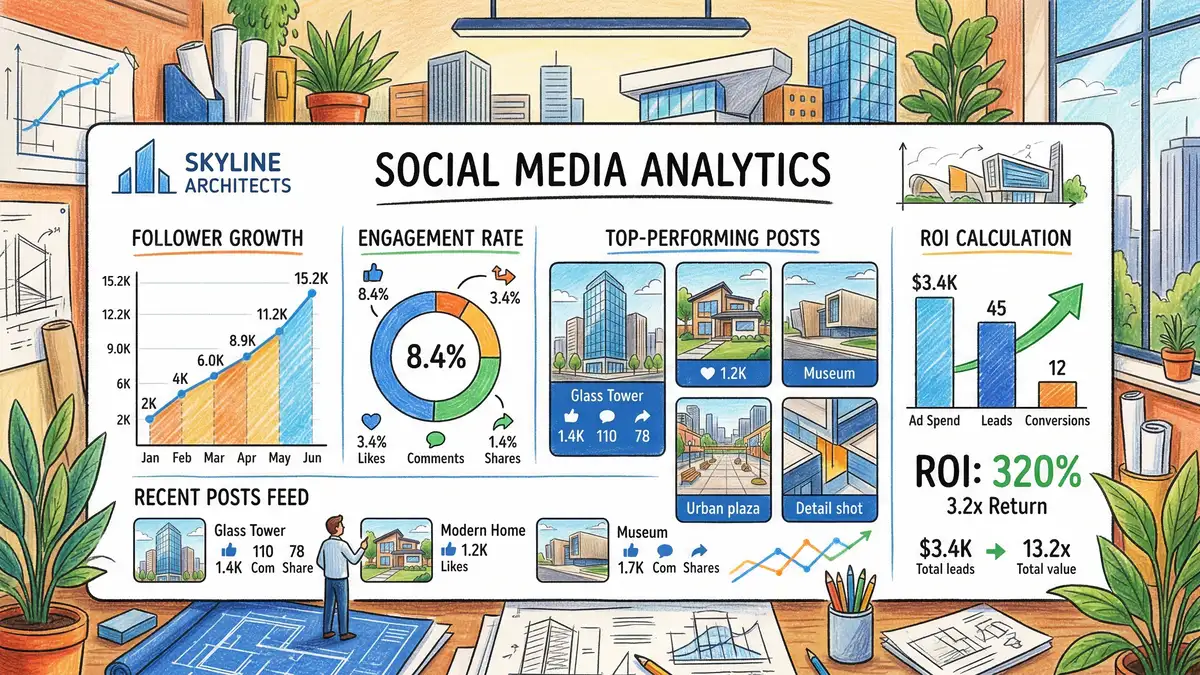
Not all metrics are created equal. Vanity metrics (followers, likes) reveal little about business impact. Focus on metrics that connect to revenue:
Platform-Specific KPIs
- Instagram: Website click-through rate, content saves (indicate high relevance), message inquiries from direct messages.
- LinkedIn: Profile views, connection requests from target clients, qualified inquiry volume, thought leadership reach.
- Houzz: Ideabook saves, review volume and rating, direct inquiries from Houzz messaging, qualified lead conversion rate.
- Pinterest: Outbound click traffic to website, conversion rate from Pinterest referrals, pin saves and repins (content lifespan indicator).
- YouTube: Average watch time (% of video watched), click-through to website, subscriber retention and growth from architecture audience.
Attribution and Conversion Tracking
Set up UTM parameters for all social links to identify which platforms drive qualified leads. Example: ?utm_source=instagram&utm_medium=reels&utm_campaign=project_showcase
Track inquiries back to their source. Which platforms' visitors become clients? This reveals true ROI and informs budget allocation. Many firms discover that Houzz and LinkedIn outperform Instagram in lead quality, despite Instagram's larger following.
30-Day Social Media Launch Plan
Ready to revamp your social media presence? Follow this structured 30-day roadmap:
Audit Your Current Presence
Review all profiles—Instagram, LinkedIn, Houzz, Pinterest, YouTube. Screenshot current metrics, assess completeness, identify gaps. Note which platforms have engagement.
Optimise Profile Completeness
Complete all profile fields. Update bios, logos, links. Ensure consistent branding across platforms. Add clear calls-to-action directing users where to inquire.
Audit and Organise Content
Identify your best-performing content to date. Create a content library of high-resolution project photography. Organise by project type, style, or service area.
Develop Your Calendar
Map out 4 weeks of content using the framework above. Assign content creation responsibilities. Schedule recurring content types (e.g., "Transformation Tuesday" Reels).
Create Pillar Content
Film and edit 2–3 hero project videos, 5–8 Reels, and 1–2 YouTube walkthroughs. This foundational content provides runway for the month ahead.
Execute and Monitor
Post consistently per your calendar. Monitor comments and messages daily. Respond within 24 hours. Track engagement, clicks, and inquiries. Adjust based on performance.
Frequently Asked Questions
Ready to Build Your Architecture Firm's Social Media Presence?
We help architecture firms develop social media strategies that showcase expertise and generate qualified leads.
Architect Marketing Hub
Clwyd Probert
Managing Director, Whitehat SEO
Clwyd has over 15 years of experience in digital marketing and SEO, helping professional services firms achieve sustainable organic growth through evidence-based strategies.
Sources: Instagram Creator Economy Report 2026, LinkedIn Professional Engagement Index, Houzz Architecture & Design Professionals Study, Pinterest Business Best Practices Guide, YouTube Creator Analytics Data